
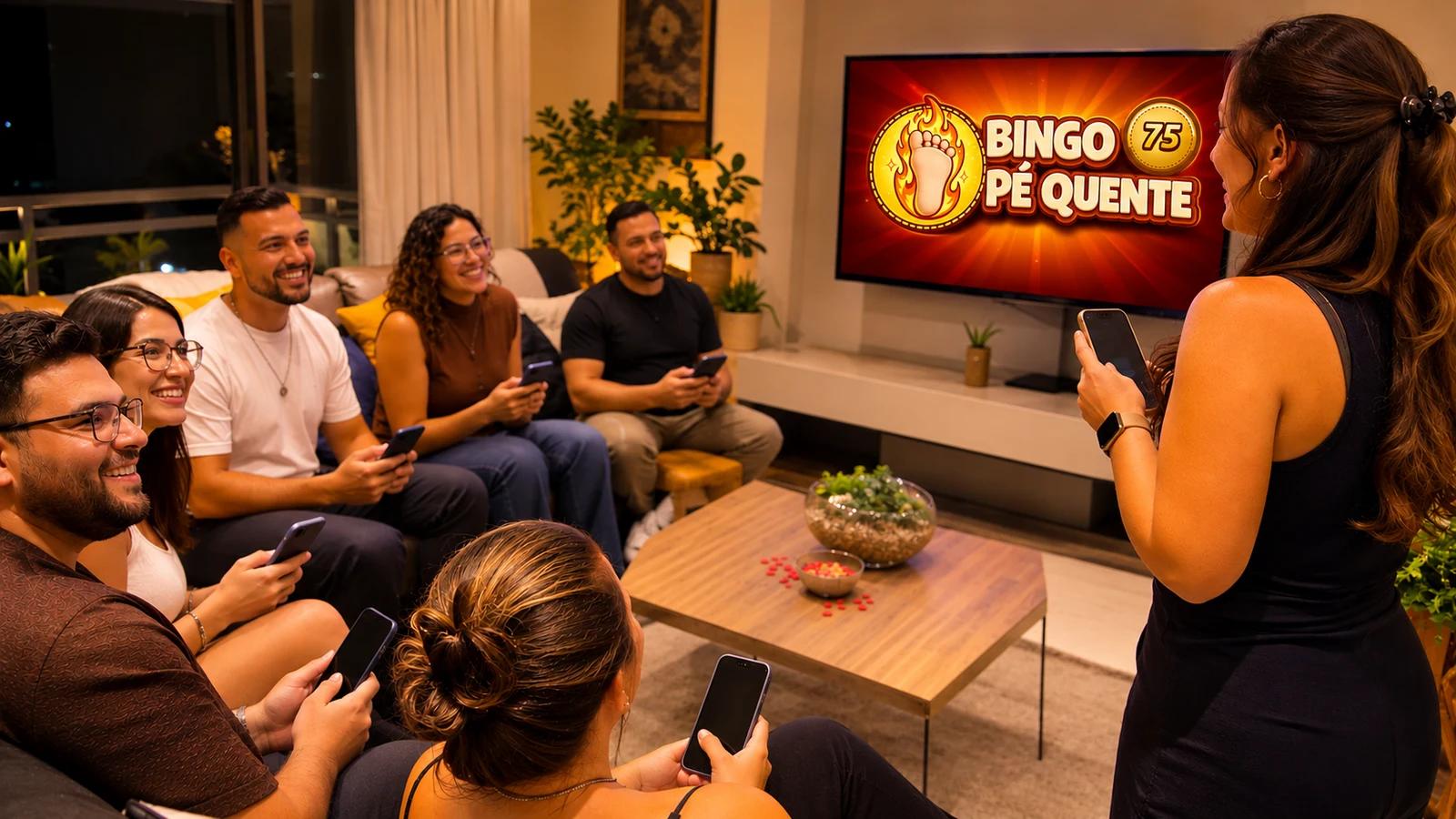
Bingo at home seems simple until you're the one doing the calling. How many cards should you print? Which round goes first? How long does each one take? What do you do when two people shout at the same time? This is the plan for whoever runs the night, from the invitation to the last prize.
If you still need to put the materials together (cards, markers, prizes), start with the guide to making a bingo at home and the bingo night planning kit. Here, the subject is the night itself.
- −7 days
Invitation and cards: how many people are coming and how many cards each one plays.
- −1 day
Prizes and the order of rounds: from the fastest pattern to the slowest.
- −30 min
TV, sound and voice: test everything before the first guest arrives.
- Arrival
The rules in one minute: cards, markers and the tie agreement.
- Rounds
Pace and voice: one ball after another, letter and number, loud and clear.
- Finale
Blackout: the best prize last.
- After
The record: who won what, for next time.
A week before: the invitation and the cards

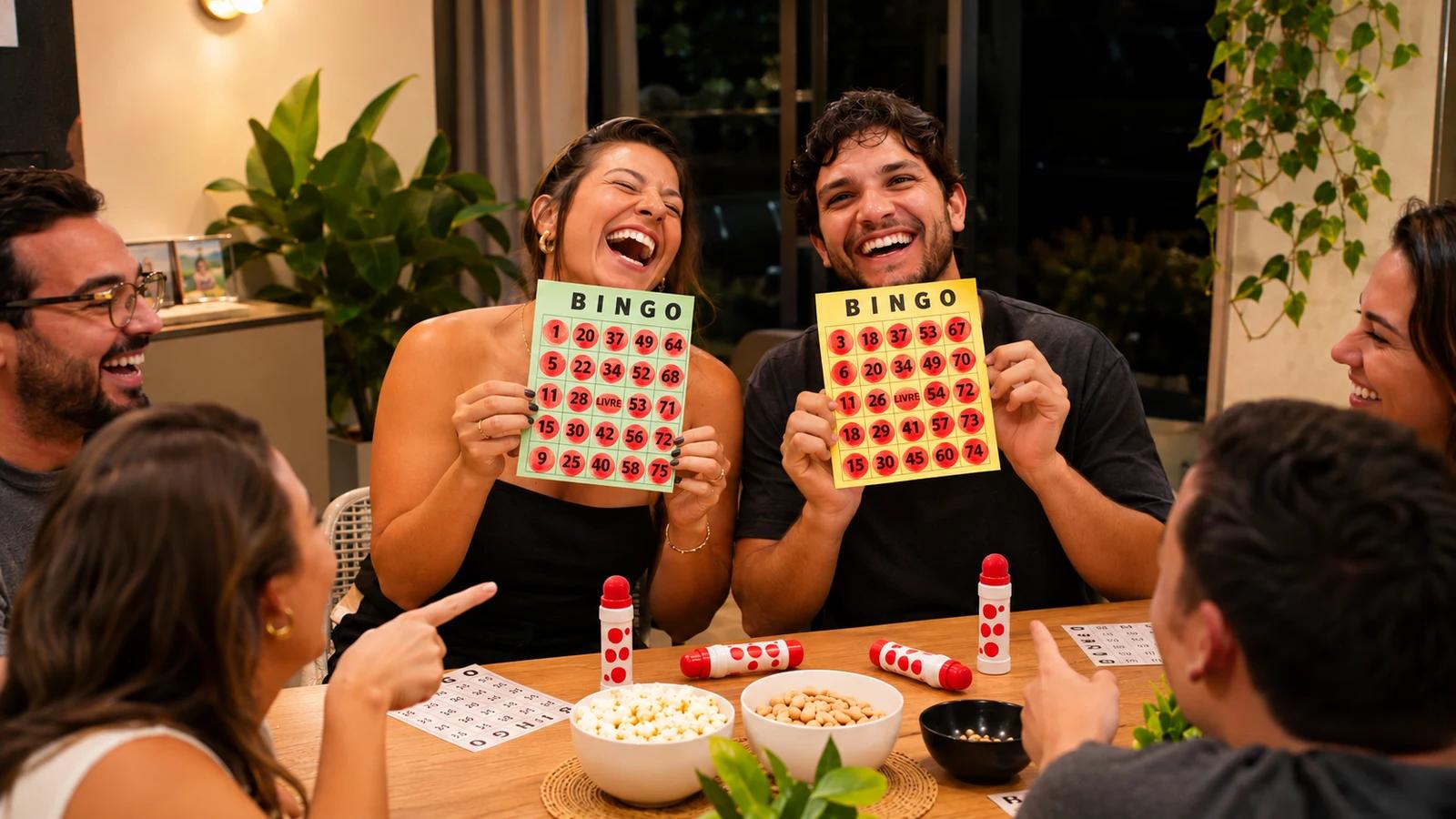
Send the invitation with the day, the time and what each person brings (a dish, a small gift). Ask how many people are coming: the number of cards changes the pace of the night. With more cards on the table, rounds end sooner.
- Two or three cards per person is the count that usually works: plenty of excitement without anyone getting lost.
- Print different cards with the card generator: they come out ready to cut, and in practice a repeated card doesn't happen (there are 552 septillion possible, as the bingo math post shows).
- Markers for everyone: beans, corn, bottle caps or a bingo dauber. Set them out in little bowls.

Gather the ones you love for the next Bingo
See how simple it is to play and host with Bingo Pé Quente.

5 stars on Google PlayFree to start, no sign-up
A day before: the prizes and the order of rounds
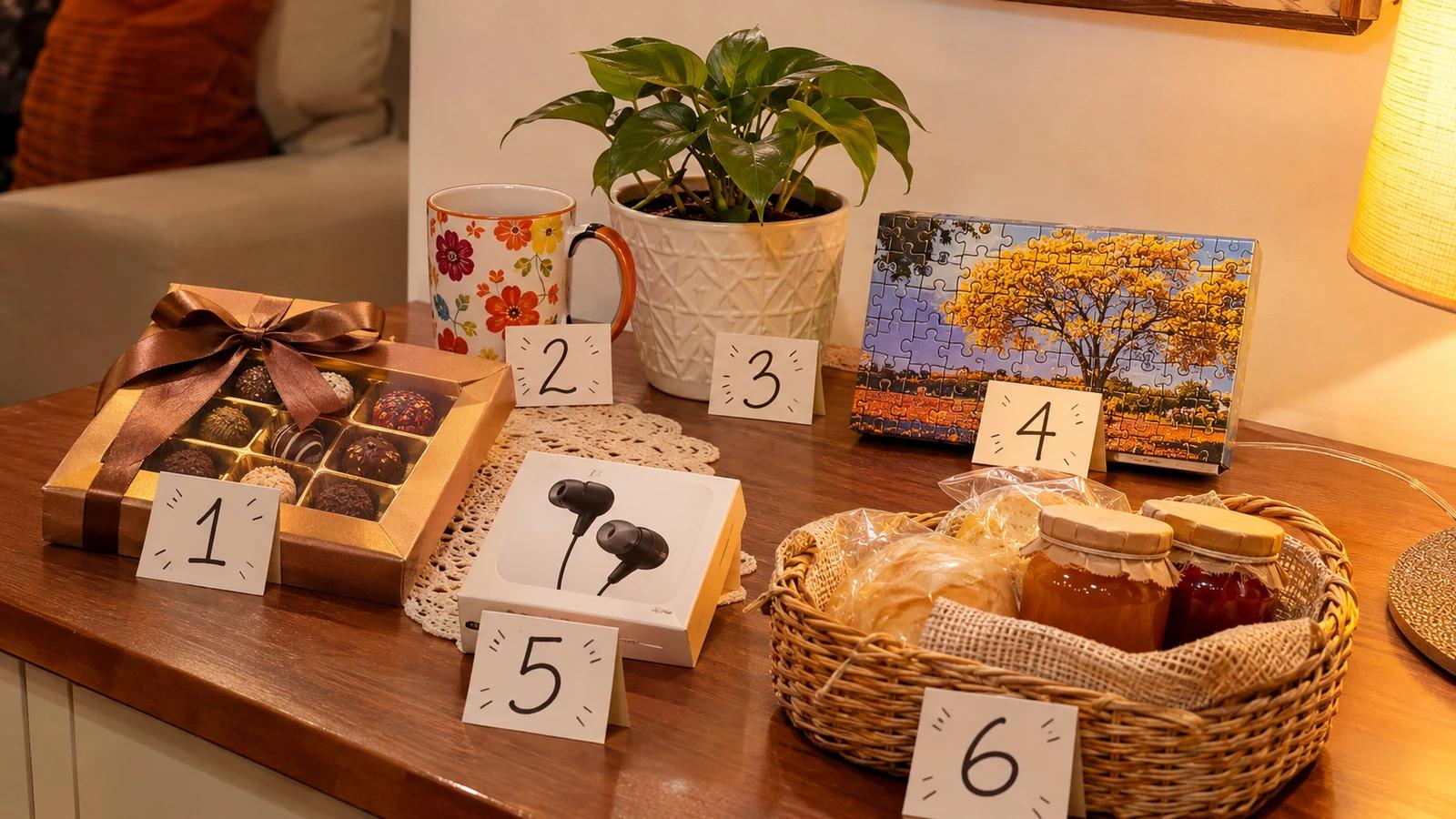
Plan the night from the fastest pattern to the slowest. That way everyone gets an early chance to shout, and the blackout is saved for the end, with the best prize. We simulated 20,000 rounds to find out how long each pattern usually takes at a table with 20 cards, drawing one ball every 20 seconds:
How long each round takes (table of 20 cards, 1 ball every 20 s)
- Line, column or diagonal. lands around the 22nd ball: about 7 minutes.
- Four corners. around the 35th ball: about 12 minutes.
- X. around the 51st ball: about 17 minutes.
- Picture frame. around the 63rd ball: about 21 minutes.
- Blackout. around the 67th ball: about 22 minutes.
Add the pauses for checking and switching rounds, and a night with five rounds comes to about an hour and a half of play. Want it shorter? Speed up the draw or put more cards on the table. The details of each pattern are in the bingo patterns guide and the four corners one.
Half an hour before: TV, sound and voice
With the app, the caller's phone becomes both the cage and the board. Mirror the phone's screen to the TV (or connect it with a cable) and, on CALLER, tap TAP HERE FOR FULL SCREEN (TV): the current ball shows up huge, with the last few balls beside it, and whoever is on the sofa can see it from across the room.
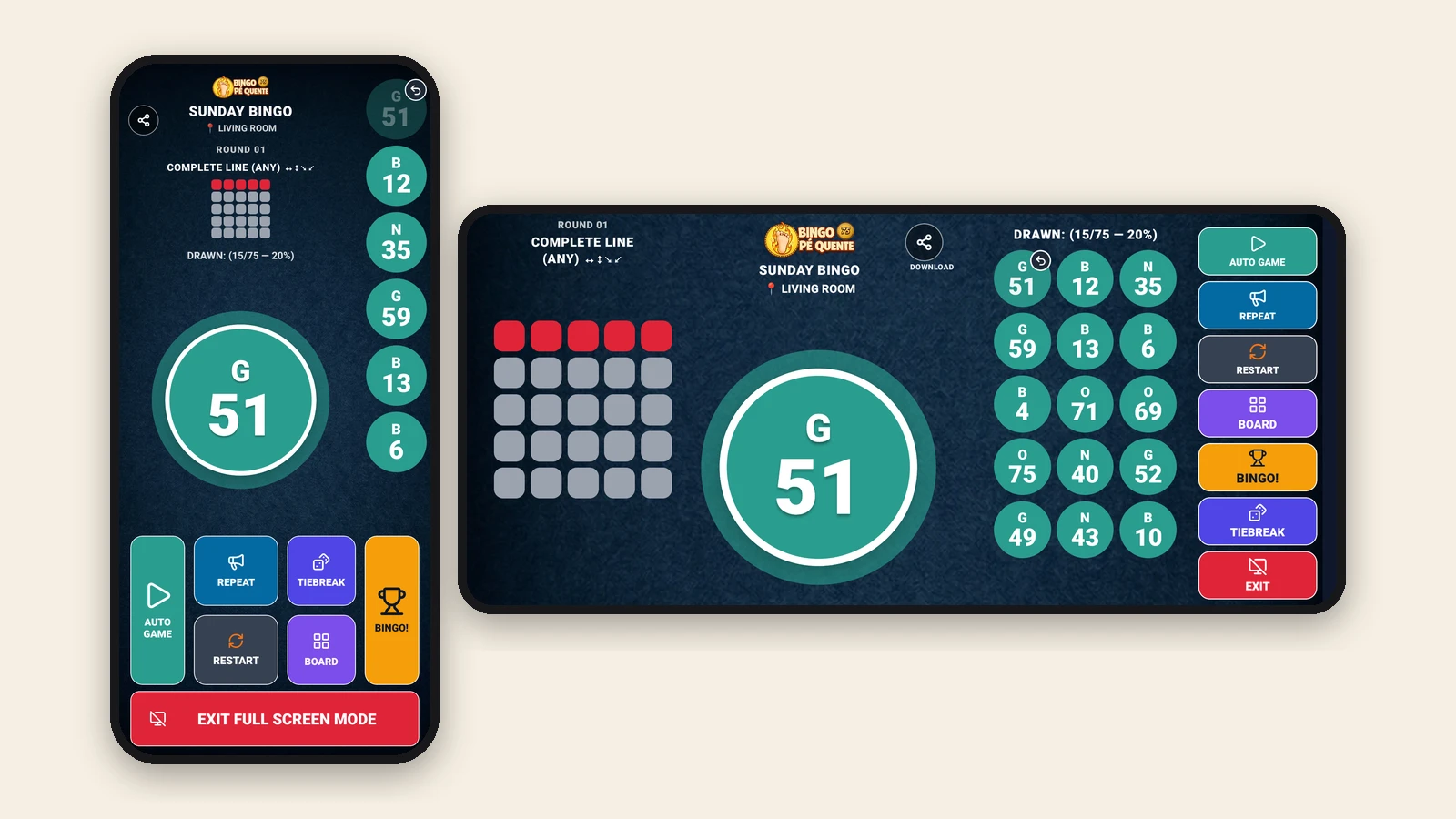
- Test the volume with one ball before everyone arrives. A full room is noisy: set it a little louder than seems necessary.
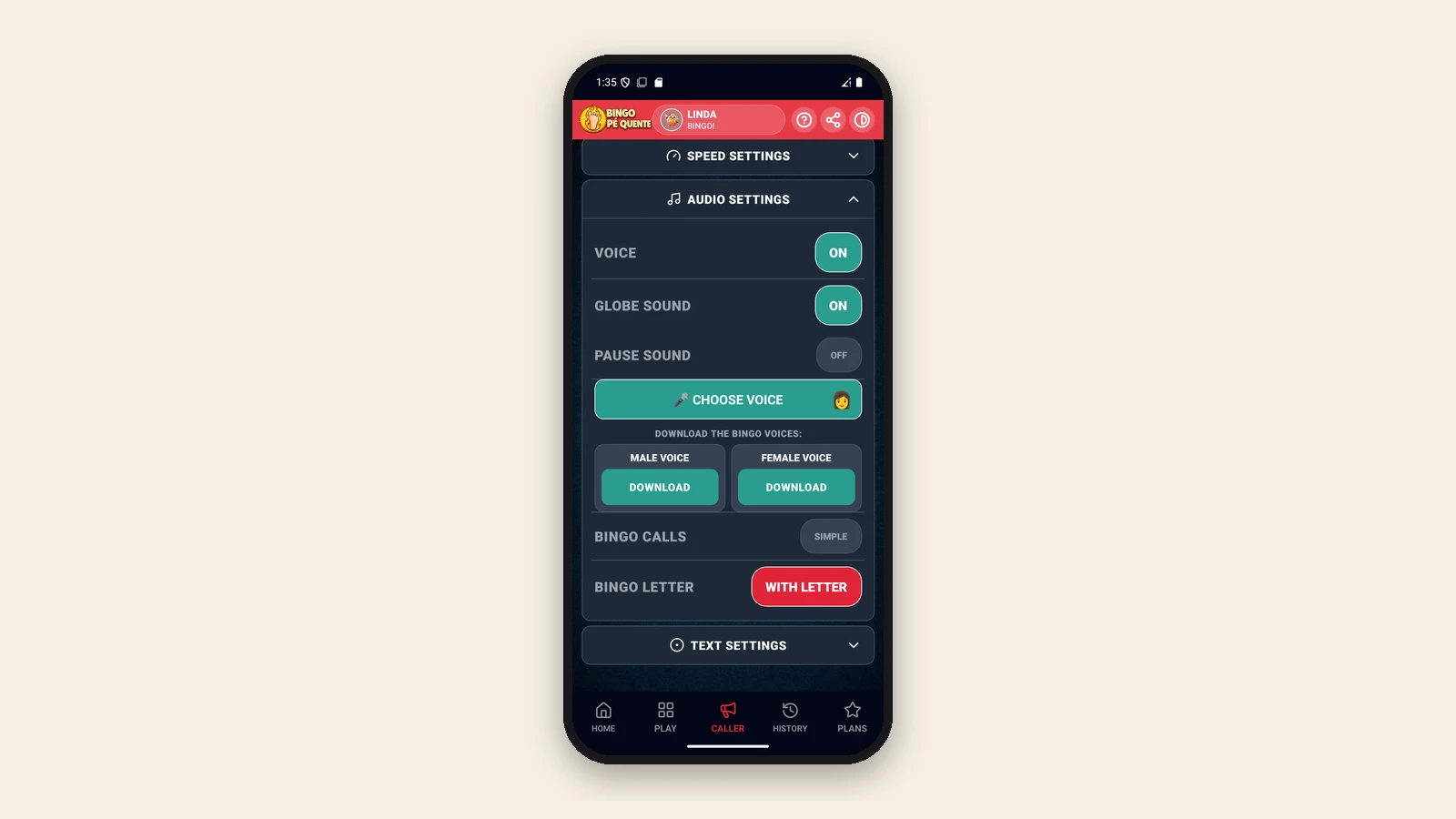
- Choose the voice and the letter: a male or female voice, and BINGO LETTER set to WITH LETTER ("B 7") or NUMBER ONLY.
- Keep the phone plugged in. A bingo night is long.
Arrival: the rules in one minute
"Everyone has their cards. I call the letter and the number; if you have it, mark it. This round is FOUR CORNERS. Got it all? Shout BINGO before the next ball. If two people shout together, each one draws a ball and the highest one wins."
That's all a first-timer needs to hear. Announce each round's pattern before it starts and agree on the tie rule when people arrive, not in the middle of an argument.
During the round: pace and voice
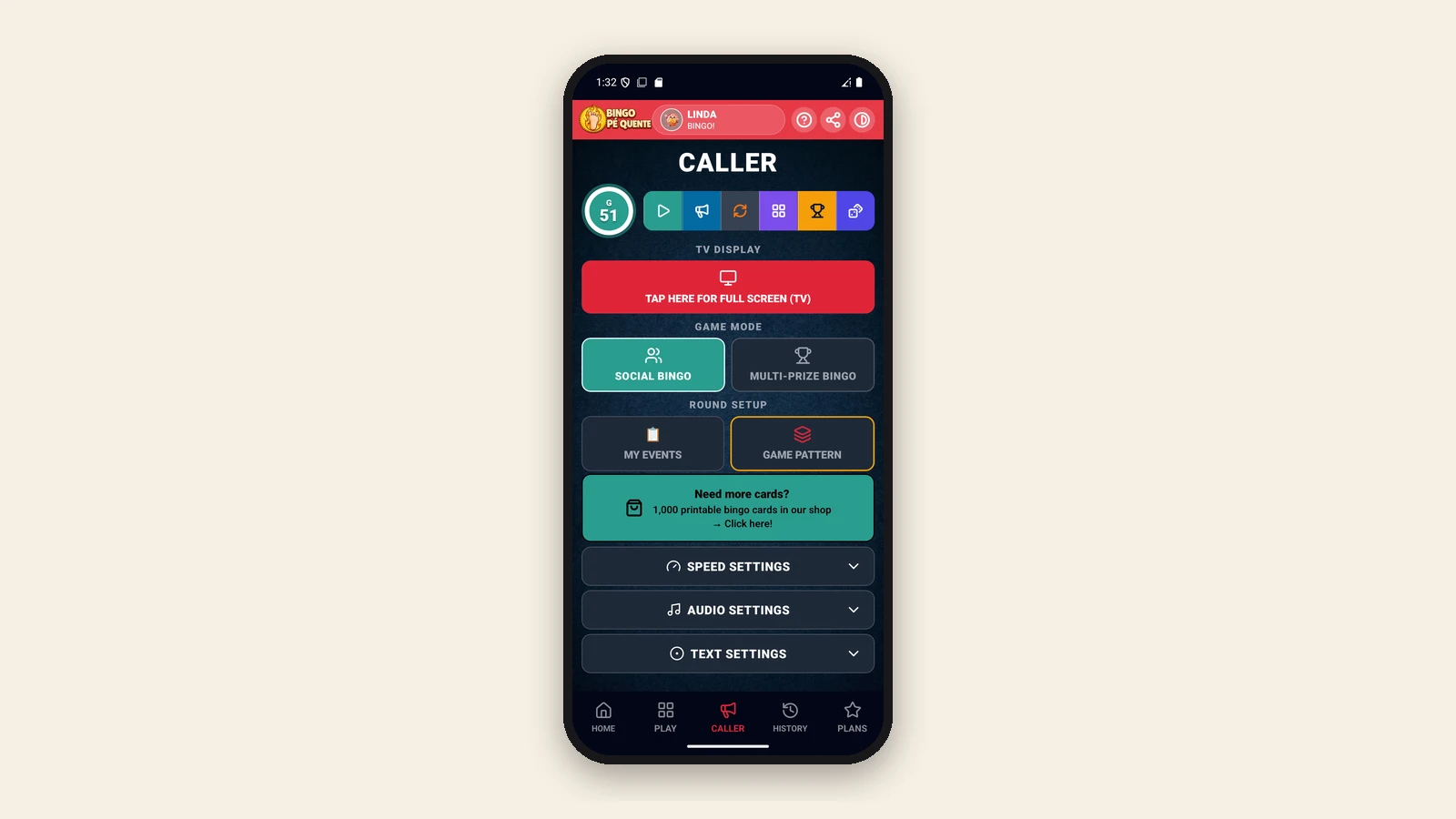
You can draw each ball with a tap or turn on AUTO GAME, which draws on its own at the interval you choose. In the first rounds, go slowly: whoever has three cards is still getting the hang of it. In the blackout, you can speed up.
Someone shouted BINGO: how to check
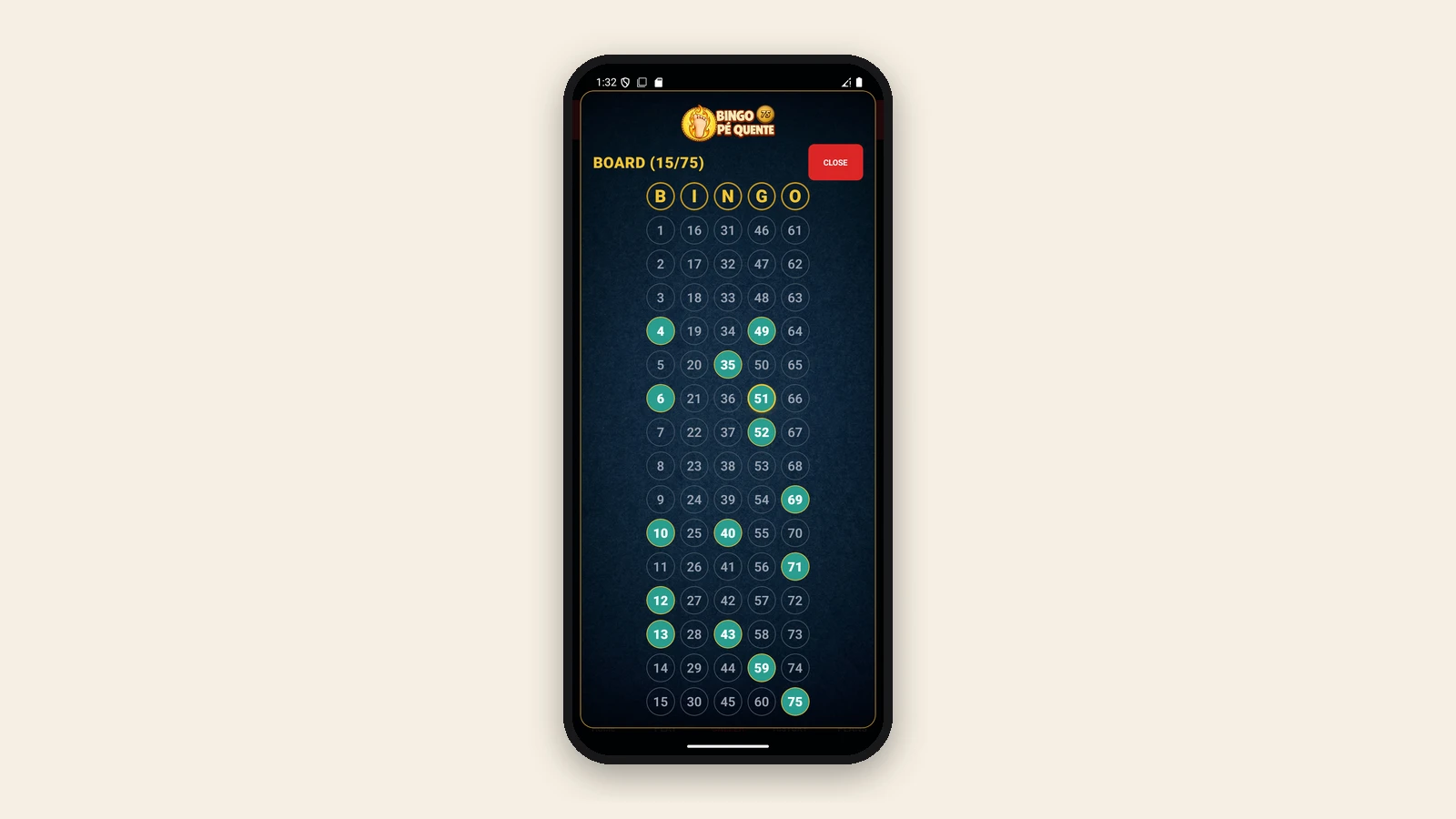
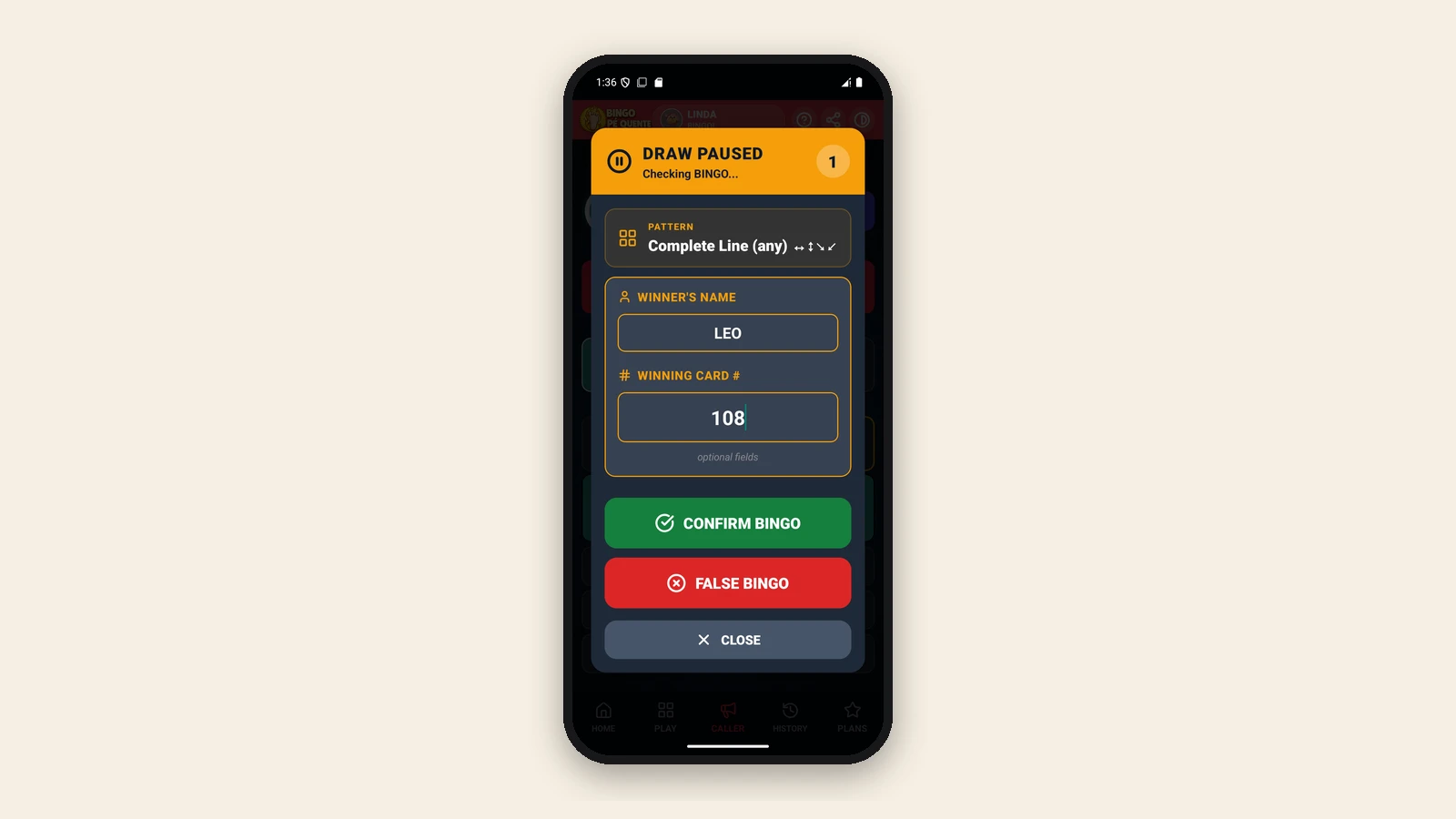
Tap BINGO! on the caller: the draw pauses. Ask the player to read out the numbers of the pattern and check each one on the board. If they've all been called, tap CONFIRM BINGO and hand over the prize. If one is missing, it was a FALSE BINGO: no scolding, the round picks up where it left off.
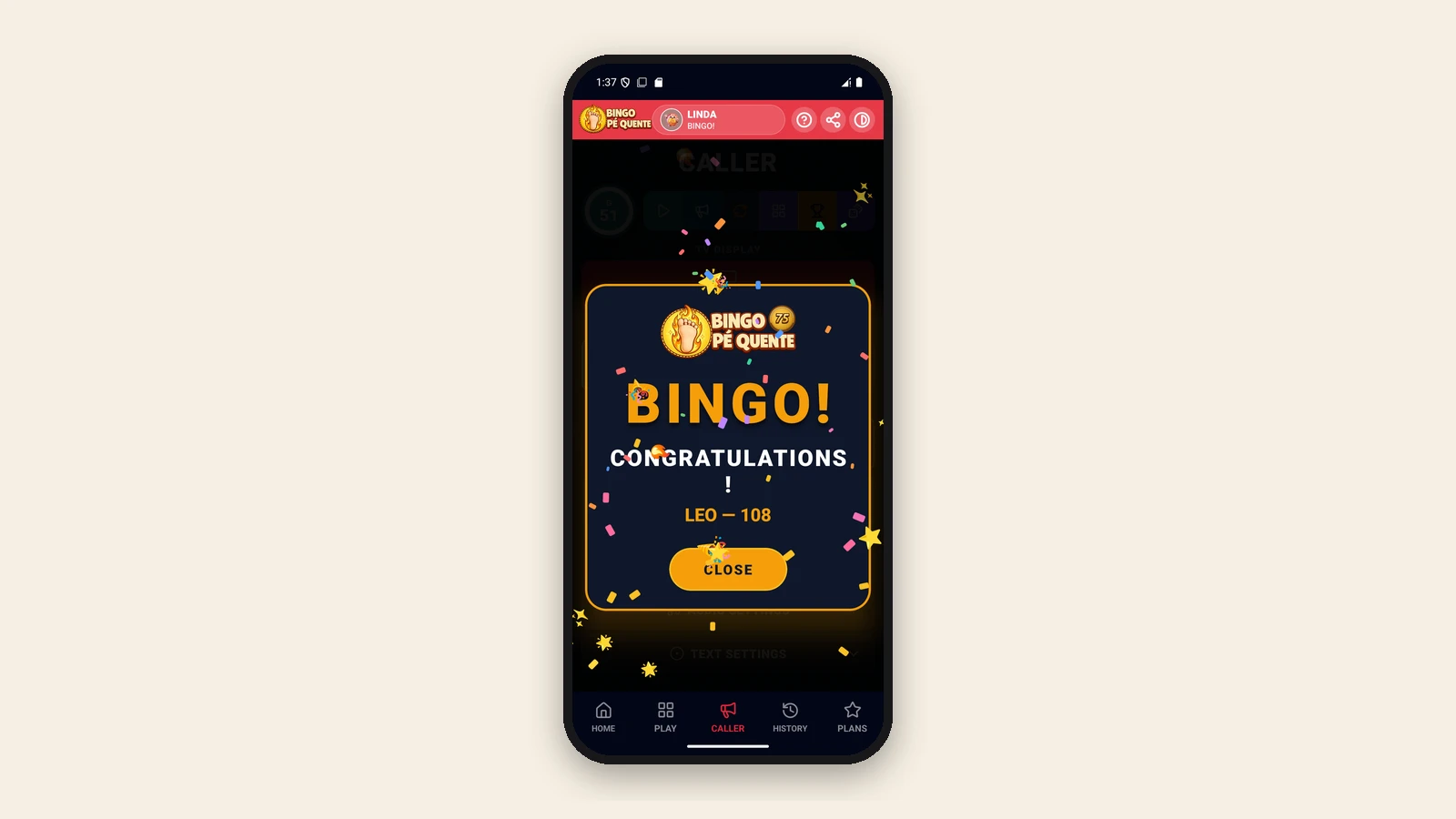
A tie: the highest ball settles it
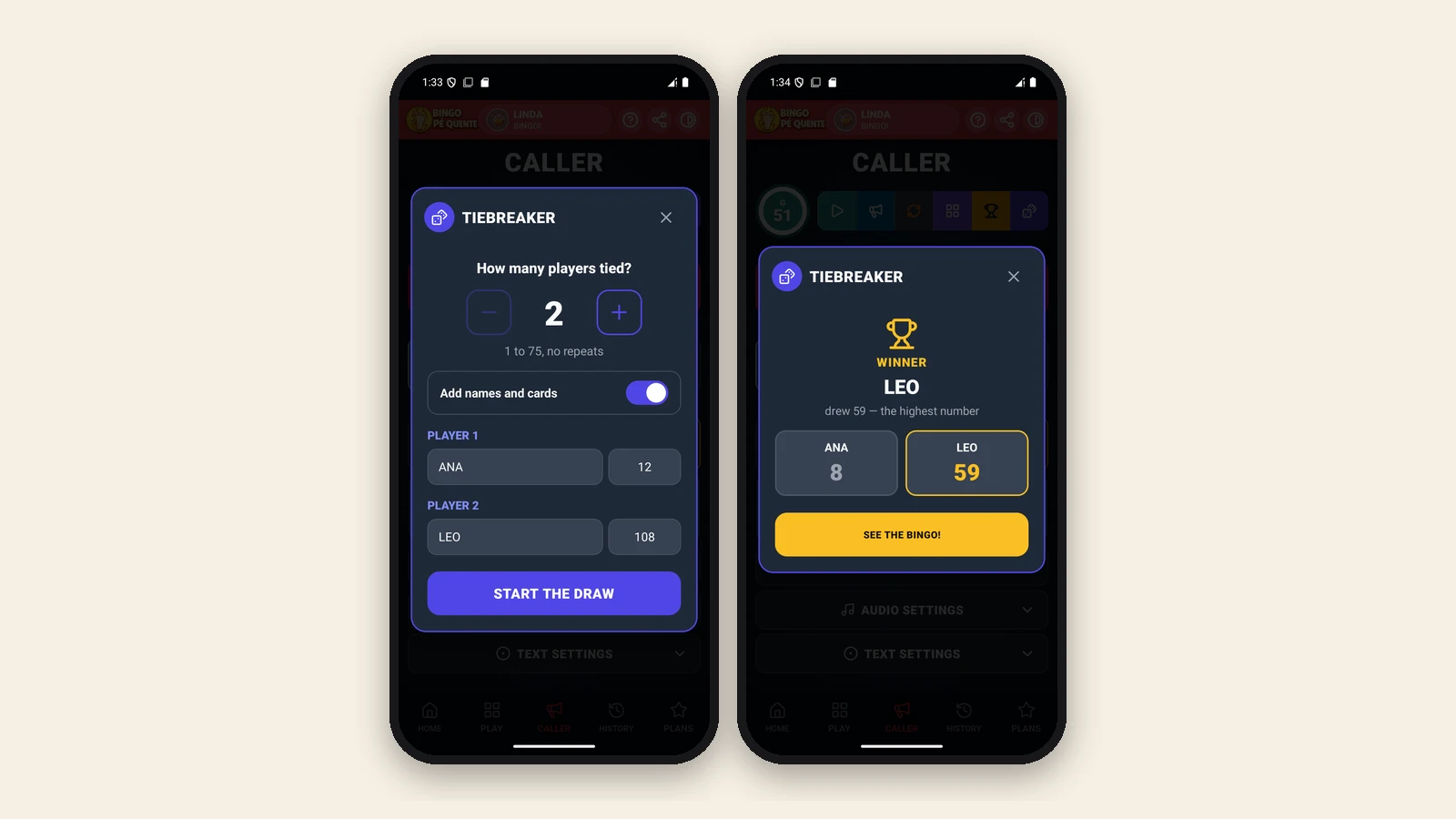
Ties are more common than they seem: in the blackout, 1 round in 5 ends with two complete cards on the same ball. If you agreed on the highest ball, tap TIEBREAK: you enter how many people tied, each one, in turn, draws a ball (1 to 75, no repeats) and the highest one wins.
Other fair ways (splitting the prize, a second gift, a lightning round) are in the bingo tiebreaker guide.
The finale: the blackout
Save the best prize for it and announce that it's the last round: the mood in the room changes. Remember that it's long (about 22 minutes at a table of 20 cards, at 20 seconds per ball). To liven it up, agree on an extra prize if it lands by the 60th ball: it almost never does, and everyone roots for it.
Afterwards: the record of the night
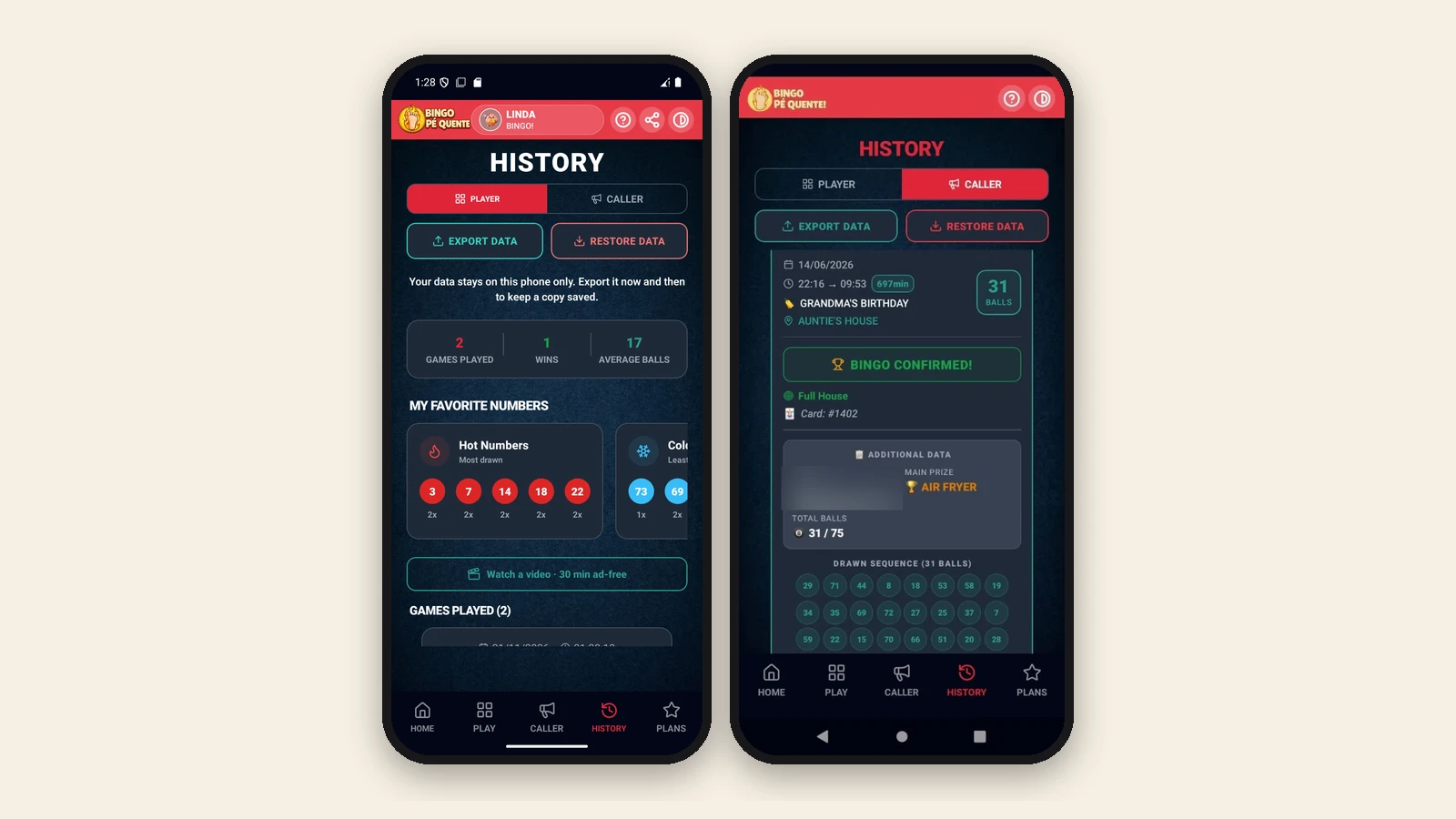
Who won each round, with which card and on which ball: with GRAND BINGO, the caller's history keeps it all and creates a PDF summary of each round, with the pattern, who won, the prize and the sequence of balls, to share in the group chat the next day.
What to have on hand on the night
- Cards. two or three per person, plus a few spares for latecomers.
- Markers. beans, corn, bottle caps or daubers, in little bowls.
- Prizes. numbered in round order, the best one last.
- Phone and charger. the caller stays on all night.
- TV. with the phone's screen mirrored, so everyone can see the current ball.
- The tie agreement. announced when people arrive, before the first ball.
Quick questions
- How long does a bingo night at home last? With five rounds, a table of 20 cards and one ball every 20 seconds, about an hour and a half, counting the pauses.
- Which round should go first? A quick one: a line or four corners. Leave the blackout for the end, with the best prize.
- How do I show the balls on the TV? Mirror the phone's screen to the TV (or use a cable) and open the caller's full screen.
- What do I do when two people shout BINGO together? Use the rule you agreed on when people arrived. In the app, the highest-ball tiebreaker settles it: each one draws a ball and the highest wins.
- Can I keep a record of who won each round? Yes. With GRAND BINGO, the caller's history records every round and creates a PDF summary of each one.
A well-run bingo night is never in a hurry: it has rhythm, clear rules and the best prize at the end.