Within 75-ball bingo, the halls of the United States and Canada created dozens of variants by changing a single thing: the way you win. The cage, the balls and the 5×5 card stay the same. What changes is what has to happen for someone to shout BINGO, and that's enough to turn a 40-minute round into a 3-minute one, or a one-prize round into a five-prize one.
This is part 2 of 5 of the series on the types of bingo. Part 1 explains the formats by number of balls, in types of bingo; the others cover bingo around the world, themed bingo and bingo by occasion. Here, the 12 hall variants, one by one, with the rule, the step by step and the right moment to use each one.
1. Pattern bingo: the normal way to play 75 balls
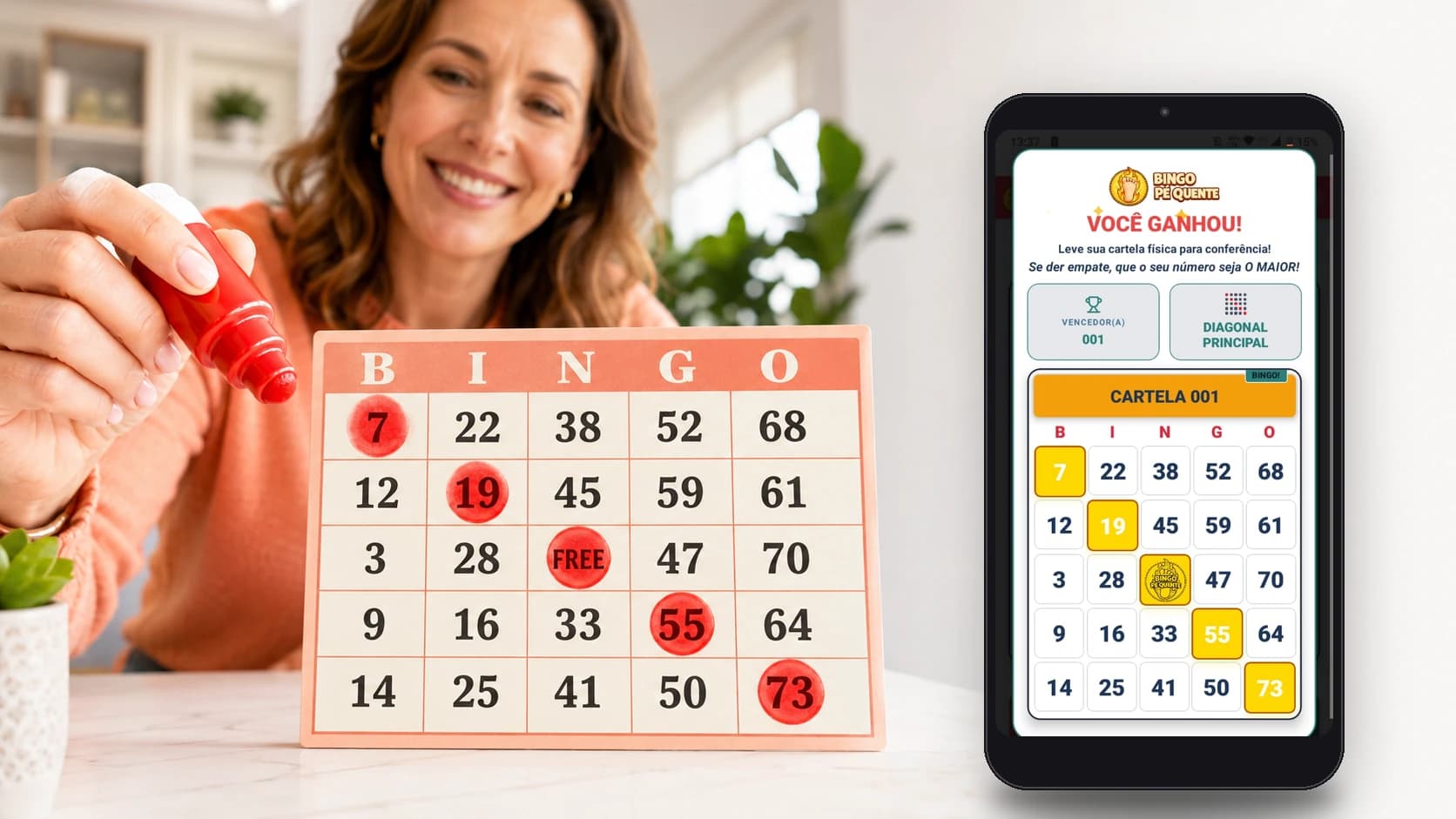
The rule: before each round, the organizer announces the pattern the card needs to form: a line, the four corners, the letter X, the picture frame, a stamp in the corner, a letter of the alphabet, a shape. Whoever forms the pattern first wins. How long it lasts: from 10 balls (a line with many cards) to 50 (a picture frame with few). When to use it: always. It's the basis of everything below, and changing the pattern each round is what keeps an afternoon of bingo alive.
Step by step: show the pattern to everyone (on a big card on the wall, on the TV or on the big screen); call the balls; check the BINGO square by square against the balls that have come out, only on the squares of the pattern; the rest of the card doesn't count. The 10 most played patterns are in bingo patterns.


Gather the ones you love for the next Bingo
See how simple it is to play and host with Bingo Pé Quente.

5 stars on Google PlayFree to start, no sign-up
2. Full card: coverall, blackout, full house
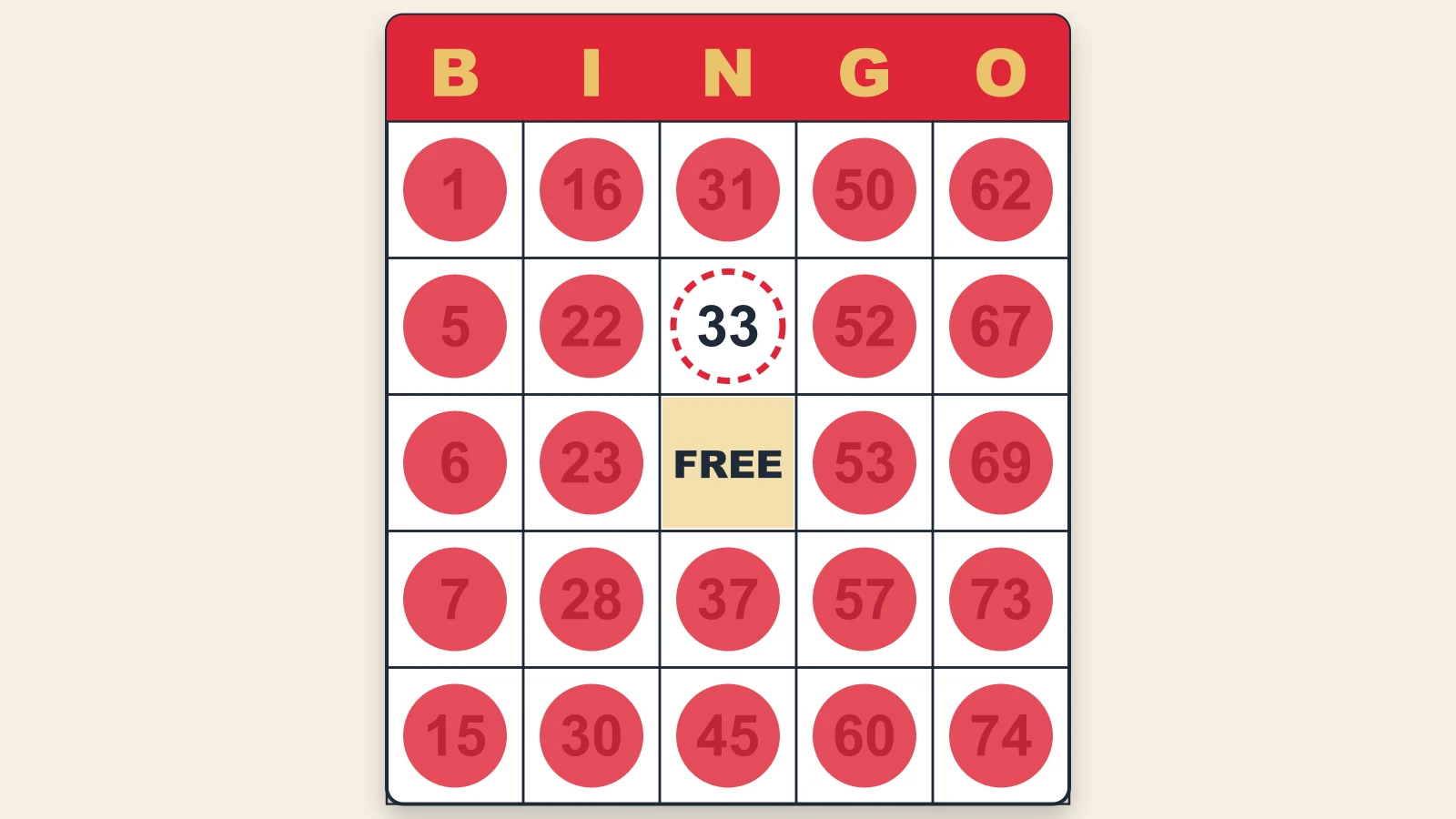
The rule: mark all 24 numbers. In the United States it's called coverall or blackout; in England, full house; in Brazil, "cartela cheia" (full card) or simply "bingo" (as opposed to "line"). How long it lasts: 50 to 65 balls with a full room; with few cards, it can go past ball 70. When to use it: as the last round of the night, with the biggest prize. It's the round where everyone is one or two squares away, and the tension rises with every ball.
3. Hardway: without the free space
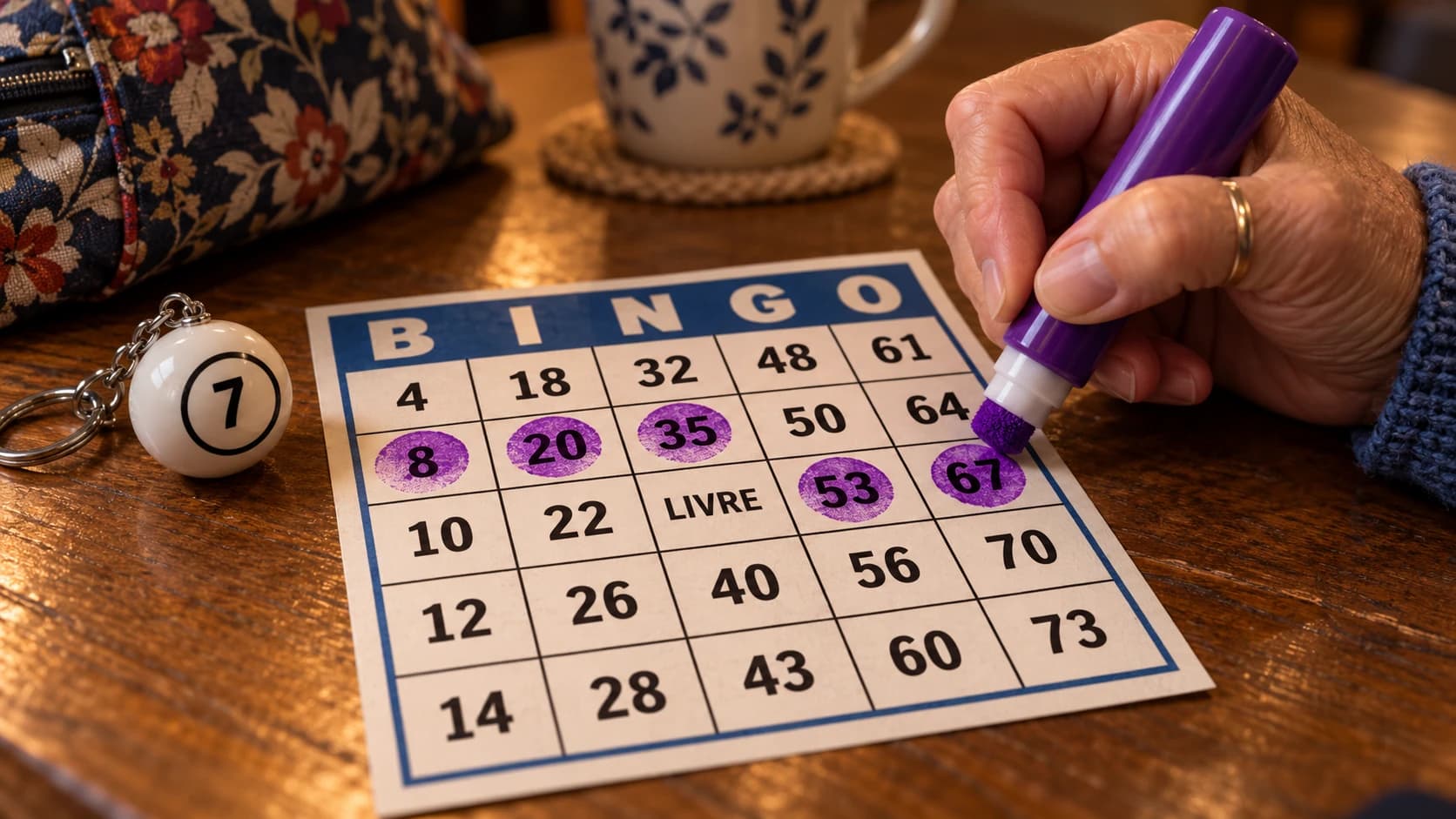
The rule: the pattern has to be completed without counting the FREE. The middle square becomes an empty square that helps nobody. It only makes a difference in patterns that go through the middle: X, the diagonals, the cross, the middle row, the N column, the blackout. For four corners, the picture frame and the stamp, hardway changes nothing. How long it lasts: about 2 to 5 balls longer than the normal version. When to use it: as the "elite" round of a session, with a slightly bigger prize, or as a tiebreaker: "the X counts, but only the hardway". In some American halls, the same round pays a normal prize for completing with the FREE and a bigger one for completing without it.
4. Wild bingo: the first ball unlocks a whole ending
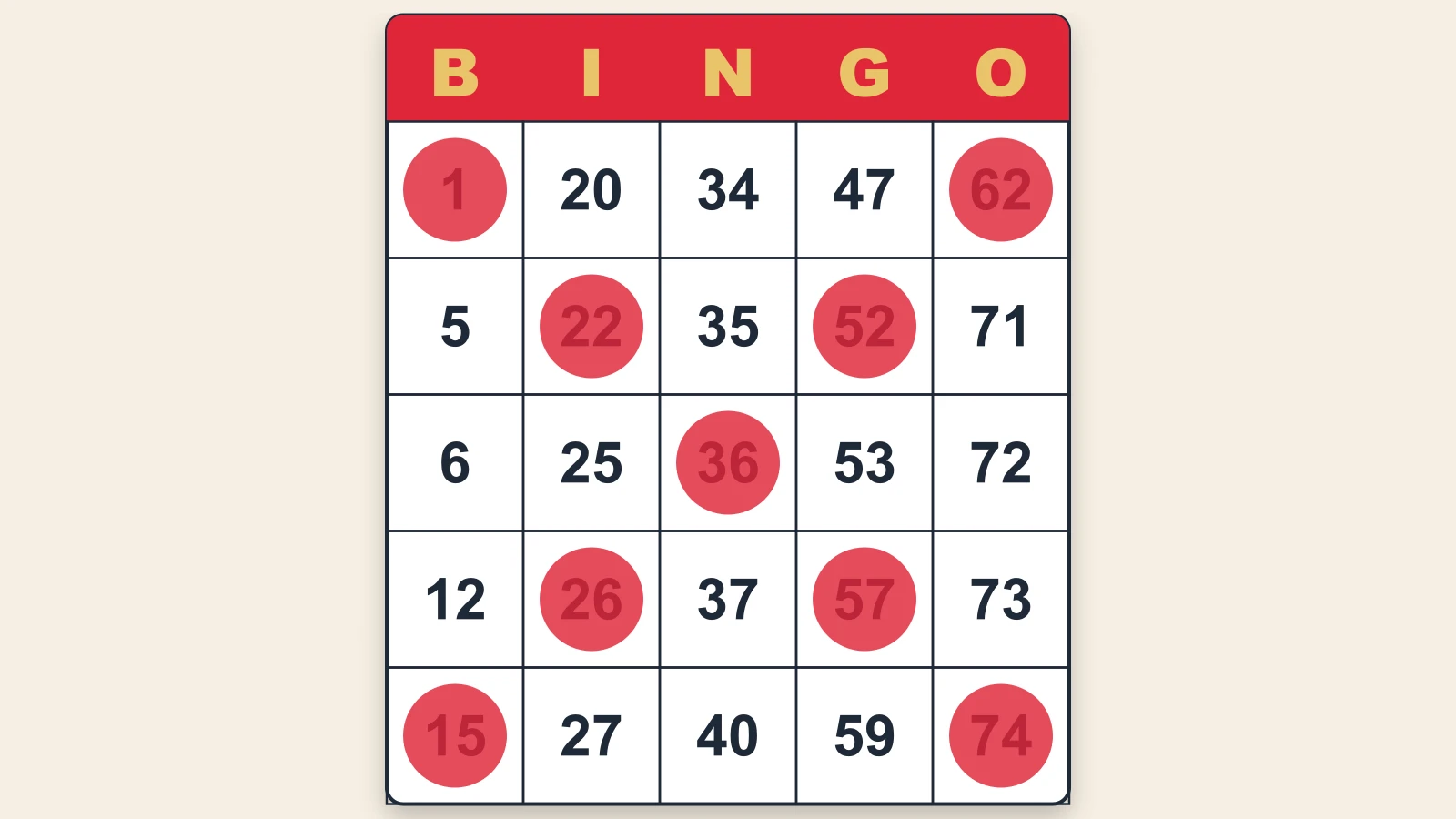
The rule: the first ball drawn sets an ending digit. If 22 comes out, every number ending in 2 (2, 12, 22, 32, 42, 52, 62, 72) is already marked on every card before the round really begins. Then the draw continues as normal, usually to a blackout. Variants: "forwards and backwards" (22 unlocks the numbers ending in 2 and also those starting with 2: 20 to 29) and "by column" (the first ball unlocks its whole column). How long it lasts: a blackout that would take 55 balls comes up in 35 to 45; in minutes, 5 to 12. When to use it: as a warm-up round, as a "last chance" at the end of the night, or when the kids are already getting restless.
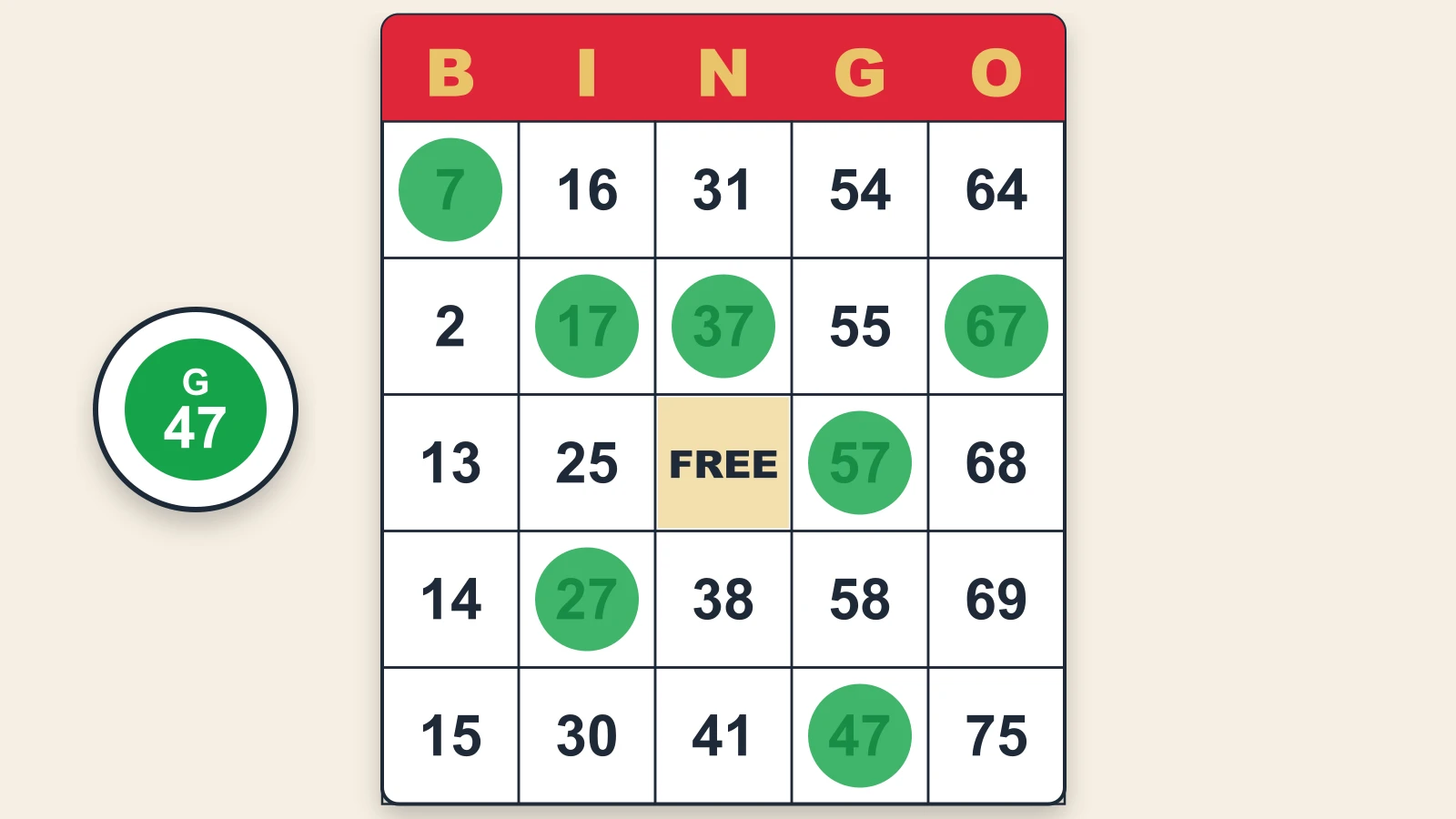
Step by step: the caller draws the first ball and announces: "47 is out: every number ending in 7 is marked!"; everyone marks their 7, 17, 27, 37, 47, 57 and 67; from then on, ball by ball, until the agreed pattern. When checking, the ending digits count as marked even though they never came out of the cage.
5. Pick your own numbers (U-Pick-Em): the birthday card
The rule: the player fills in their own card with whatever numbers they like, respecting the columns (B from 1 to 15, I from 16 to 30, N from 31 to 45, G from 46 to 60, O from 61 to 75). It's bingo with a lottery mindset: everyone plays with "their" numbers, birthdays, dates, the grandchildren's ages. How long it lasts: the same as the chosen pattern; a personalized card doesn't change your luck. When to use it: at a family party, where everyone builds a card with their own household's dates, or as a special card sold separately at a club bingo.
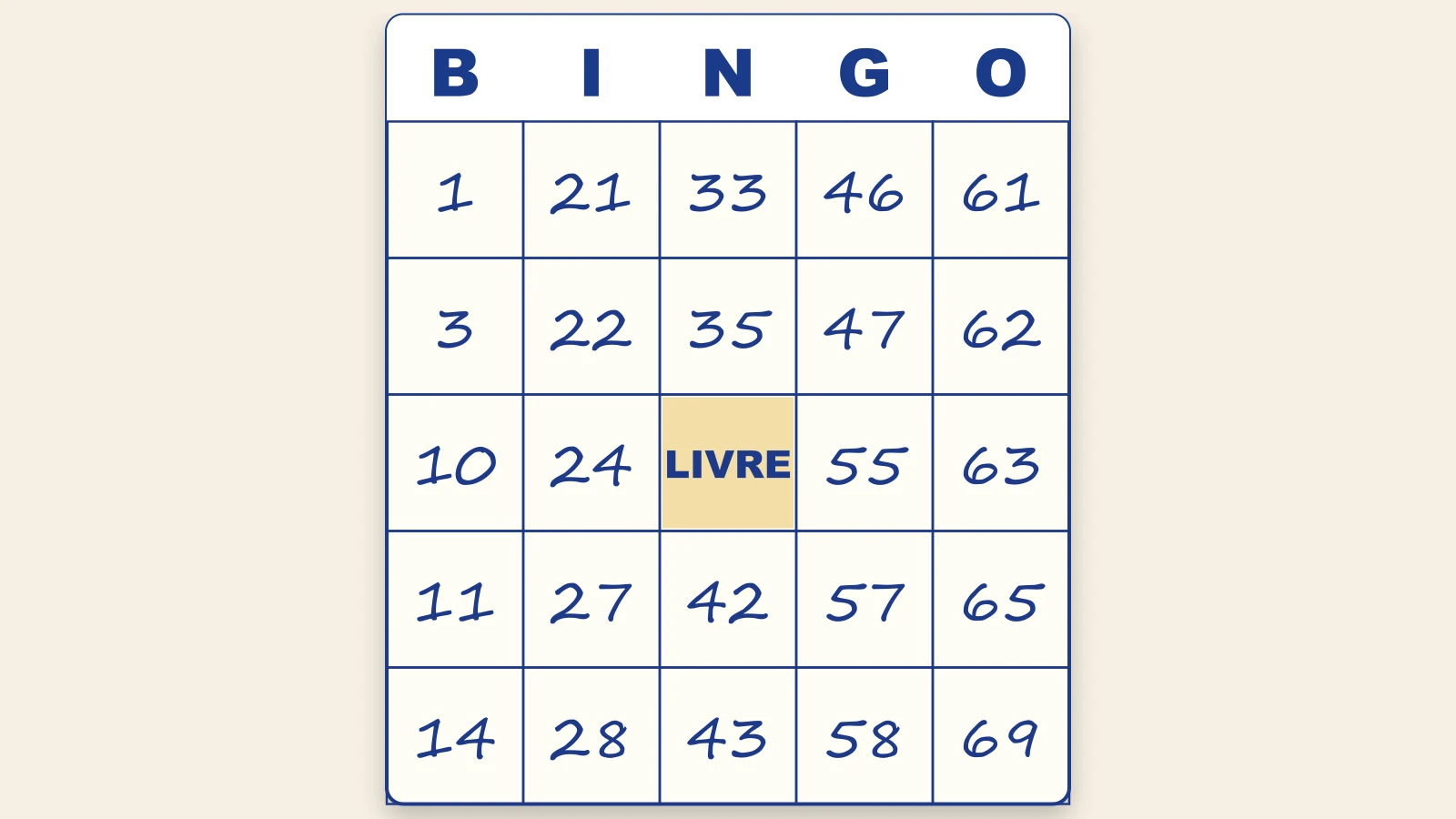
Step by step: hand out blank cards with the B-I-N-G-O header and the range of each column written underneath; everyone writes 5 numbers per column (4 in the middle one), with no repeats; the organizer checks that the numbers are in the right ranges before starting.
6. Bonanza: 43 balls at once
The rule: before the round, 43 to 48 balls are drawn and announced all at once, and everyone marks whatever they have on their card. Only then does the draw continue, ball by ball, until someone completes the blackout. How long it lasts: 5 to 10 minutes, against 25 to 30 for a normal blackout. When to use it: as a quick final round, when the night is running long and the big prize hasn't come out yet. In American halls, the Bonanza is sold as a separate card at the start of the session and runs alongside the other rounds: the 43 numbers stay up on a board, and the round "closes" at the end.
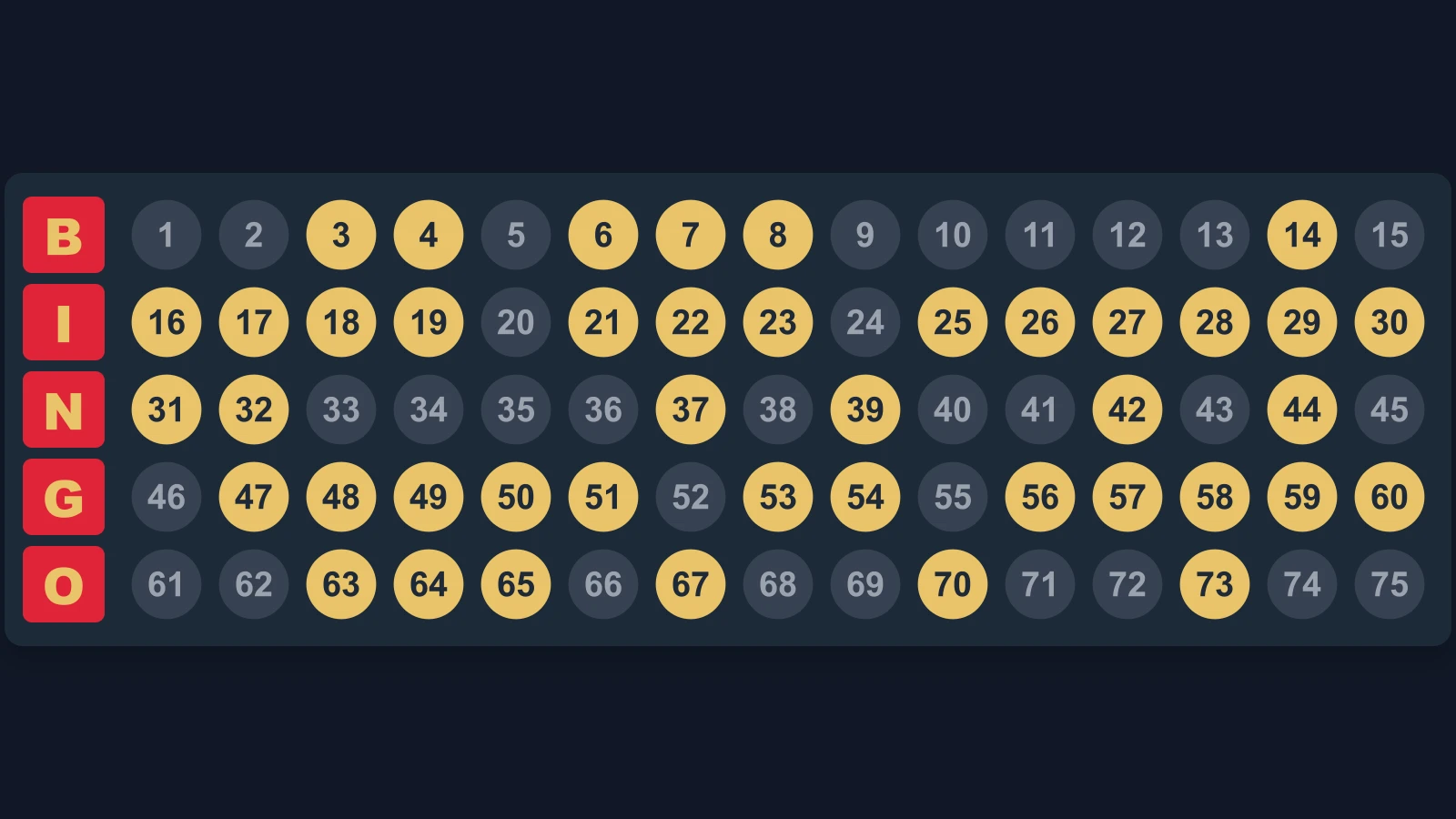
Step by step: draw 43 balls and write them on a board, no hurry; hand out the cards (or have everyone mark theirs); check who already has how many squares; keep drawing, one at a time, until the first blackout.
7. Quickie or blowout: a blackout at top speed
The rule: a blackout with the caller calling the balls at a fast clip, almost without pausing, one every 2 or 3 seconds. Whoever can't keep up misses the mark, and no ball is repeated. How long it lasts: 2 to 3 minutes. When to use it: as an electric break between two slow rounds, or as a speed contest among the youngest at the table. Careful: it's the first variant on the list that can leave out those who are slower to mark. At a table of mixed ages, give warning and let anyone who prefers to just watch.
8. Shotgun: first to mark wins
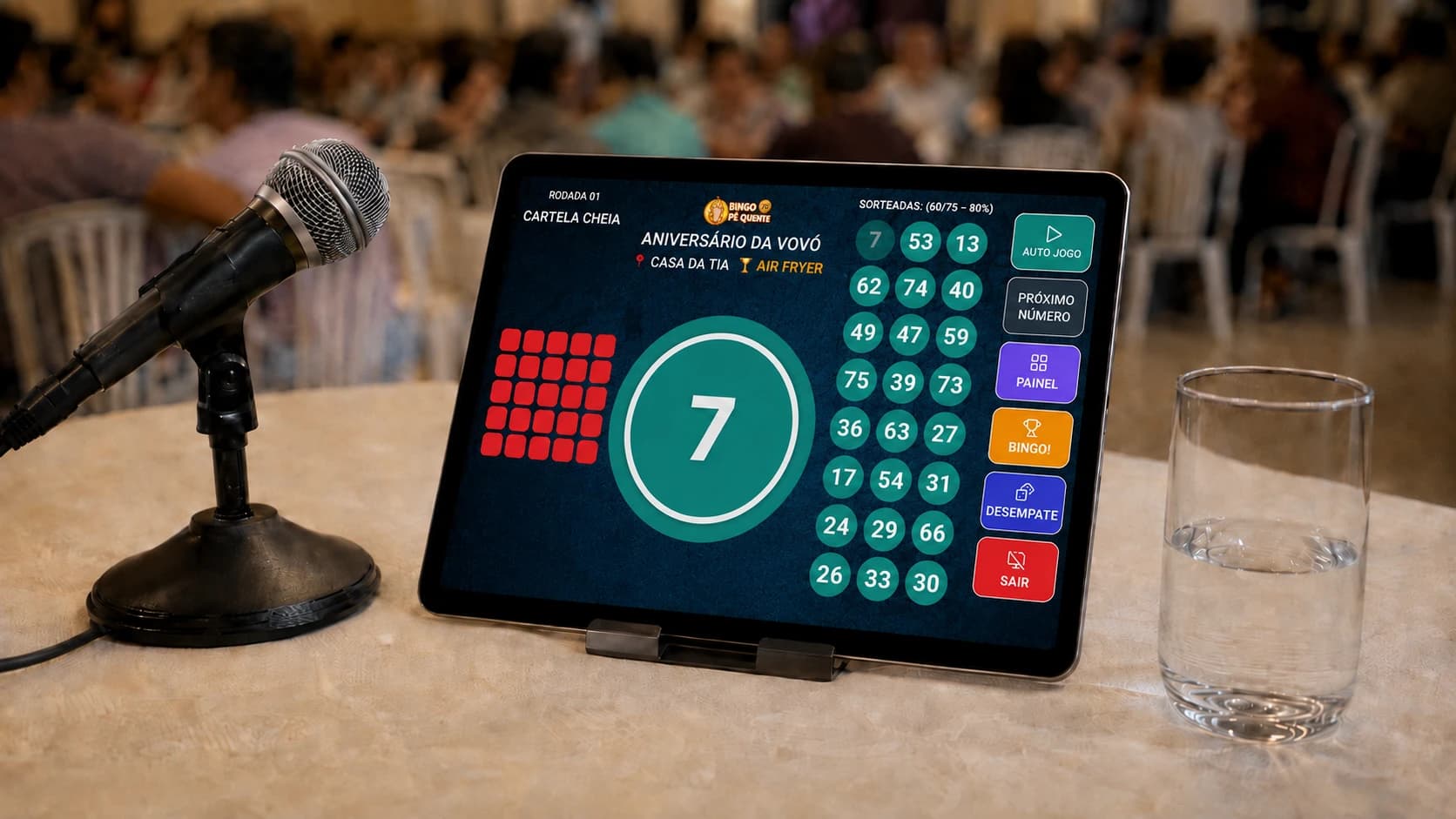
The rule: it's not quite bingo, it's reflexes. The caller draws a ball, and the first person to mark that ball on their own card and shout wins. No pattern, no build-up. How long it lasts: 30 seconds to 2 minutes. When to use it: as an icebreaker, as a tiebreaker (two people shouted BINGO on the same ball and nobody wants to split; the other ways are in a tie in bingo), or to settle who gets the last slice of dessert. It makes no sense to play alone, and it needs an attentive referee.
9. Early bird: the round for those who arrived early
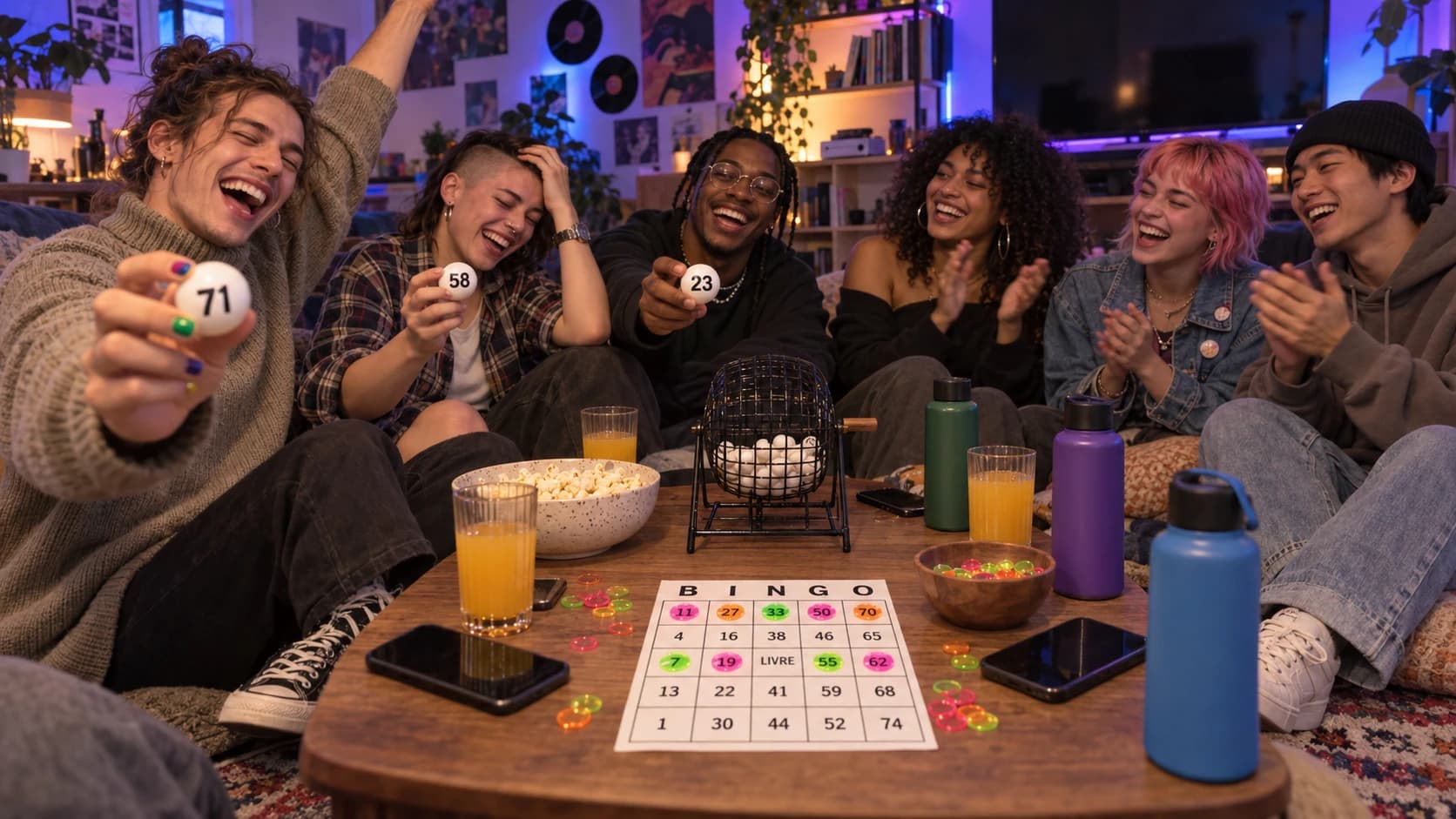
The rule: it's not a mechanic, it's a role within the session: the warm-up round, with a small prize, played before the official start time, for those who arrived early. It's usually light (a line, the four corners) and can combine with any variant above: wild early bird, 30-second early bird. How long it lasts: whatever the pattern calls for, usually under 10 minutes. When to use it: whenever the party has a set time and people who show up before it. It rewards punctuality and warms up the caller.
10. Progressive prize: blackout in N balls or fewer
The rule: the blackout earns an extra prize if it comes up within N balls (45, say). If nobody completes it within the limit, the round goes on as normal and pays the regular prize, but the extra is held back: in the next round, the limit goes up by one ball and the prize grows. In commercial halls, the carryover is money; at home and at the club, it's gifts that pile up: the panettone from the first round plus the mug from the second plus the gift basket from the third. How long it lasts: as long as a blackout. When to use it: when the group meets regularly: the prize nobody took last Sunday comes back bigger the next, and it's a reason to come back.

Step by step: announce the limit ("a blackout in 45 balls or fewer also takes the Main Prize"); count the balls out loud from 40 onwards; if someone completes it within the limit, they take both prizes and the round is over; if not, carry on to the normal blackout and note it down: "next round, 46 balls, and the prize adds up".
11. Crazy pattern: the shape counts in any rotation
The rule: the pattern counts rotated: the letter L upright, on its side, upside down or mirrored; the letter T pointing any way; the kite with its tail in any corner. How long it lasts: it shortens the round by up to a third, because there are four ways to close instead of one. It only makes a difference for asymmetrical patterns: X, picture frame, diamond and cross look the same rotated. When to use it: to speed up a good-looking pattern that, fixed, would take too long, and for the player who enjoys "hunting" for the shape on the card.
Upright L
The letter L as written: left column and bottom row.
Flipped L
Left column and top row. In crazy pattern, it counts too.
Upside-down L
Top row and right column.
Mirrored L
Right column and bottom row. Four ways to close the same pattern.
12. Consolation, 1TG and 2TG: a prize for those who almost made it
The rule: smaller prizes for those who were 1 or 2 numbers away from closing (one to go and two to go) when someone else shouted BINGO, or for the second person to hit. In online rooms, "1TG" is what the player types in the chat when one number is missing. How long it lasts: it doesn't change the round; it only changes how the prizes are shared out. When to use it: at a table with children and in a group that plays for fun, not to compete: it eases the frustration of those who came close and spreads the gifts around. It pairs well with "friendly bingo", where everyone brings a little present and everyone takes something home.
The ladder round: line, two lines, blackout
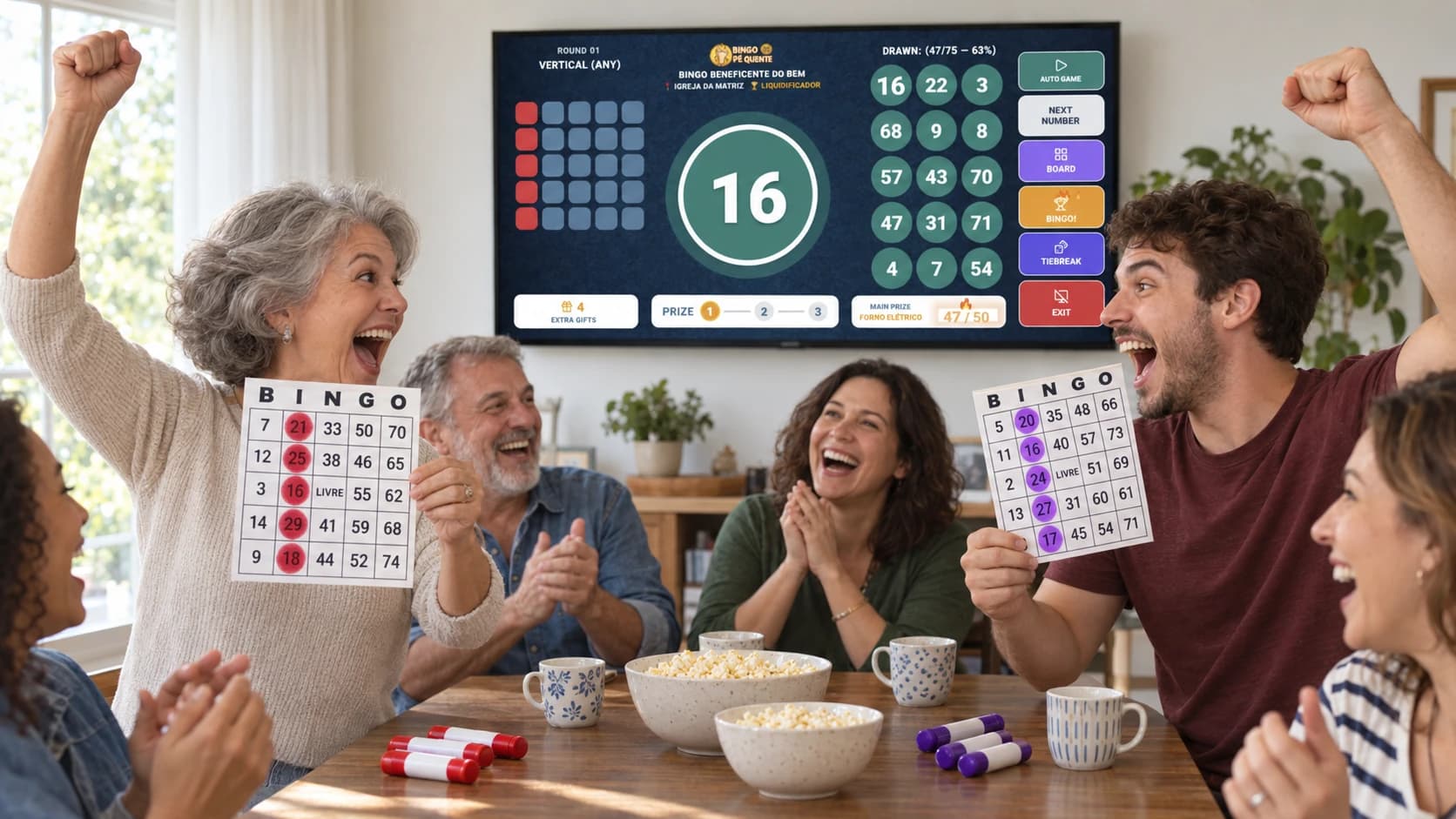
One more, which isn't an American variant but an inheritance from 90-ball bingo: the ladder round, with three prizes and the same cage rolling. First one line, then two lines, then the blackout, without clearing the card between prizes. In Brazil, it's the most common way to set up an afternoon of bingo, and it's what the app calls multi-prize. At a family table: the line wins the chocolate, two lines win the mug, the blackout wins the gift basket.
How to put together a session with these variants
A good afternoon of bingo alternates pace. A two-hour program, tested at family tables and at clubs:
- Early bird (10 min): four corners, small prize, for those who arrived early.
- Three pattern rounds (45 min): a line, a stamp in the corner, the letter X. Change the pattern every round.
- Wild (10 min): blackout with the first ball marking the ending digits. Wakes up the table.
- Shotgun (2 min): just for laughs, with a silly prize.
- Ladder (30 min): line, two lines, blackout, with the three biggest prizes.
- Progressive (whatever's left): a blackout in 45 balls or fewer takes the Main Prize; if nobody gets it, it comes back bigger at the next get-together.
Which of these variants you can play with Bingo Pé Quente (and how)
Bingo Pé Quente draws and calls the 75 balls on the CALLER tab, with a full-screen mode for the TV, and keeps track of paper cards on the PLAY tab. The card is always the 5×5 with a free space, and checking the BINGO is the caller's job. With that in mind, variant by variant:
Already the app's game, as it is:
- Pattern bingo: choose the pattern under GAME PATTERN. There are 18 classics in the free tier and over 30 exotic ones in PARTY. On PLAY, the app shows how many squares each card is missing for the current pattern.
- Full card: that's the Blackout pattern, in the free tier.
- Ladder (line, two lines, full card): that's PARTY's multi-prize mode: 3 phases, each with its own pattern, and the app moves on by itself when a phase is won. Complete Line, Two Lines and Blackout, for example.
- Progressive prize: that's the Main Prize in multi-prize mode. You set the base number of balls (45, say) and, every round in which nobody closes within the limit, the app raises the limit on its own. The Turbo Prize lets up to 4 gifts pile up, one per round without a winner. A prize is a gift, never money.
- Early bird and quickie: the automatic draw has an adjustable gap between balls, from 3 to 60 seconds (three settings in the free tier, eleven in PARTY). For the warm-up, a quick pattern; for the blowout, 3 seconds and Blackout.
- Crazy pattern (rotation): the selector lets you combine two or more patterns, and any of them counts. In GRAND BINGO, Build your own pattern paints any shape on the card, and you can save the L in all four positions and combine the four.
- Consolation and 1TG: on the PLAY tab, the app lets you know when your card is one number away from closing. The highest-ball tiebreaker is on CALLER, free in every tier. The consolation prize is up to the table.
Possible, with a tweak:
- Pick your own numbers (U-Pick-Em): on the PLAY tab, Type builds a card with whatever numbers you want, as long as each one is within its column's range; the app rejects any number out of range or repeated. On paper, everyone writes their own, and the app only keeps track.
- Bonanza: the caller draws the first 43 balls all at once on CALLER (the automatic draw at 3 seconds does it in a little over 2 minutes), and only then hands out the cards; on PLAY, everyone types in the 43 balls and keeps following along.
- Shotgun: the app draws the ball; whoever marks first wins. The referee is the caller's eye.
Stays on paper (the app doesn't do it):
- Hardway: the free space always counts as marked in the app. To play without the FREE, agree it at the table and check on the paper card.
- Wild bingo: the app doesn't pre-mark numbers by ending digit. You can do it by hand: the caller announces the first ball, everyone marks the ending digits on paper, and the game goes on with the app drawing. On PLAY, type in the seven numbers of that ending as if they had come out.
Quick questions
- What is hardway bingo? The round in which the free space in the middle doesn't count: the pattern has to be completed with drawn numbers only. It only matters for patterns that go through the center.
- What is wild bingo? The first ball drawn sets an ending digit, and every number with that ending starts out marked. It shortens a blackout by 10 to 20 balls.
- What is bonanza bingo? The round in which 43 or more balls are drawn all at once before it starts, and the normal draw only completes what's missing for the blackout.
- What is coverall or blackout? The full card: marking all 24 numbers. It's the round with the big prize.
- What does 1TG mean in bingo? One to go: one number short of closing. 2TG, two short. In online rooms it's what you type in the chat; in some, it earns a consolation prize.
- What is a progressive prize in bingo? An extra prize for a blackout that comes up within N balls. If nobody closes within the limit, the limit goes up and the prize grows in the next round.
Twelve ways to win, one card. Pick the pace for your table.