Bingo around the world: 16 countries and cultures
Here bingo stops being a rulebook and becomes an accent. Each country took one of the formats (75 balls, 90 balls, or neither) and poured into it its own party, its own caller, its own way of shouting and its own number nicknames. In Naples, 23 is the mother-in-law. In London, 88 is two fat ladies. In Japan, when one number is missing, the whole room shouts "Reach!". In Mexico there are no numbers at all.
This is part 3 of 5 of the series on the types of bingo. Part 1 explains the formats by number of balls, in types of bingo; part 2, the hall variants of 75-ball; part 4, themed bingo; part 5, bingo by occasion. Here, the trip around the world, country by country, with what's unique about each one and a way to play "their way" at your own table.
Two forces explain the map. Wherever the British Empire reached (Ireland, Australia, India, South Africa), bingo is 90-ball. Wherever the influence was American (Canada, the Philippines, Japan, today's Brazil), it's 75-ball. And wherever a drawing game already existed before Anglo bingo arrived (Italy, Mexico, Russia), the local game survived under its own name.
16
countries and cultures on this trip around the world
2
big families: 75 balls (American) and 90 balls (British)
3
games with their own name that are neither: Lotería, Tombola, Loto
1
shout at the end, in any language
The UK and Ireland: the bingo club
Format: 90 balls. The ritual: British bingo is a club, with a hall seating hundreds, a professional caller with a rhythmic voice and a session that lasts the whole evening: several rounds of line, two lines and full house, plus a national linked game that joins hundreds of halls at the same time. Half of British adults have played at some point; in the 1960s, when the law allowed the game in clubs, neighborhood cinemas turned into bingo halls and working-class families' Saturday nights moved there. In Ireland, bingo arrived the same decade through the parishes, and in the countryside it's described as a remedy for loneliness.
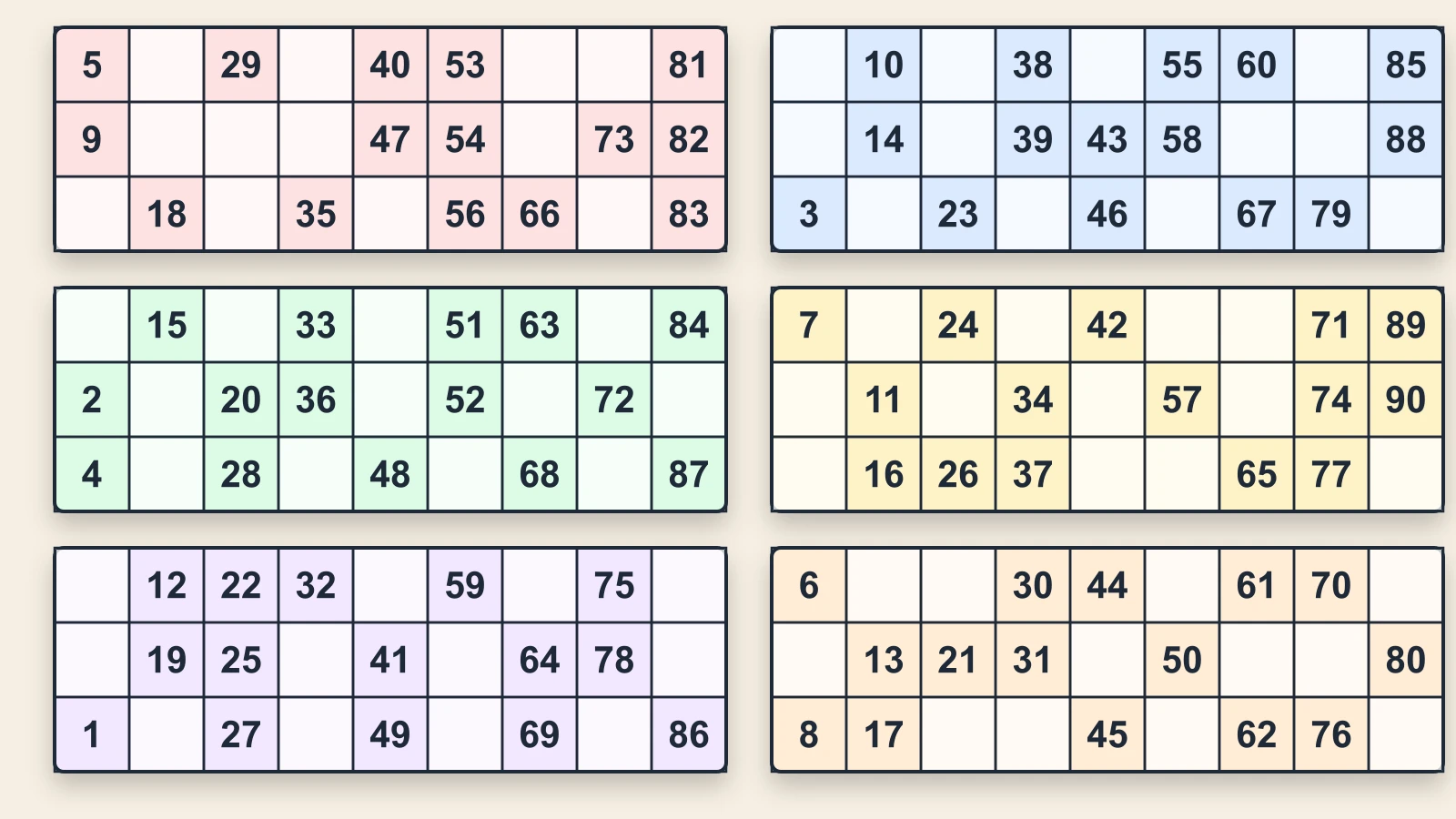
What's unique: the rhyming calls ("two fat ladies, 88"; "legs eleven, 11"; "two little ducks, 22"; "Kelly's eye, 1"), some from the trenches of the First World War, and the church-like silence during the calling: nobody talks, so as not to miss a ball. The shout: "line!" for the line and "house!" or "bingo!" for the full house. At your table: a ladder round with three prizes and a caller who has to use a bingo call on every ball.


Gather the ones you love for the next Bingo
See how simple it is to play and host with Bingo Pé Quente.

5 stars on Google PlayFree to start, no sign-up
The United States and Canada: the charity hall
Format: 75 balls. The ritual: born in 1929 at carnivals, it grew in churches, schools and veterans' halls, where it's the classic fundraiser: the parish sells the cards, pays the prizes and keeps the difference for its work. A session has twenty scheduled rounds, each with its own pattern, printed on a program the player receives at the door. In the United States, bingo was also the seed of Native American casinos: in the 1970s the tribes opened high-prize bingo halls, and the 1988 federal law that regulated the matter put bingo in a category of its own, under tribal control. In Canada, the model is charity, with licensed halls and the revenue going to institutions.
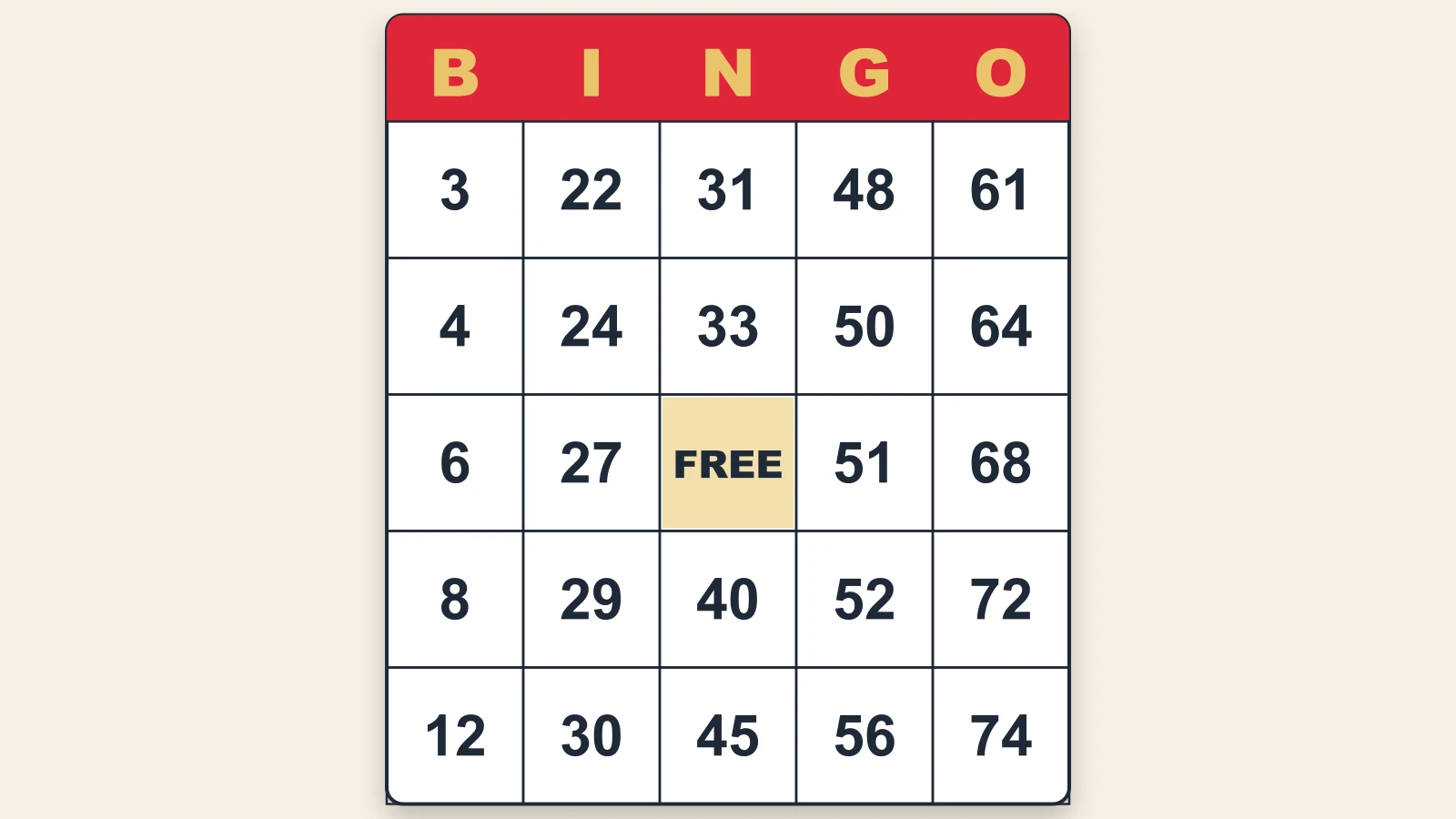
What's unique: the dauber (the ink marker with a sponge tip), the strip of disposable cards, the lit-up board showing the round's pattern and the caller who says "under the B, 7". The shout: "bingo!", and the floor worker who runs to the table to read the numbers out loud. At your table: a printed program with the patterns for each round, so everyone knows what's coming.
Brazil: from the 90-ball hall to the 75-ball table
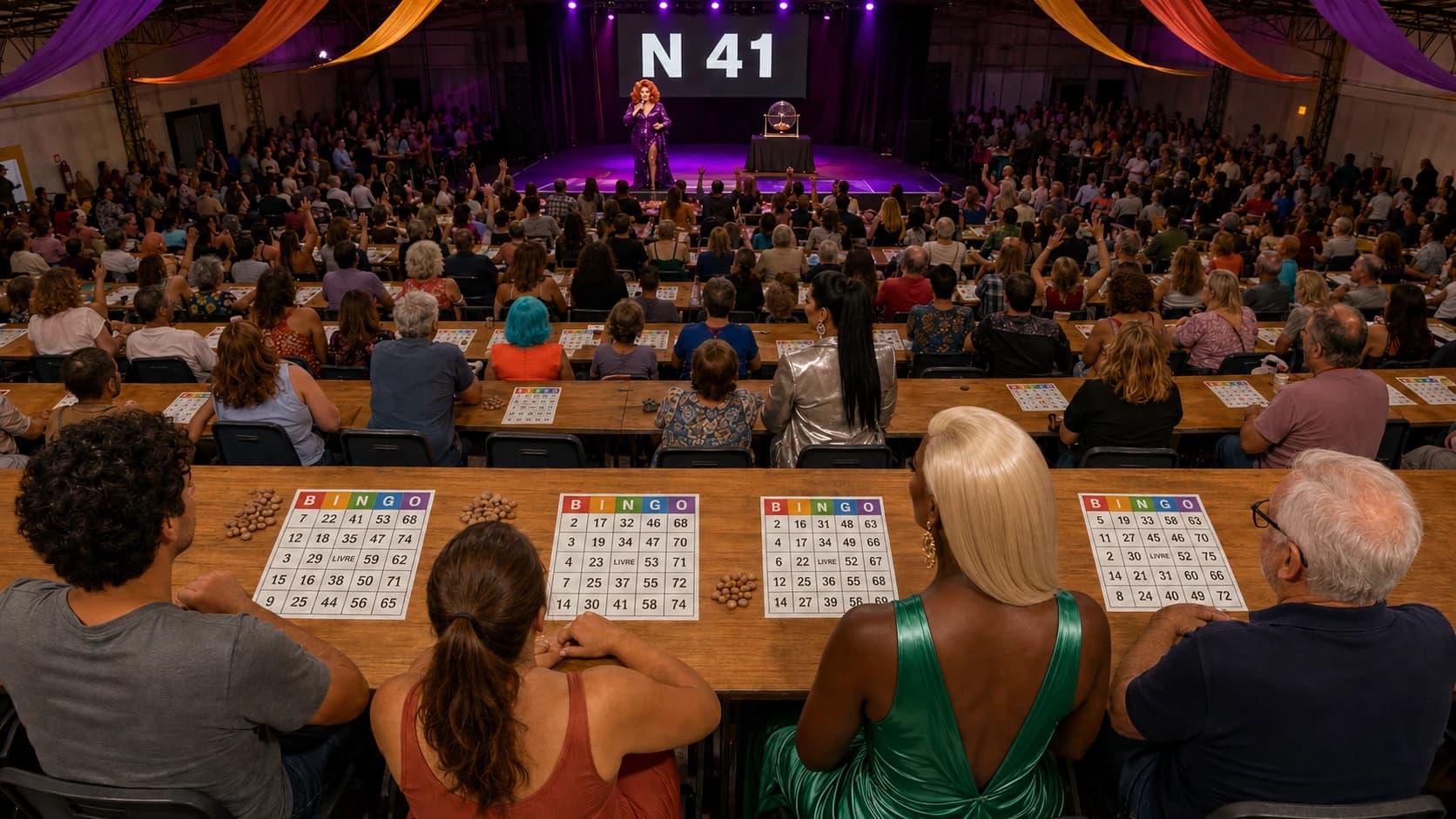
Format: 75 balls today; 90 balls in the commercial bingo halls of the 1970s to 1990s. The ritual: Brazilian bingo lives at the school fair, the club, the seniors' community center, the Festa Junina (the June festival), the living room and, more and more, the bar. Cards are marked with beans, corn kernels or bottle caps, and the prize is a gift: the basket, the towel, the panettone, the giveaway donated by the shops down the street. The typical round is a ladder (line, two lines, blackout), and the afternoon ends with the blackout worth the big prize.
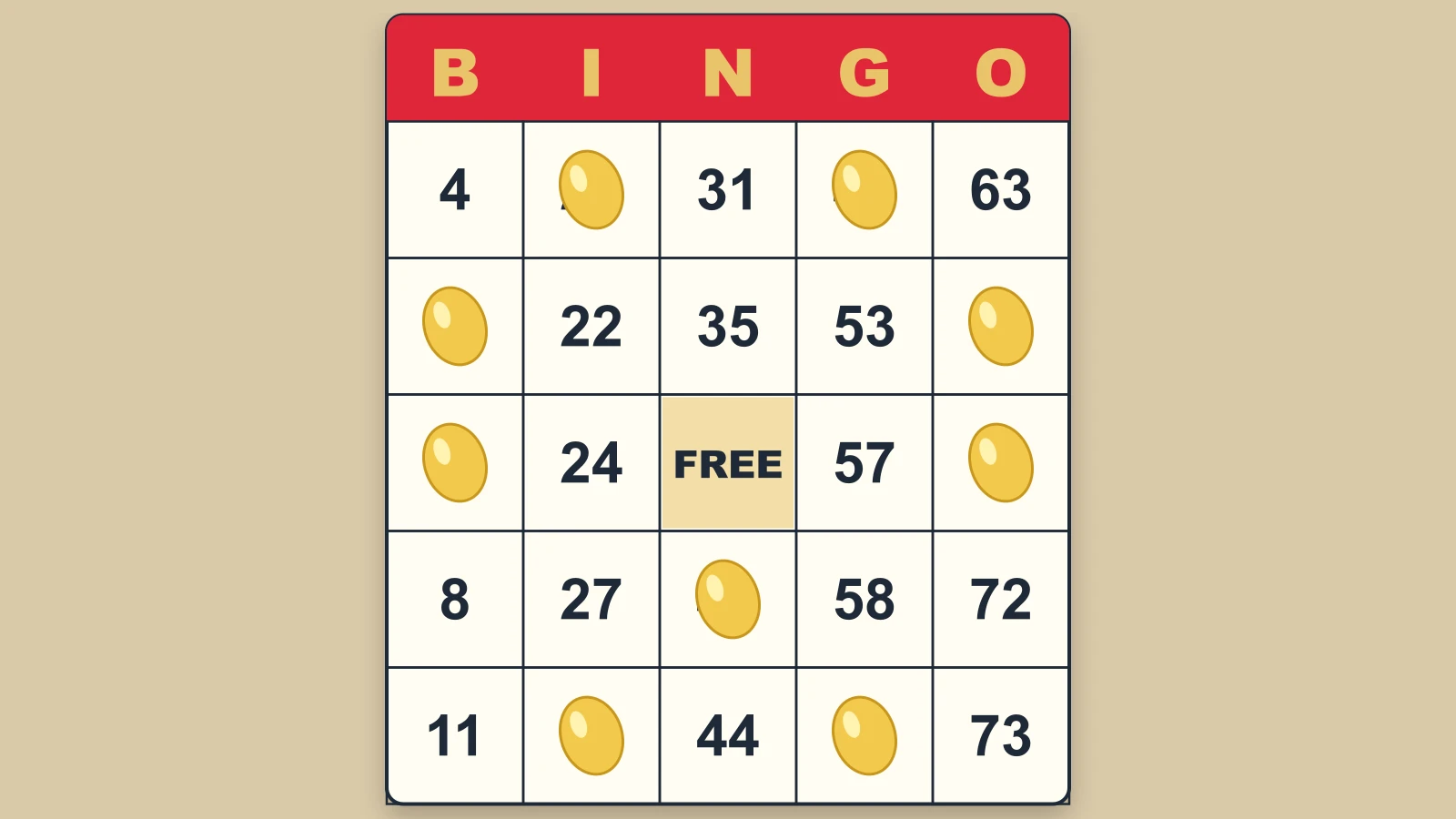

What's unique: the caller who spins out the calls ("twenty-two: two little ducks on the pond"; "thirty-three: the age of Christ"; "ten: everyone's favorite") and the "pé quente" (literally "hot foot", the lucky player) who wins twice in the same afternoon. And a line nobody crosses: bingo for money is illegal gambling under article 50 of Brazil's Misdemeanors Act. At a family table, nobody pays to play and the prize is bought or donated. The full explanation is in is bingo gambling?. The shout: "BINGO!", and sometimes "linha!" (line) on the first step.
Mexico and the Hispanic community: Lotería
Format: none of the above. Lotería doesn't use numbers: it uses a deck of 54 illustrated cards, each with a name, a number and a picture. It came from Italy to New Spain in 1769 and took its definitive form in 1887, with the illustrations of Don Clemente Jacques, which today are part of Mexico's visual heritage: El Gallo (the rooster), La Dama, El Catrín (the dandy), La Sirena, El Diablito, La Muerte, El Sol, La Luna, El Árbol, La Chalupa, El Corazón.
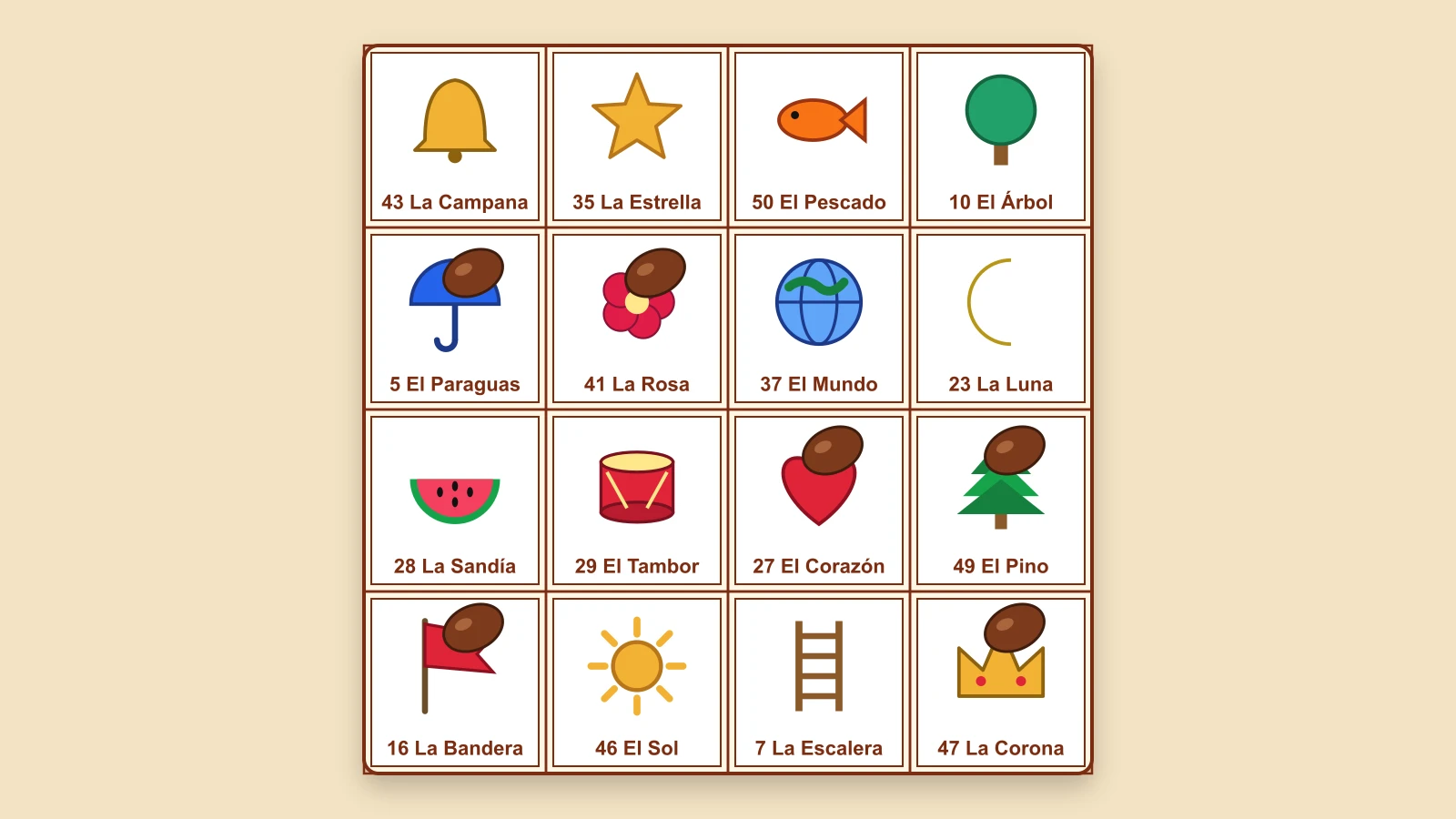
How it's played: each player has a tabla, a 4×4 grid with 16 pictures. The cantor turns over the cards from the pile and, instead of saying the name, sings a little verse or riddle: "El que le cantó a San Pedro, no le volverá a cantar" is the rooster; "Con los cantos de sirena, no te vayas a marear" is the mermaid; "La muerte siriqui siaca" is death. Whoever spots the picture on their tabla puts a bean on it. Before the game, the winning shape is agreed: a line (across, down or diagonal), the four corners, the center (the 4 middle squares) or the full tabla. The shout: "¡Lotería!" or "¡Buenas!".
What's unique: it's the game of the fair, the family party and the quinceañera, and, in the United States, a symbol of Mexican-American identity, reinterpreted by artists in "millennial" and feminist editions. At your table: a Lotería deck is easy to buy online; without one, you can make a home-made picture bingo, as we explain in part 4.
Italy: the Tombola of Christmas Eve dinner
Format: 90 balls, 3×9 card (the cartella). The ritual: Tombola was born in Naples in 1734, when King Charles of Bourbon banned the lotto during the year-end holidays and families brought the draw indoors. To this day it's played on Christmas Eve and New Year's Eve, with grandparents, children and grandchildren at the same table, the numbers pulled from a little bag or a wicker drum (the panariello) and checked on the tabellone, the big board with all 90 numbers, kept by whoever is calling.
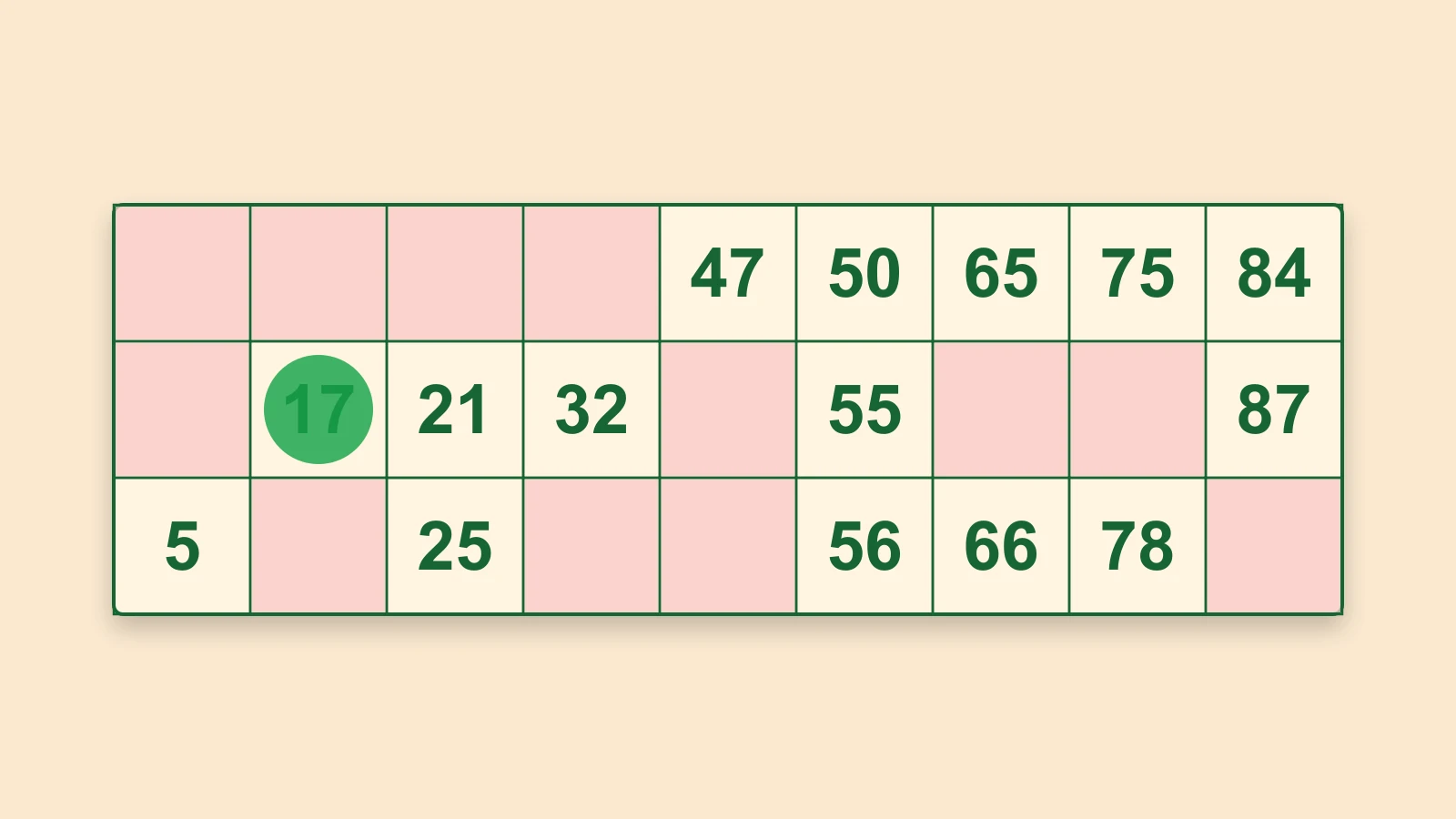
How you win: there are five prizes in a ladder, finer-grained than the three of British bingo. Ambo (2 numbers on the same row), terna (3), quaterna (4), cinquina (the whole row, 5) and tombola (the full card). The prizes are symbolic: walnuts, tangerines, sweets, small coins, whatever the family "bank" gathered selling the cards for pennies. The shout: "ambo!", "terna!"… and "tombola!" at the end.
What's unique: the Neapolitan Smorfia, the table that gives every number a meaning, drawn from the tradition of interpreting dreams: 9 is anger, 14 is the betrayed man, 23 is the mother-in-law, 33 is the years of Christ, 47 is the dead man, 48 is the dead man who talks, 77 is women's legs, 90 is fear. Whoever pulls the ball calls the meaning, not the number, and the whole table laughs. At your table: a list of nicknames of the family's own, one per number, read out loud with every ball. Brazil's bingo calls are our own slice of Smorfia.
Spain and Portugal: the bingo hall and the festival bingo
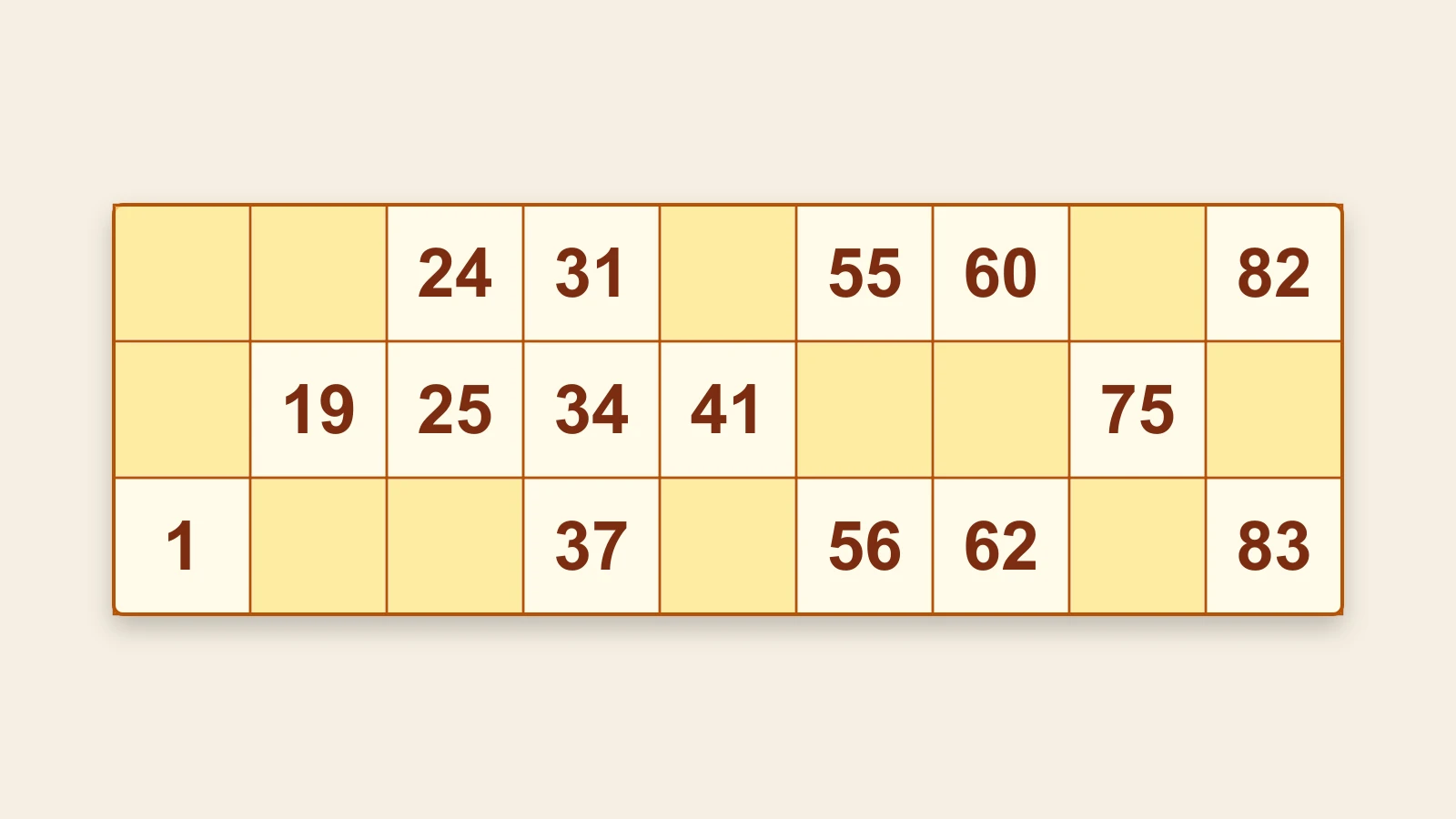
Format: 90 balls. The ritual: Spain legalized bingo halls in 1977, right after the dictatorship, and they became social spaces, with a restaurant, music and paper cards bought at the table. The two traditional hall prizes are the línea and the bingo (full card). Outside the halls, village-festival and neighborhood-association bingo follows the same format, with a Christmas hamper as the prize. In Portugal, halls have been regulated since the 1980s and the game is the same 90-ball one, with "linha" and "bingo". The shout: "¡línea!" and "¡bingo!".
Scandinavia: TV bingo
Format: a card bought at the supermarket or the gas station, played at home in front of the television. The ritual: Sweden's BingoLotto has been on the air since 1989: the host draws the balls live on Saturday night, the whole country marks from the sofa and whoever closes calls the show. At its peak, in 1995, it had 4.5 million viewers, the biggest audience in Swedish TV history, and the money from the cards funds the country's amateur sports. Norway and Denmark copied the format. What's unique: bingo as a family show, with the living room standing in for the hall. Swedes also have a tradition of playing bingo on the day before Christmas Eve.
Russia and Eastern Europe: the Loto of the little barrels
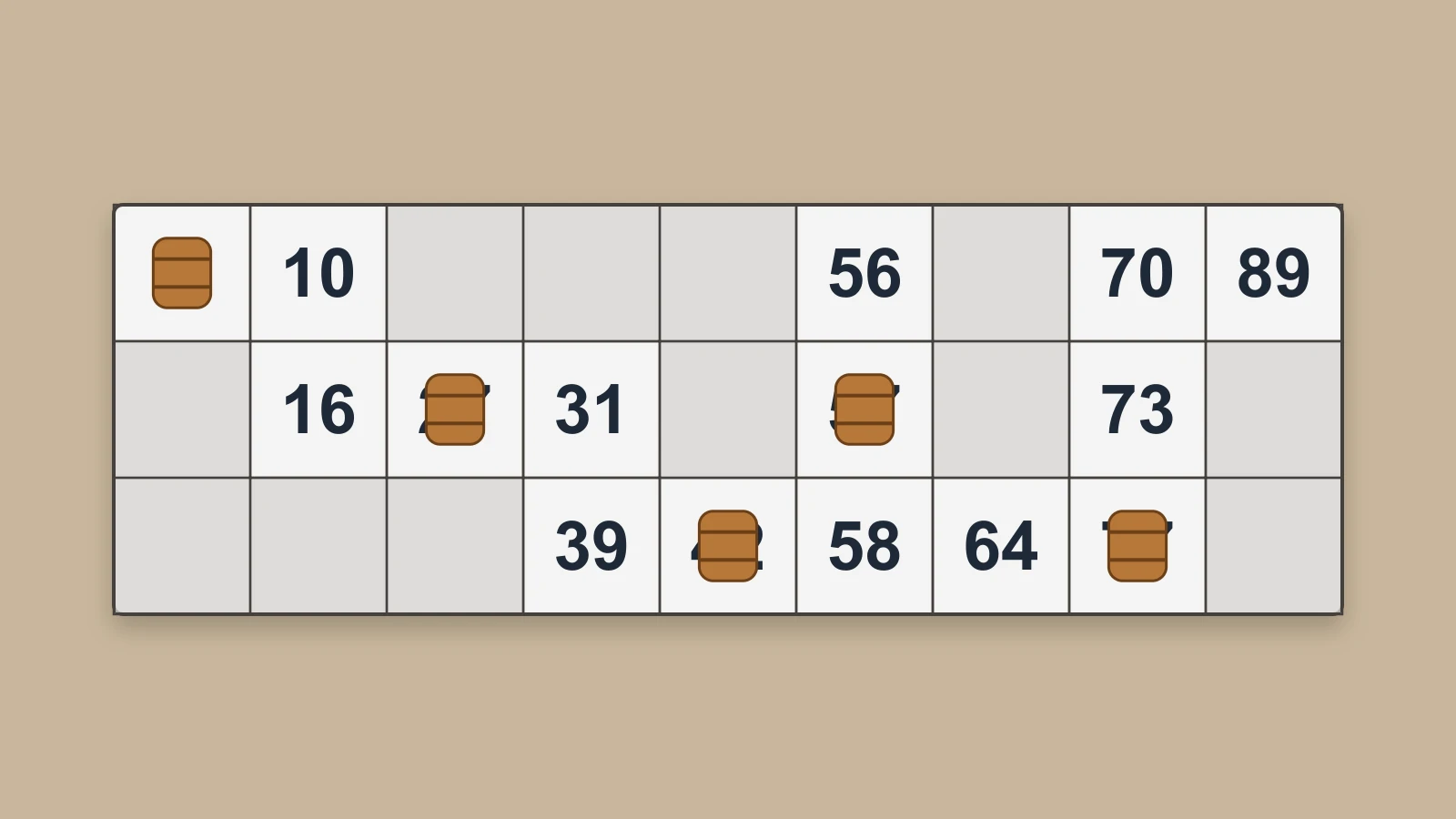
Format: 90 numbers, 3×9 card. The ritual: Russkoe Loto is played with 90 little numbered wooden barrels inside a cloth bag: the caller pulls one at a time, without looking, and players cover the numbers with chips or buttons. It's the game of the dacha, the kitchen table and winter nights, passed down from grandmother to grandchild, and the televised version has been a national lottery since the 1990s. What's unique: the wooden barrel instead of the ball, and the caller hiding their hand in the bag. At your table: 75 folded slips of paper in a little cloth bag give the same effect.
Germany and the Netherlands: classroom Lotto and neighborhood kienen
Format: assorted cards. The ritual: in Germany, bingo is a classroom and seniors' club tool: times-table cards, vocabulary cards, historical-date cards, with the shout of "Volltreffer!" (bull's-eye) instead of "bingo". In the Netherlands, kienen is the community-hall and fundraising bingo, often with a themed card and a prize in goods. (Mind the translation: "Dutch bingo", in English, is something else, the game two Dutch people play when they discover relatives in common.)
Australia and New Zealand: club Housie
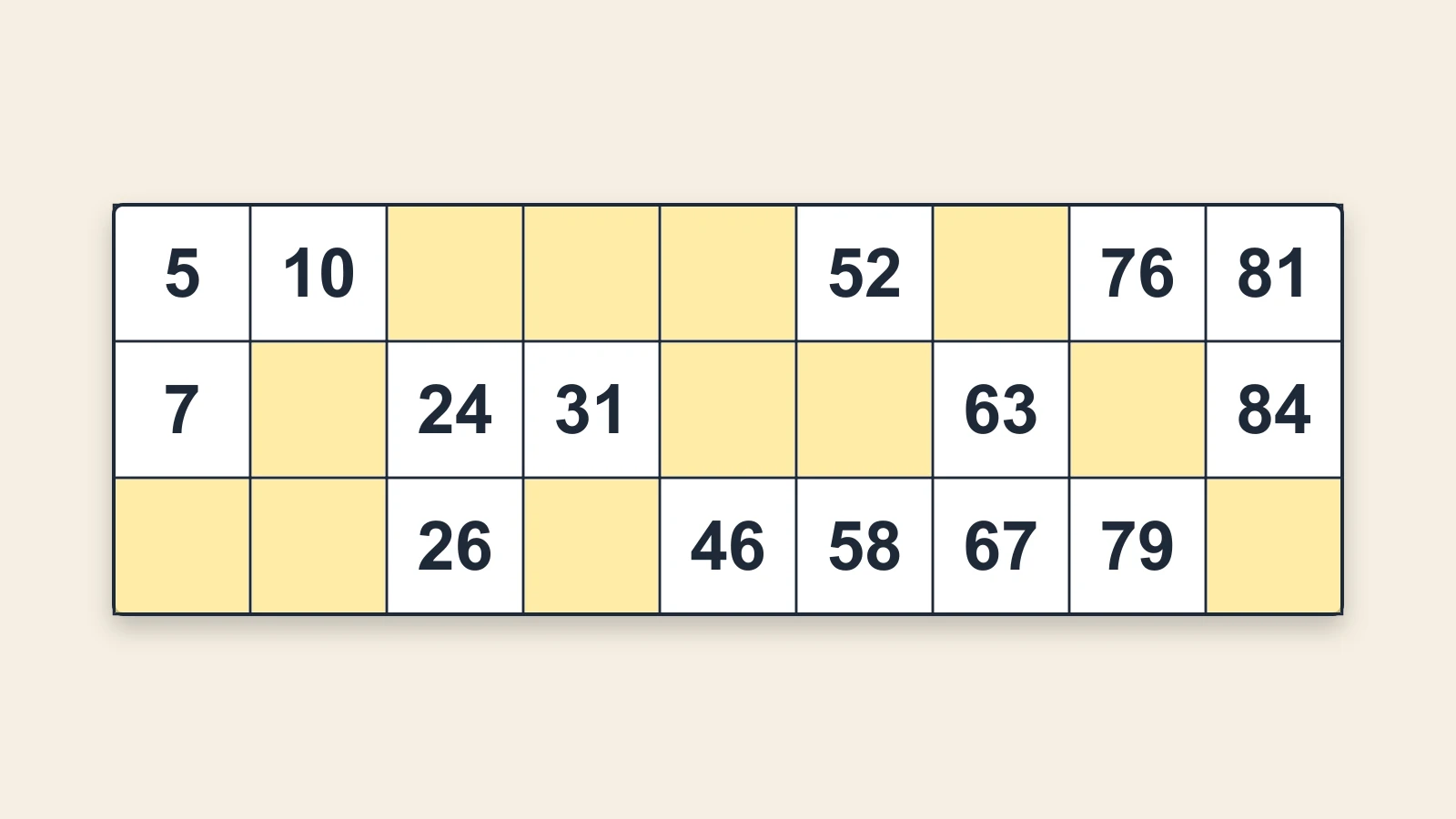
Format: 90 balls. The ritual: there, bingo is called Housie, and it lives in sports clubs, veterans' clubs (the RSLs) and parishes, as a fundraiser. It boomed in the 1970s, got a TV show in the 2000s and is played at a relaxed pace, with the same ladder of line, two lines and full house. The shout: "house!". What's unique: the club as the home of the game: Tuesday housie is a neighborhood institution, with tea and sandwiches.
India: party Tambola
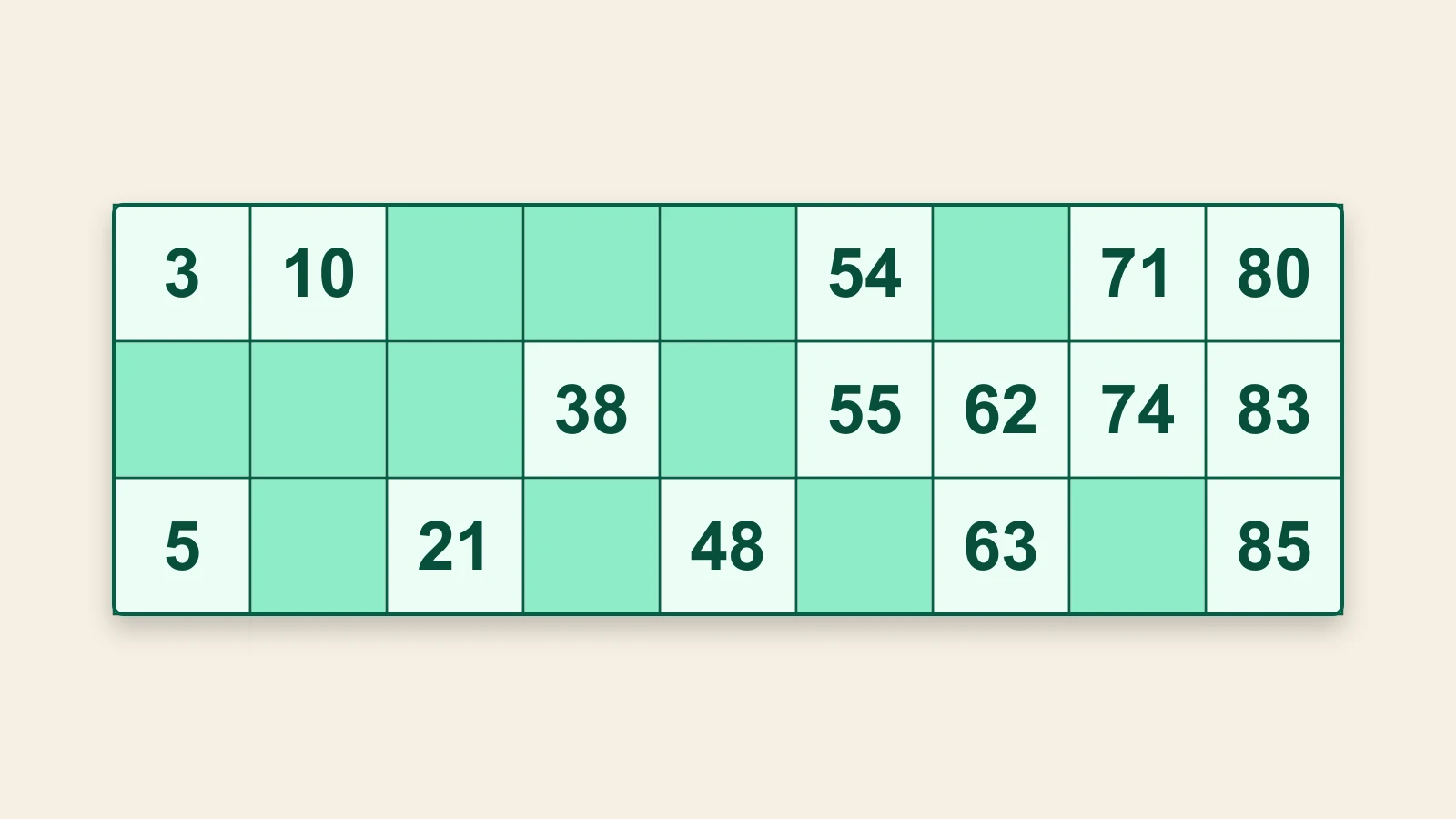
Format: 90 balls, 3×9 ticket with 15 numbers, marked with a pen. The ritual: Tambola (or Housie) is one of India's best-loved group games: it shows up at kitty parties (the monthly get-togethers of women friends, where each one chips into a fund that one of them takes home each time), at weddings, at office parties and at Diwali. The host sells the tickets for a token amount and the total becomes the prizes.
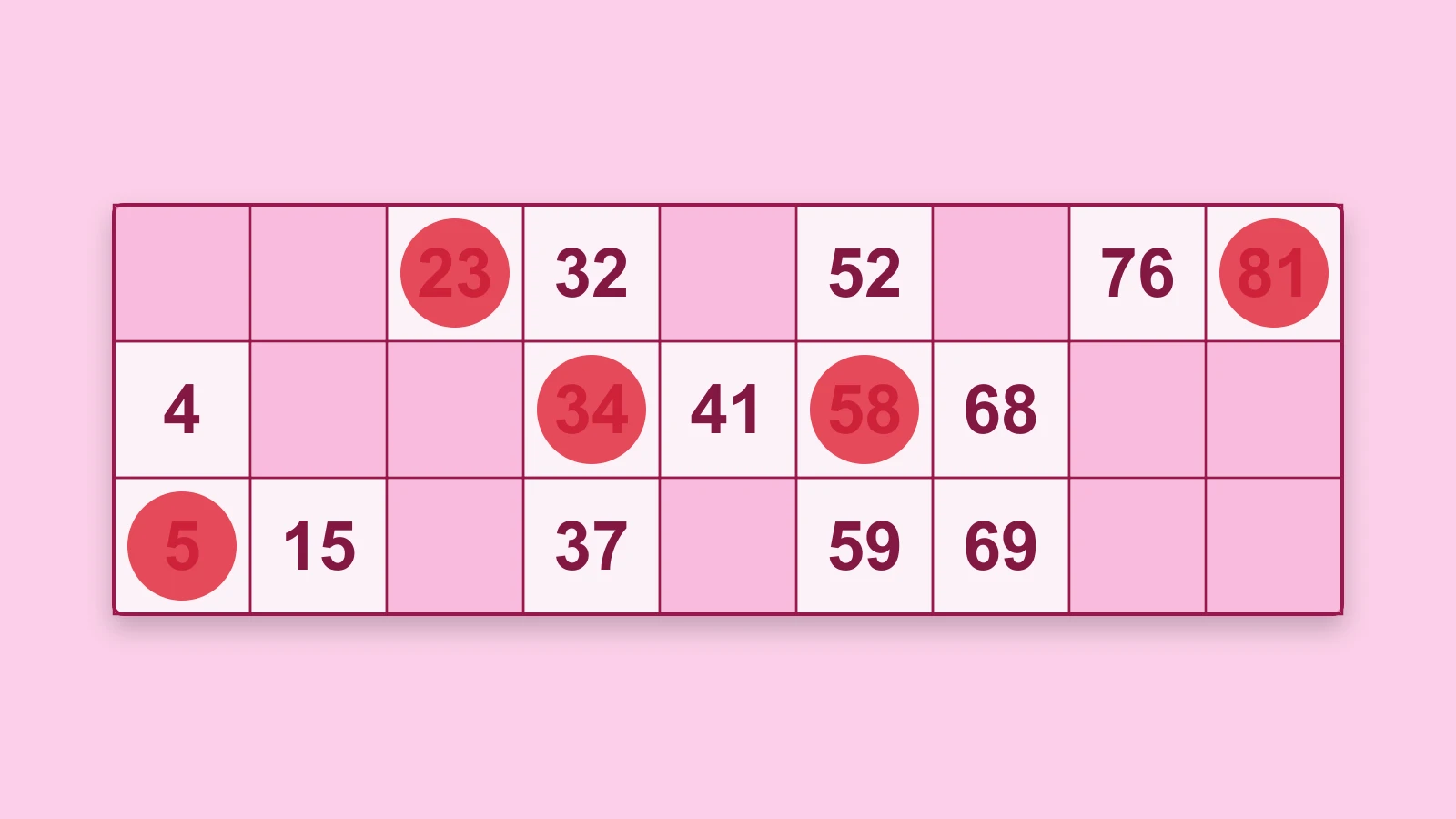
How you win: a list of prizes per round, called dividends, announced beforehand: Early Five (the first 5 numbers marked, anywhere on the ticket), Top Line, Middle Line and Bottom Line (each of the three rows), Four Corners (the first and last number of the top and bottom rows) and Full House (all 15). Some add Early Seven, Second Full House, Bamboo (the middle column) and zigzag patterns. What's unique: the caller uses rhymes in English and Hindi ("two fat ladies, 88"), and anyone who claims a wrong prize, a "bogey", gets booed and loses the ticket. The shout: the name of the prize: "early five!", "top line!", "full house!".
The Philippines: fiesta bingo
Format: 75 balls. The ritual: bingo arrived with American missionaries and settled into the barangay fiestas (the neighborhood festivals on the patron saint's day) and the peryas (the fairgrounds), with cards sold at the stall and appliances as prizes. The physical halls are noisy, with shouting and good-humored rivalry, and in recent years online bingo and electronic bingo in shopping malls have become a craze among young people. What's unique: bingo as part of the neighborhood's religious festival, alongside the procession and the karaoke. The shout: "bingo!".
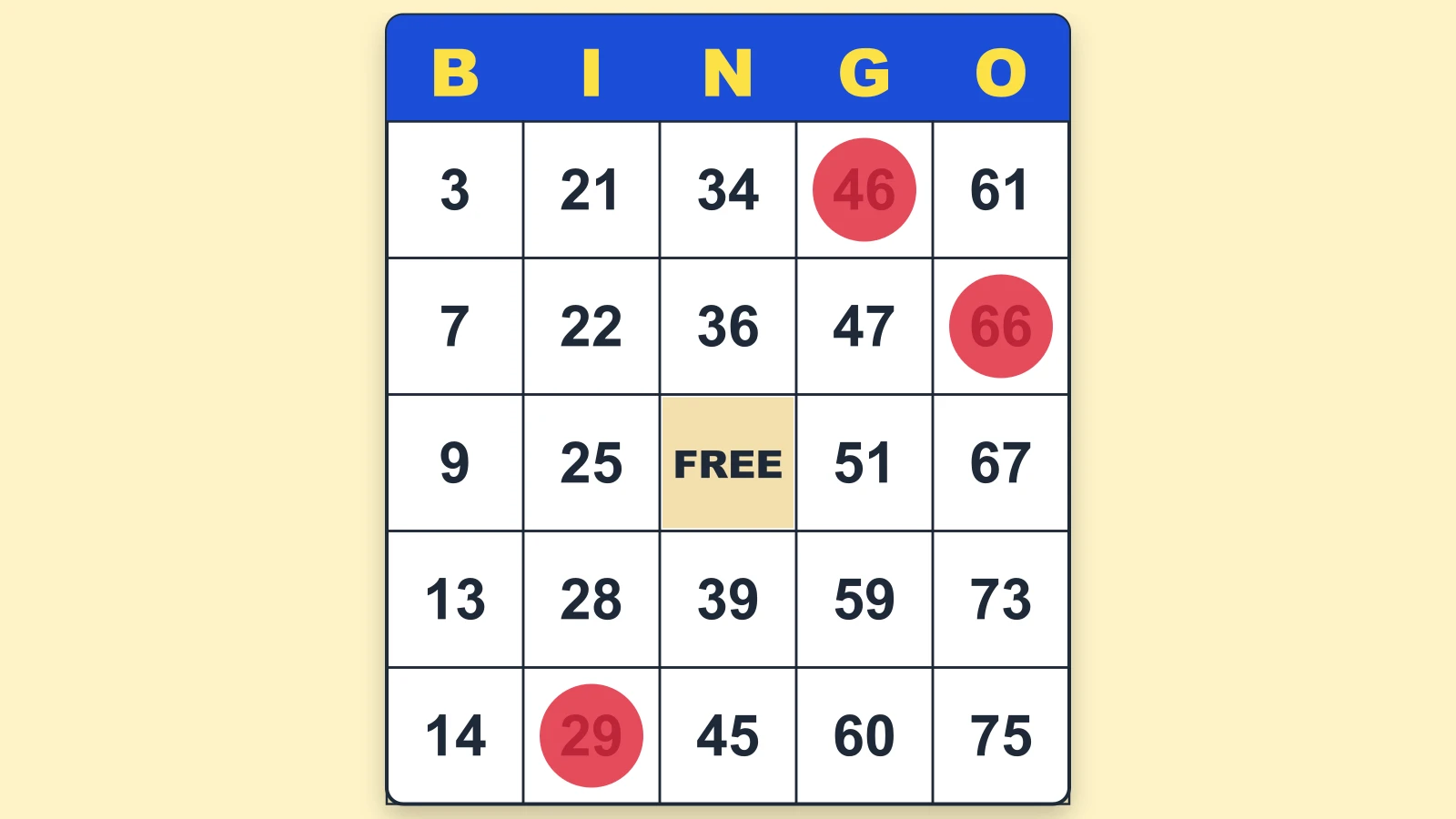
Japan: wedding bingo and year-end party bingo
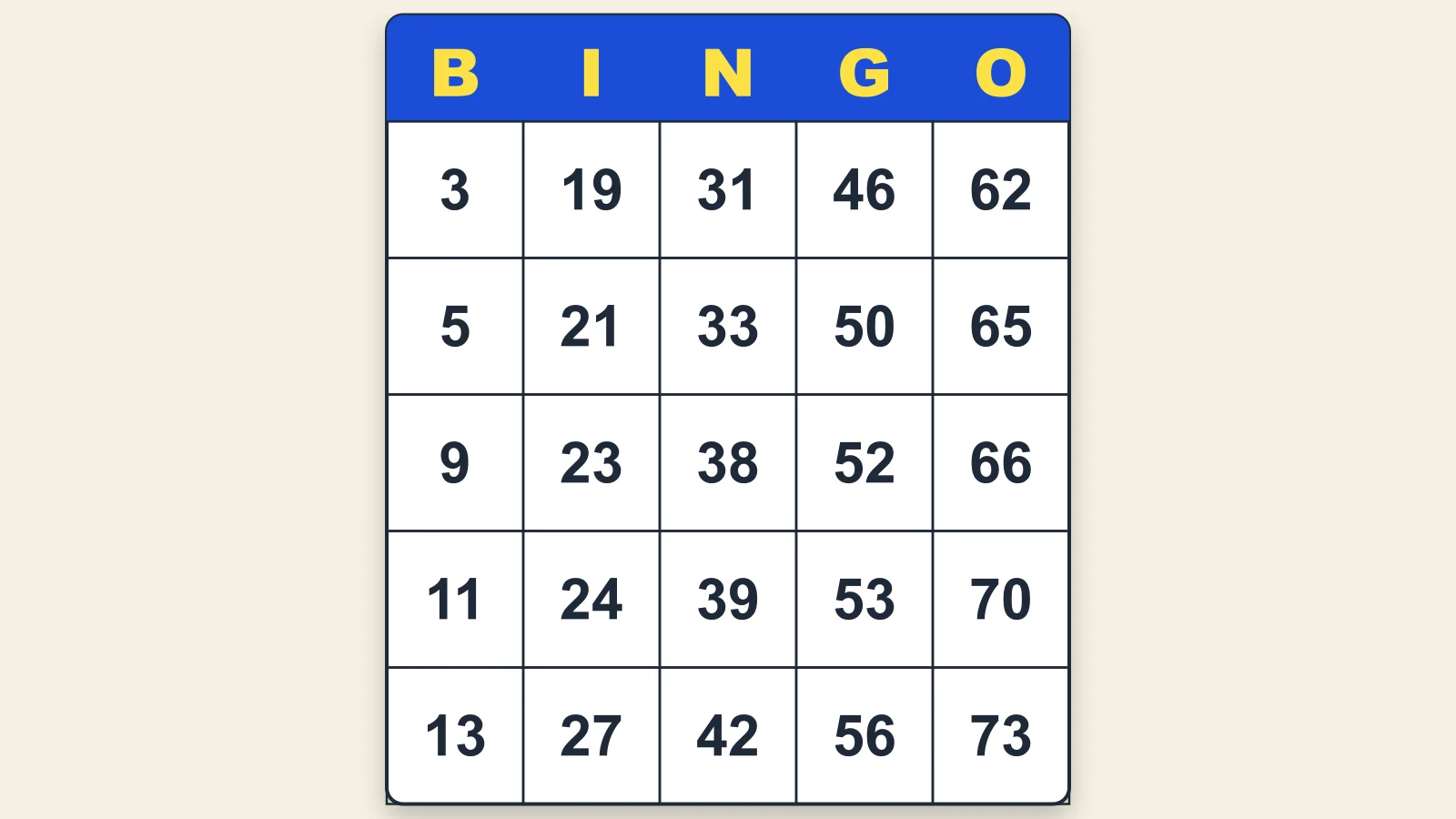
Format: 75 balls, 5×5 card with a free space, made of cardboard, where each square is a little tab you fold down to mark. The ritual: in Japan, bingo (ビンゴ) isn't gambling: it's the party game par excellence, with a small plastic drawing machine, just like a gumball machine, sold in any department store. It's at the wedding after-party (the nijikai), at the year-end party among colleagues (the bōnenkai) and at school camp, always with a table of wrapped prizes.
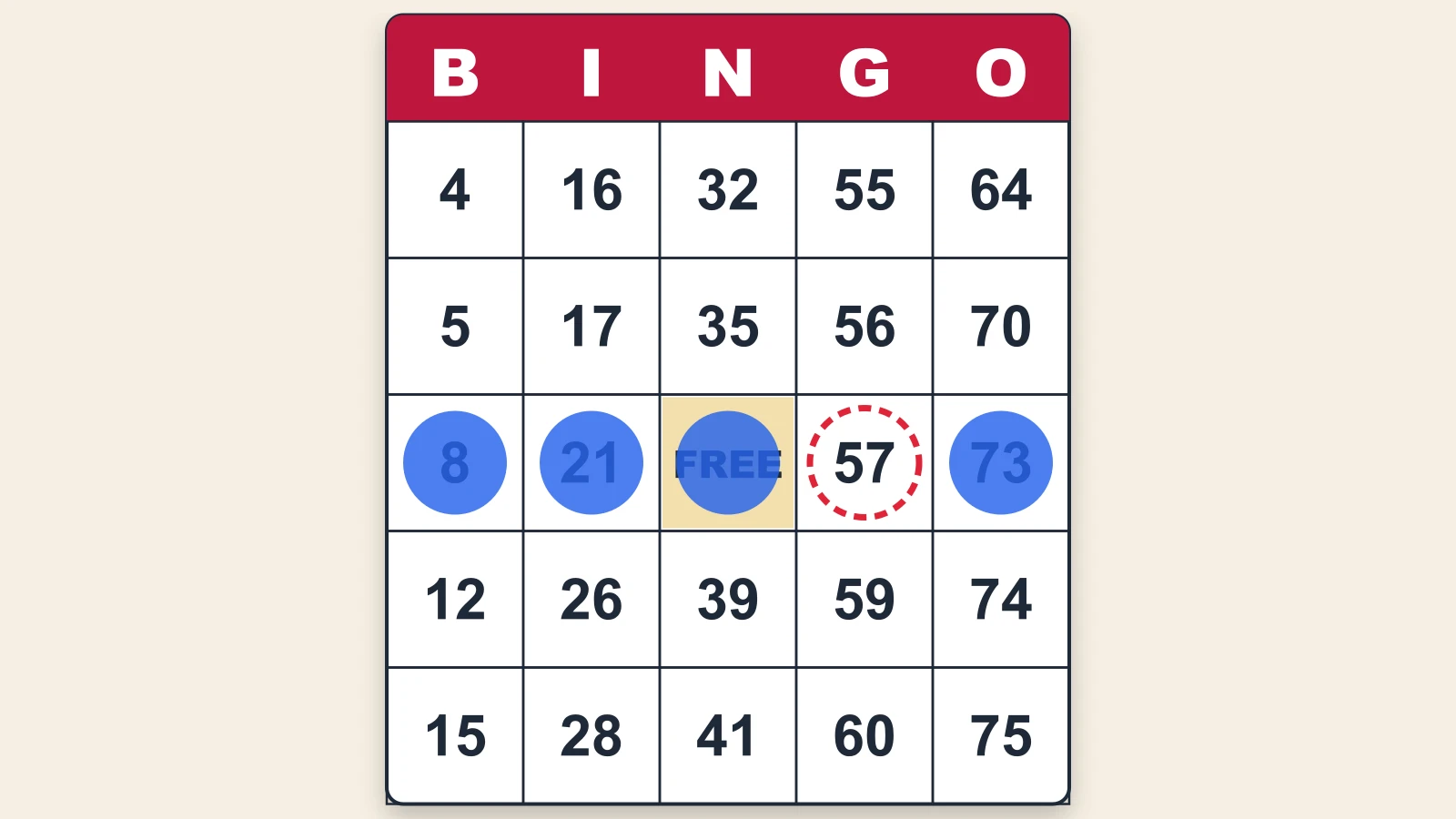
What's unique: the shout of "Reach!" (リーチ, from the English reach) when one number is missing, which the whole room joins in and the wedding host uses to build suspense; the pattern is almost always a line in any direction; and the round doesn't end at the first bingo: it goes on until three, five or ten people have hit, each picking a prize from the table in the order they hit, so nobody goes home empty-handed. The shout: "bingo!", after a very loud "reach!". At your table: the rule of several bingos per round is the best possible import for a family party.
Argentina, Colombia and Uruguay: halls and clubs
Format: 90 balls in most halls, 75 in part of the online scene. The ritual: in Argentina, the traditional bingo halls, licensed by province, live alongside neighborhood-club and retirees'-center bingo, with paper cards and a draw at the table. In Colombia, bingo is one of the most popular licensed games and shows up at family and neighborhood parties, the "bingo bailable" (dance bingo), which brings together the draw, food and music in the same hall, with the band playing between rounds. In Uruguay, club and school bingo is the usual year-end fundraiser. The shout: "¡línea!" and "¡bingo!".
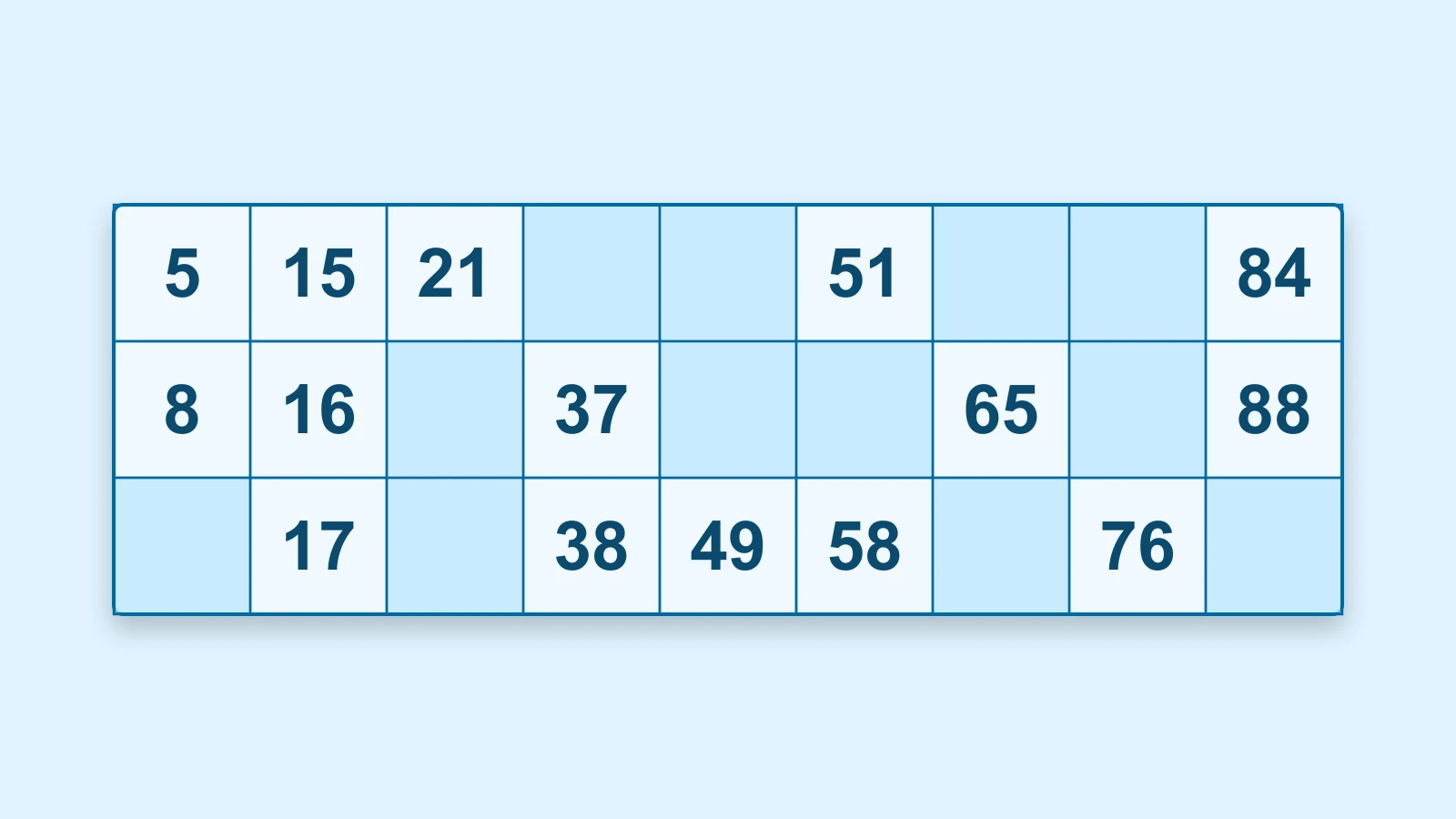
South Africa: electronic bingo at the mall
Format: terminals. The ritual: bingo was irrelevant in the country until 2005, when electronic bingo terminals arrived in malls and halls: today there are thousands, with a crowd of middle-aged women who go for the company. It's the example of how the same game turns into a casino product once it goes into a machine, which is why it appears here only as a contrast to everything that came before.
The map on one screen
Where it's 75 balls
The United States, Canada, Brazil, the Philippines, Japan and most online bingo. 5×5 card with a free space, win by pattern.
Where it's 90 balls
The UK, Ireland, Australia, New Zealand, India, Italy, Spain, Portugal, Russia, Argentina. 3×9 ticket, win by ladder.
Where it's neither
Mexico (Lotería, 54 pictures), Germany (classroom Lotto), South Africa (terminals).
The shouts
Bingo! House! Line! ¡Lotería! ¡Buenas! Tombola! Ambo! Volltreffer! Early five! Reach!
The number nicknames
British bingo lingo, Neapolitan Smorfia, Brazilian calls, rhymes in Hindi. Every bingo culture nicknames its numbers.
What they all have in common
A table, several generations, a caller and a prize worth less than the conversation.
Which of these bingos you can play with Bingo Pé Quente (and how)
Bingo Pé Quente is a 75-ball bingo app, with a 5×5 card and a free space: it draws and calls on the CALLER tab, with a full-screen mode for the TV, and keeps track of paper cards on the PLAY tab. Checking the BINGO is the caller's job. Country by country:
- The United States, Canada, Brazil, the Philippines, Japan (75 balls): that's the app's game, as it is. Choose the pattern under GAME PATTERN, call on CALLER, follow along on PLAY. For the American hall's twenty-round program, GRAND BINGO has the planned event, with the rounds, the patterns and the prizes, and the poster comes out ready for the door.
- The Japanese way (several bingos per round): possible in any tier: after each BINGO, CALLER asks whether the round goes on, and the balls already drawn still count. In GRAND BINGO's planned event this becomes the rule: each round has its own prize list (A, B, C...), one per bingo, and the round goes on with the same balls until the last one. The "Reach!" the app already does: on the PLAY tab, it lets you know when your card is one number away from closing.
- The UK, Ireland, Australia, Spain, Portugal, Argentina (90 balls in a ladder): the 3×9 ticket doesn't exist in the app, which is 75-only. But the ladder does: PARTY's multi-prize mode does line, two lines and blackout in the same round, with the app moving on by itself. It's British bingo played with the American card.
- India (Tambola): the Early Five contest exists in the app: under GAME PATTERN, PARTY's Random asks how many numbers (1 to 24) and any quantity counts, anywhere on the card. Four Corners is the free tier's Four Corners; the lines too, and Tambola's Full House is the Blackout. The ticket, again, is the 75-ball one.
- Italy (Tombola): ambo, terna and quaterna (2, 3 and 4 on the same row) have no equivalent pattern, but the five-step ladder fits in the three phases of PARTY's multi-prize mode: Random 3 in phase 1 (the terna, anywhere on the card), Two Lines in phase 2 and Blackout, the tombola, in phase 3. The Smorfia is up to the caller. In English the app calls letter and number, as callers do in the hall; the Brazilian nicknames (88 is "Grandma and Grandpa") exist in Portuguese.
- Mexico (Lotería), Germany (picture Lotto): stays on paper. A square on the app's card is a number; for pictures and verses, the card is paper and the cantor is a person.
- Sweden (BingoLotto on TV): the living room as a hall the app does in reverse: instead of the TV drawing, the phone draws and the full screen goes to the TV by screen mirroring.
- South Africa (terminals): not table bingo and not our subject.
The app is free to download on Google Play, for Android phones. The free tier keeps track of up to 3 cards and calls every ball out loud, letter and number; PARTY unlocks multi-prize mode and Random; GRAND BINGO unlocks planned events.
Quick questions
- In which countries is bingo most popular? The UK, the United States, Ireland, Spain, Italy (as Tombola), India (Tambola), the Philippines and Japan, each with its own format and its own ritual.
- What is Mexican Lotería? Mexico's bingo, with 54 illustrated cards in place of the balls and a 4×4 tabla with 16 pictures. The cantor sings little verses and the player marks with beans.
- What is Tombola? The Italian Christmas bingo, with 90 numbers, five prizes (ambo, terna, quaterna, cinquina and tombola) and a nickname for every number, the Smorfia.
- What is Tambola or Housie? The 90-number bingo of India, Australia and New Zealand. In India, with prizes such as Early Five, the three lines, the four corners and Full House.
- What is bingo like in Japan? A wedding and year-end party game, with a plastic drawing machine, a shout of "Reach!" when one number is missing and several people winning prizes in the same round.
- Is bingo legal in Brazil? As a family game, with gifts and no charge to play, yes. For money, it's illegal gambling under article 50 of Brazil's Misdemeanors Act.
Sixteen countries, two formats, one shout. Bingo is the same table in any language.
Sources
- Bingo (British version) — Wikipedia
- Bingo (American version) — Wikipedia
- Indian Gaming Regulatory Act — Wikipedia
- Lotería — Wikipedia
- Historia del juego de la lotería y los 54 versos para cantarla — México Desconocido
- The Neapolitan Tombola — Napoli Sotterranea
- Bingolotto — Wikipedia
- Tambola game rules — Kitty Party Club
- Bingo in the Philippines — Wikipedia
- List of British bingo nicknames — Wikipedia
- Decree-Law 3,688/1941 (Brazil's Misdemeanors Act), art. 50 — Planalto