Themed bingo: 8 bingos with no numbers on the card
Swap the 24 numbers on the card for something else and bingo becomes a tool for a party, a lesson or therapy. The way you win stays the same (a line, the four corners, the full card). What changes is what the caller "calls": a snippet of a song, a picture shown on the TV, a Bible clue, a multiplication problem, or nothing at all, because the card fills itself up through conversation.
This is part 4 of 5 of the series on the types of bingo. Part 1 explains the formats by number of balls, in types of bingo; part 2, the hall variants of 75-ball; part 3, bingo around the world; part 5, bingo by occasion. Here, the eight most played themed bingos, each with the card, the calling, the pattern and the right crowd.
What they all have in common (and what changes)
- The card is still 5×5, with a free space in the middle (or 4×4 and 3×3 for the little ones). Only what's in the squares changes.
- The caller becomes a host: plays, shows, reads or asks, instead of calling a number.
- The "cage" is a list: the playlist, the deck of pictures, the pile of clues. It needs more items than squares: 40 to 75 items for 24-square cards.
- The cards need to differ from one another: each with 24 items drawn from the list, in a different order. That's the prep work; a card generator or a spreadsheet takes care of it.
- The pattern is the usual one: a line for a short round, the full card for the final.


Gather the ones you love for the next Bingo
See how simple it is to play and host with Bingo Pé Quente.

5 stars on Google PlayFree to start, no sign-up
1. Music bingo: the card plays

The card: 24 song titles (or artists, or snippets of lyrics). The calling: the host plays a 15 to 60-second snippet of each song; whoever recognizes it marks it. The title isn't said: recognizing it is the game. The list: a playlist of 60 to 75 songs, preferably from one era or one style (the 80s, country, Brazilian MPB, rock), so the whole table stands a chance. The pattern: a line in the first rounds, the full card in the last; with 30-second snippets, a full card takes about 40 minutes. Where it's played: it's the bingo of the Hard Rock Cafe, of happy-hour bars and of grown-up birthday parties; in the United States it became a TV show in 1958.

Tip: build the playlist in a shuffled order and write the order down on paper; when it's time to check, you need to know which songs have already played. The full step by step, with a song list by decade, is in music bingo: the Hard Rock Cafe 'bingo'.
2. Picture bingo: for those who can't read yet (or can't see so well anymore)
The card: 24 images: fruit, animals, household objects, means of transport. For small children, 3×3 with 9 pictures. The calling: the host shows one picture (printed, on the TV or on the phone) and says its name out loud; whoever has it marks it. The list: 40 to 50 big, clear pictures, with no busy background. The pattern: a line or the full card; with children, always the full card, because "almost" is hard to explain. Where it's played: in preschool, at children's parties and in memory workshops for seniors, where the therapist asks the person to say the picture's name or tell a story about it before marking. It's the picture bingo that Mexican Lotería turned into heritage: 54 illustrated cards and a cantor of little verses (see part 3).
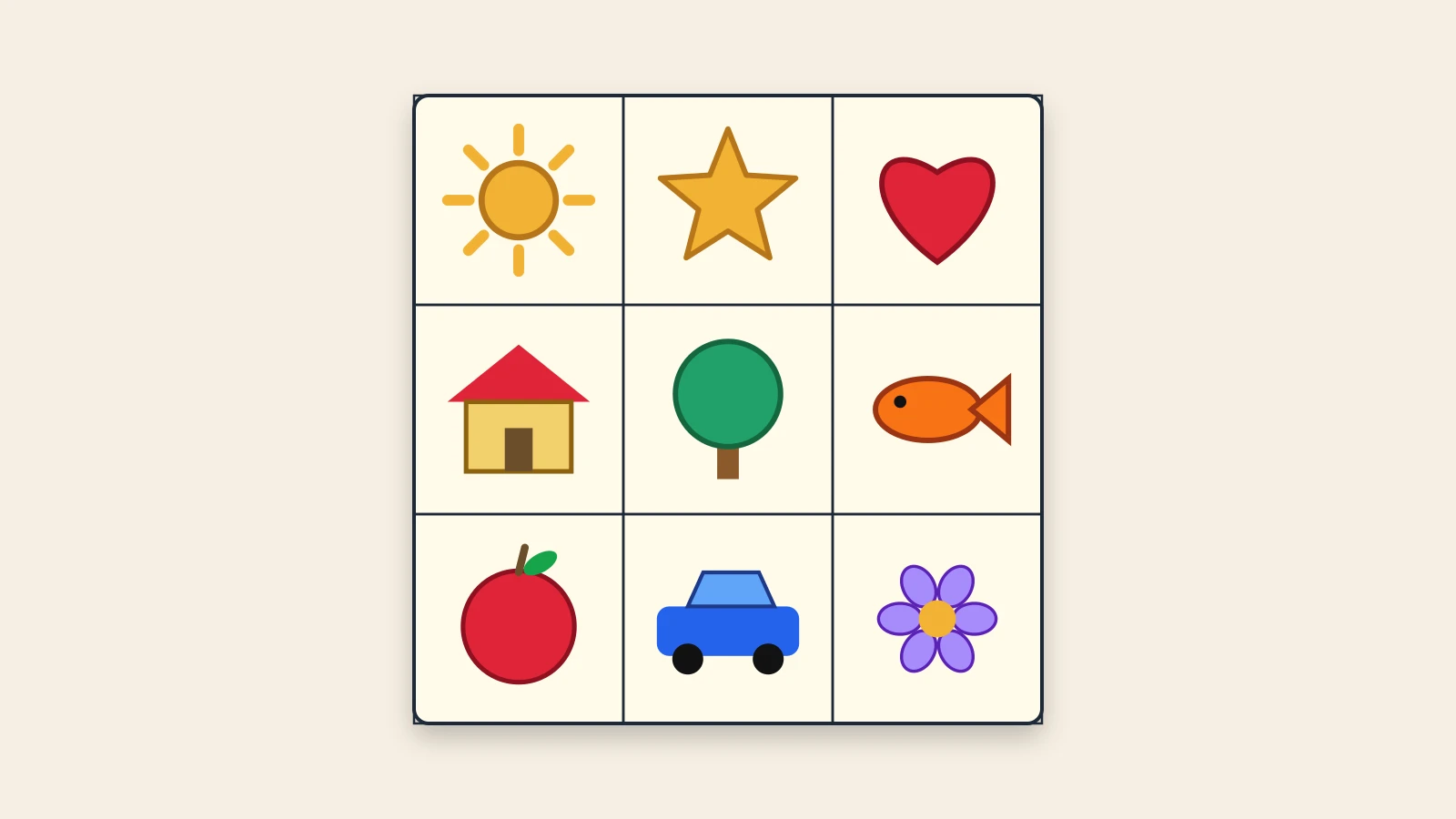
Tip: print the pictures in two sizes: small, for the cards, and large, for the calling. On the TV, each picture full-screen for 10 seconds.
3. Bible bingo and Sunday-school bingo
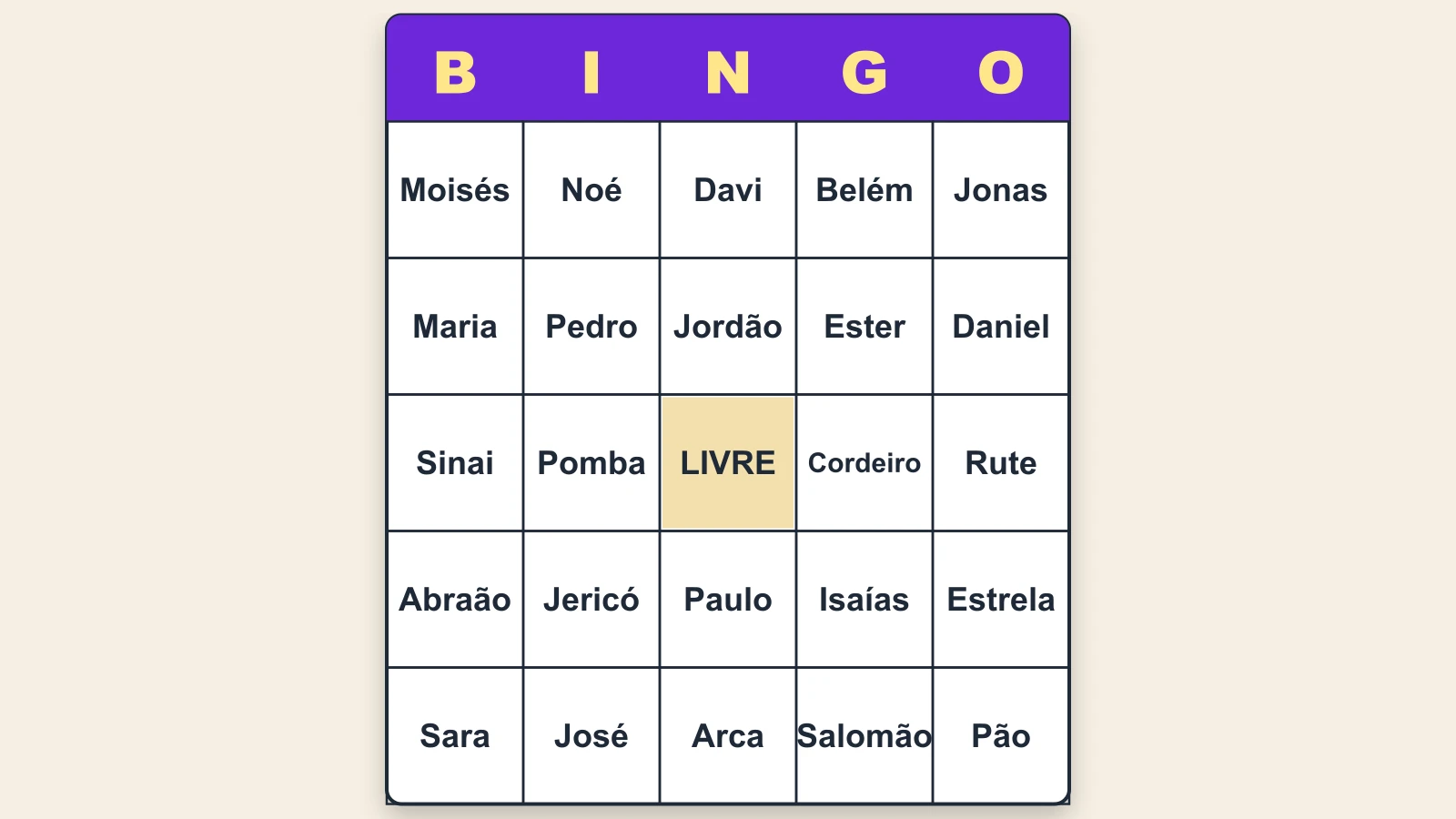
The card: names of characters, places, symbols or verse references. The calling: the teacher reads a clue ("built an ark", "was swallowed by a great fish", "the mountain where Moses received the tablets") and the player marks the answer (Noah, Jonah, Sinai). The list: 40 to 60 clues, at the group's level. The pattern: a line, so the lesson gets several rounds. Where it's played: catechism, Sunday school, youth group, retreats, couples' meetings. The mechanics of picture bingo, with lesson content: those who get it right, learn; those who get it wrong, hear the right answer when the card is checked.
4. Christmas, Halloween and June-festival bingo: the theme is in the pattern
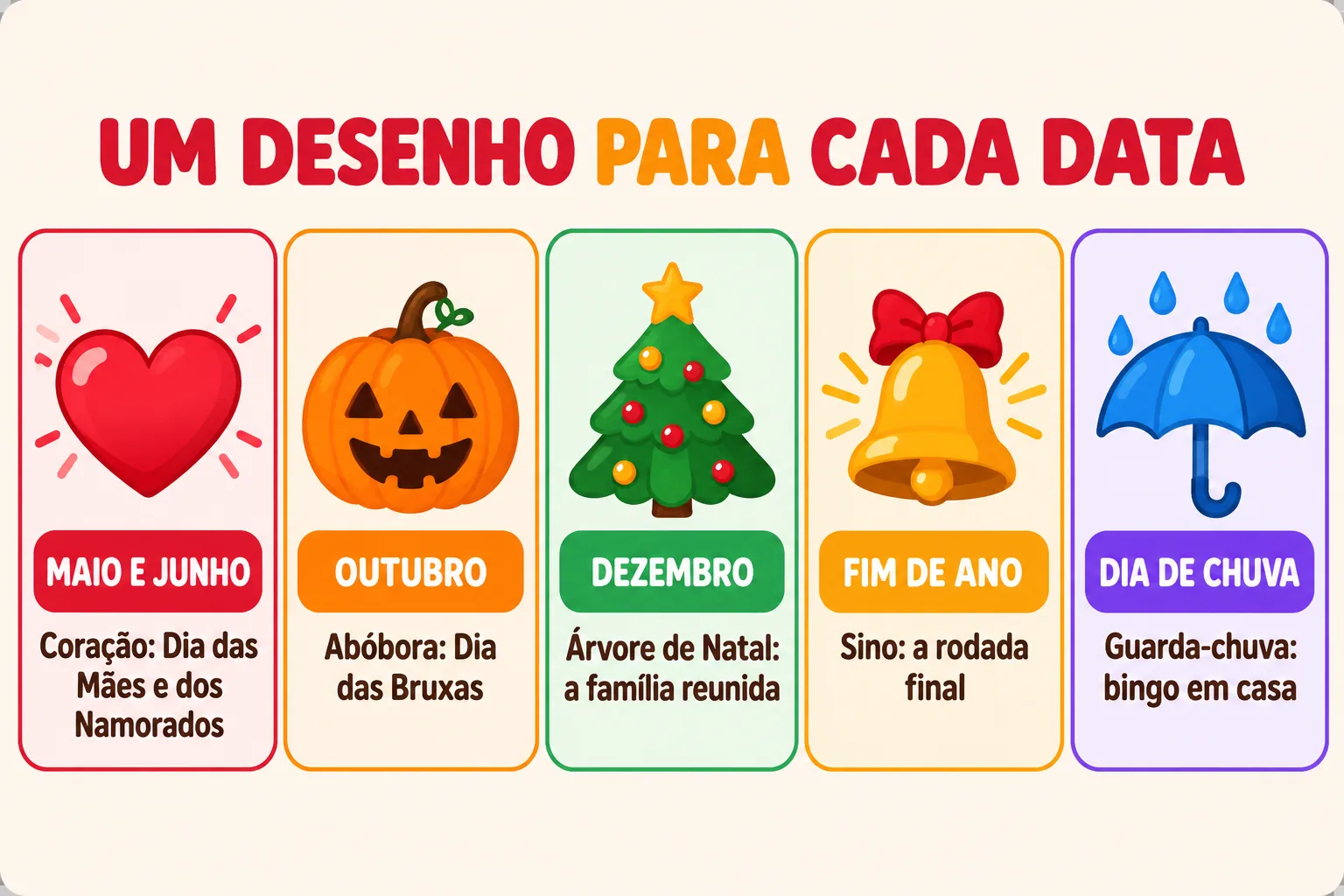
The card: here there are two paths. The simplest keeps the numbers and changes the rest: a decorated card, the season's pattern (Christmas tree, bell, pumpkin, heart), a prize on theme. The other swaps the numbers for words of the theme: "nativity", "panettone", "eggnog" in Christmas bingo; "bonfire", "square dance", "corn cake" in Brazil's Festa Junina. The calling: in the first case, as normal; in the second, the host draws and reads the words. The pattern: the theme's shape. Where it's played: Christmas dinner, school parties, Halloween among friends. The full December guide, with printable cards, is in family Christmas bingo.
5. Human bingo: the icebreaker
The card: each square is a trait: "has flown on a plane", "has a twin", "can play an instrument", "was born in another state", "hates cilantro". The calling: there isn't one. To mark a square, the person has to find someone in the room who fits and get their signature in the square; each person can only sign one square per card. The pattern: a line in the first 10 minutes, the full card in 20. Where it's played: first day of school, class reunions, retreats, parties where half the people don't know each other. It's the only bingo without a caller: the game is the conversation.
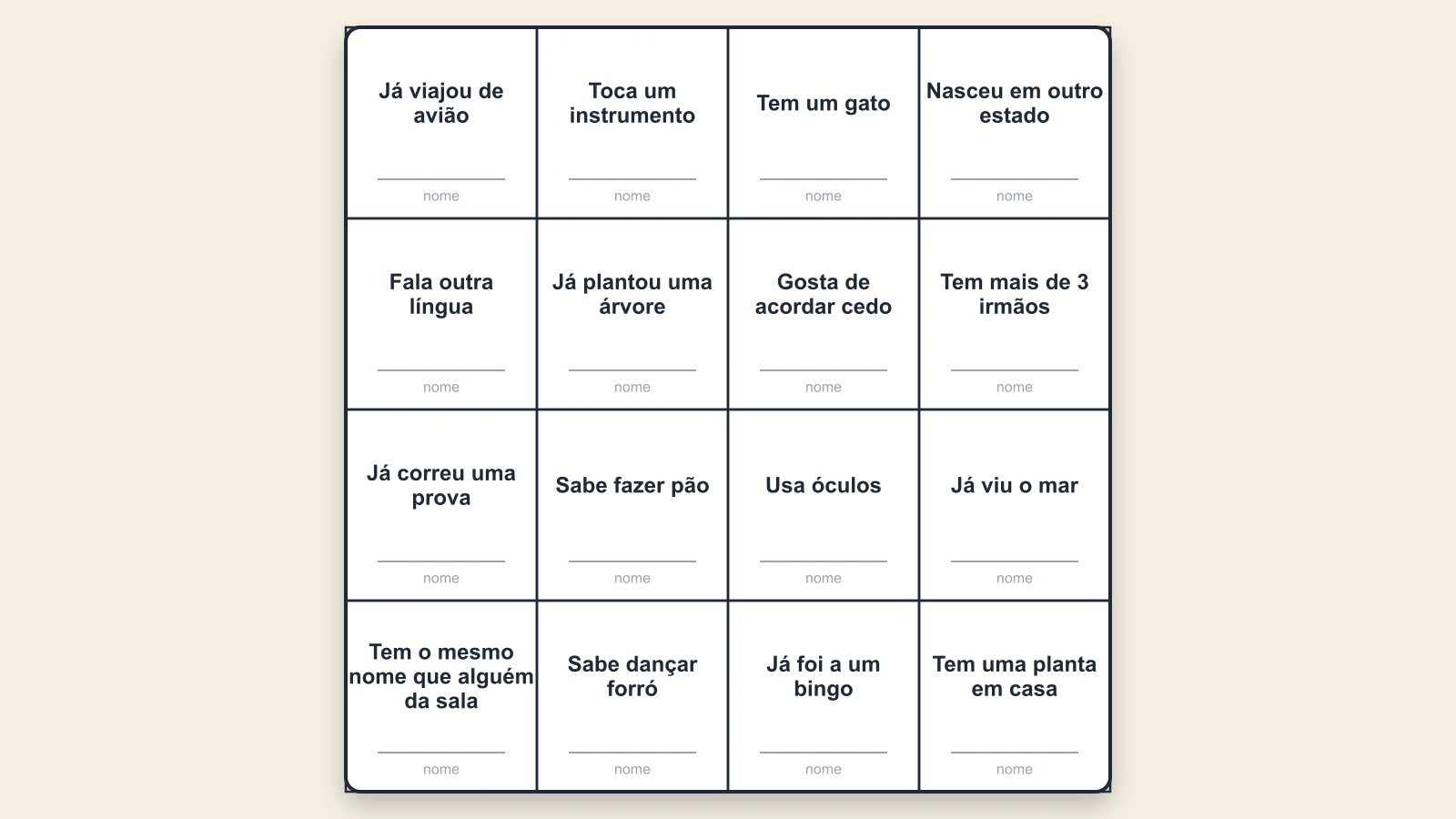
Tip: mix easy traits ("wears glasses") with rare ones ("has seen the northern lights"), and put one in the middle of the card that only the host can answer.
6. Scavenger-hunt bingo
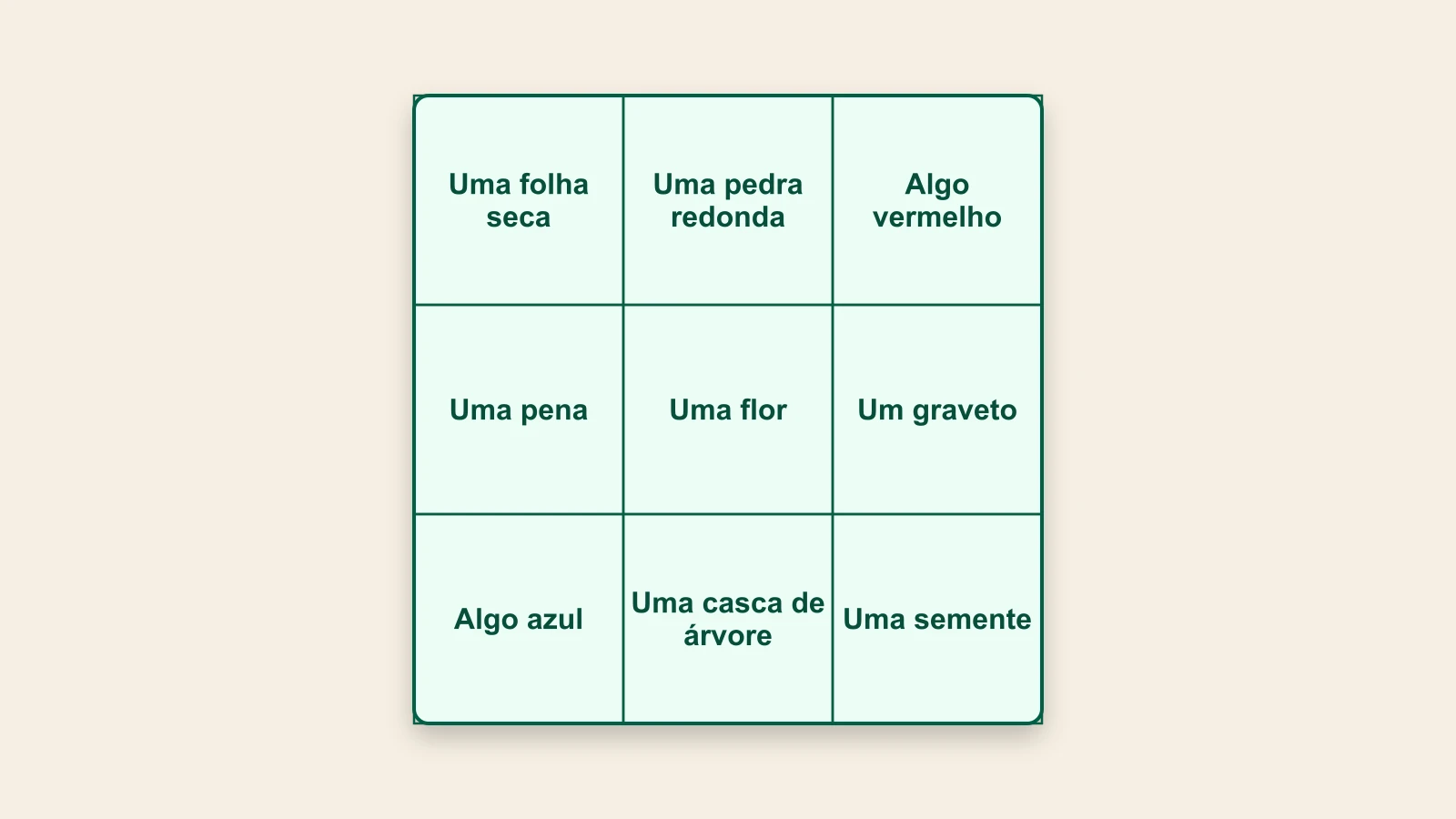
The card: things to find: "a red leaf", "a blue sign", "a dog on a leash", "a person wearing a hat", "a round stone". The calling: there isn't one; whoever finds it marks it and, ideally, takes a photo as proof. The pattern: a line or the full card, with a time limit. Where it's played: school outings, road trips, hikes, children's parties in the park, rainy afternoons indoors ("something green", "something that makes noise"). A grown-up variation is travel bingo: "a different accent", "a dish you've never eaten".
7. Educational bingo: times tables, vocabulary, capitals
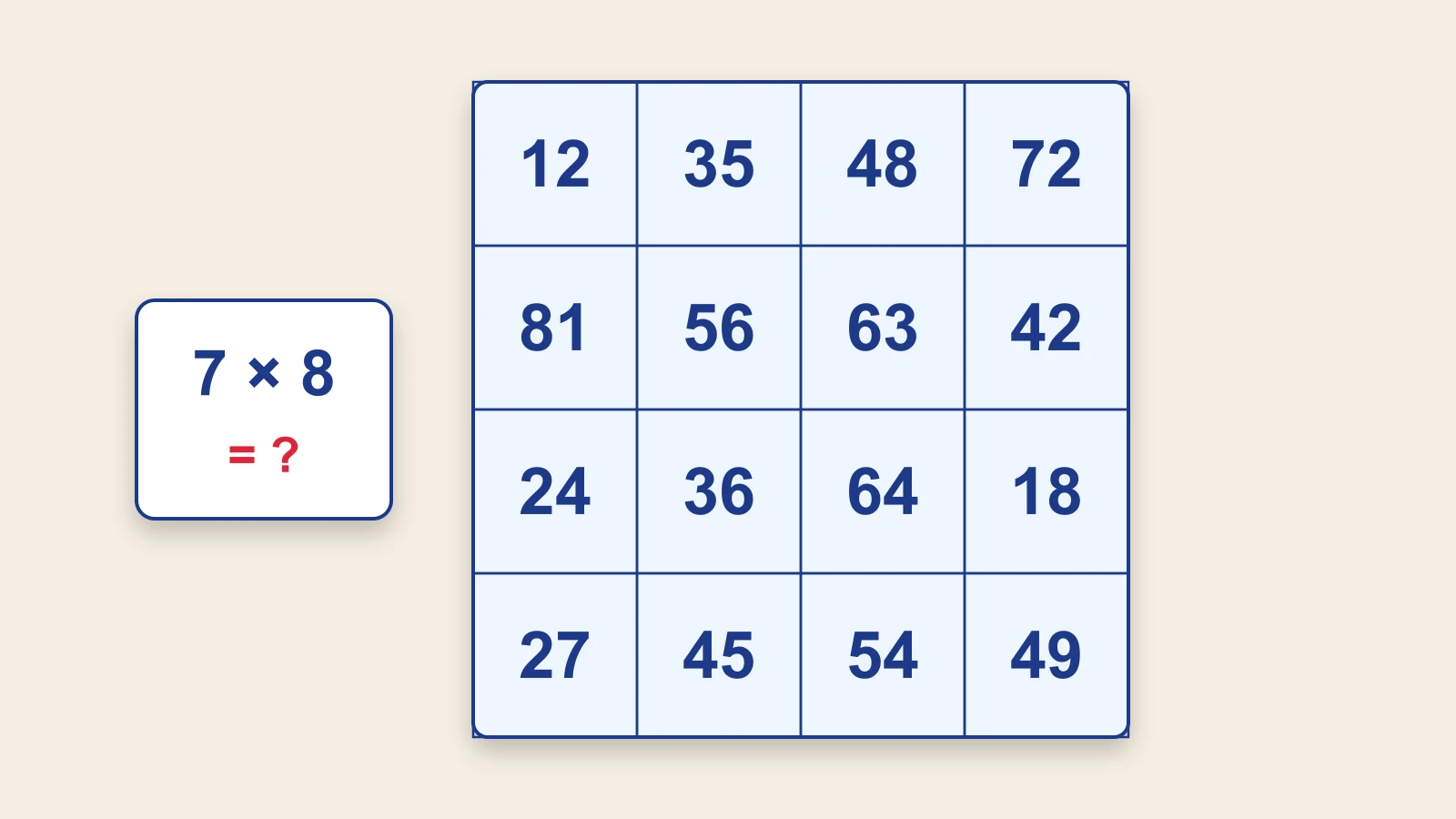
The card: answers: multiplication results (56, 72, 81), words in a foreign language, capitals, chemical elements, dates. The calling: the teacher says the question ("seven times eight", "the capital of Australia", "the symbol for gold") and the student marks the answer, if they have it. The list: the week's content, 40 to 60 questions. The pattern: a line, to get several rounds into one lesson. Where it's played: it's the Lotto of German schools, where they shout "Volltreffer!", and the review lesson of many a Brazilian teacher. It works because the student checks the answer twice: when hearing the question and when the teacher checks the card out loud.
8. Word bingo: the baby shower one and the waiting-room one
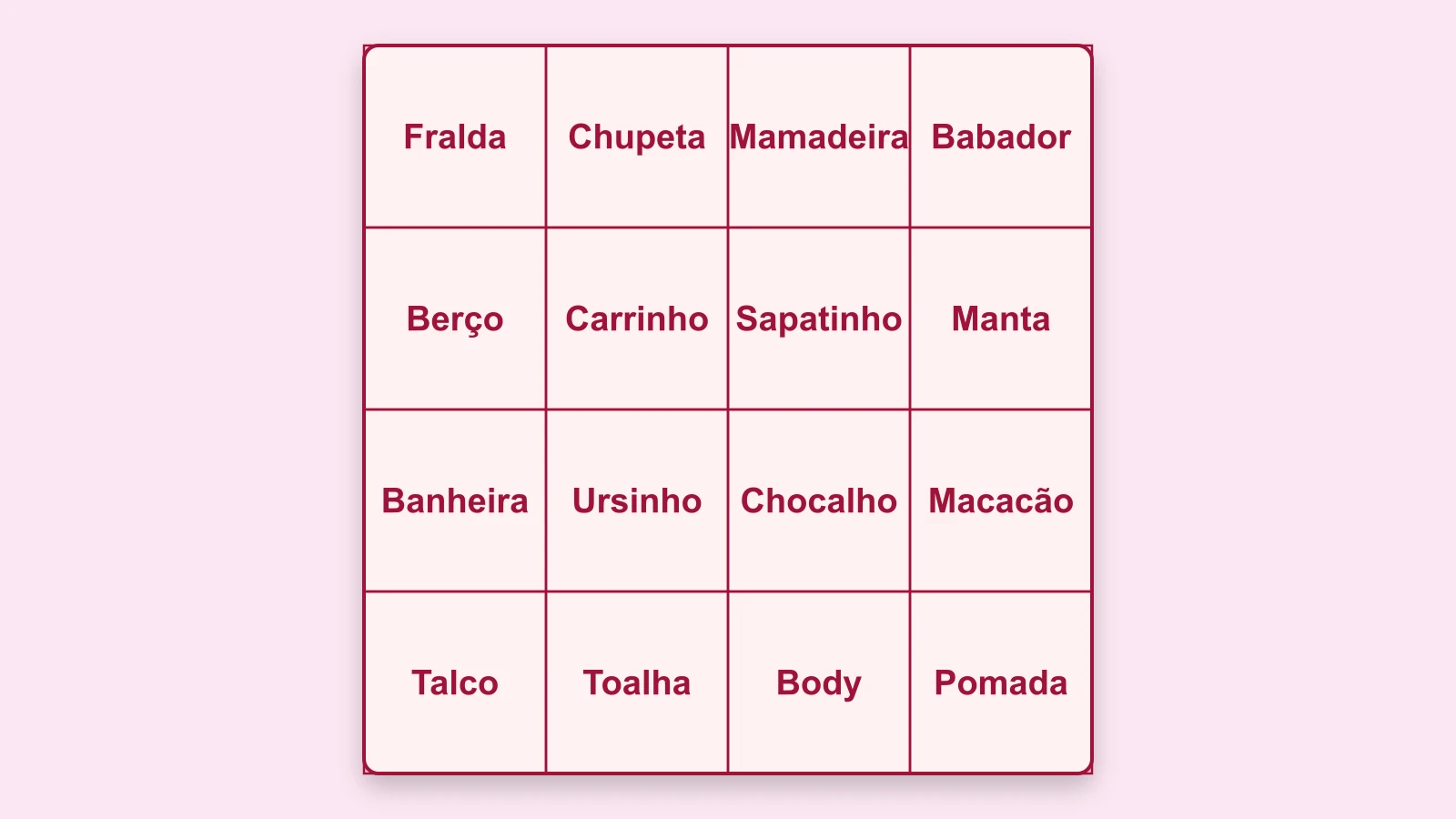
The card: words from a theme: at the baby shower, the gifts the mother is about to open ("onesie", "diaper", "pacifier", "blanket"); in the long meeting, the phrases someone is bound to say ("let's align", "from my point of view"); in the soap opera, what's going to happen in the episode. The calling: real life. You mark when the word shows up. The pattern: a line; the full card almost never comes, and that's part of the fun. Where it's played: baby showers and bridal showers (the guest marks as the gifts are opened), year-end parties, the couch at home during a football match ("penalty", "yellow card", "header").
How to build the themed cards
- The list. 40 to 75 items on the theme (songs, pictures, words, clues). More items than squares, or every card closes at the same time.
- The cards. a spreadsheet with the list and the shuffle function; copy 24 items per card. Or an online text bingo card generator.
- The calling. the same list, shuffled into another order, with a little box to tick off what has already come out. That's your cage.
- The check. when BINGO is shouted, read the squares on the card and check them against your calling list. Only what has already come out counts.
- The size. 5×5 for adults, 4×4 for human bingo (16 signatures is already plenty), 3×3 for small children.
Which of these bingos you can play with Bingo Pé Quente (and how)
The short, honest answer: none of the eight, as they are. Bingo Pé Quente is a 75-ball bingo app: a square on the card is a number from 1 to 75, the draw is of balls, and the camera reading of the card looks for numbers. Songs, pictures, words and signatures don't fit on the app's card, and that's a product decision: one bingo, done well.
What the app does for themed bingos is what surrounds them:
- Christmas, Halloween and June-festival bingo with numbers: that's the app's game. PARTY has the seasonal patterns (Christmas tree, bell, pumpkin, heart), and the free tier has the picture frame, the cross, the X and the blackout. In Portuguese, 25 is called as "Christmas Day"; in English the app calls "I, 25".
- The numbers round in the middle of a themed night: many music bingo parties alternate a round of songs with a round of numbers, to rest the ears. The numbers round the app calls and shows on the TV, with the automatic draw and the full screen.
- Printable 75-ball cards: the site's bingo card generator makes them for free, with a title and color of your choice. For text or picture cards, use a spreadsheet or a word bingo generator.
- Music, pictures, Bible, human, scavenger hunt, educational, words: they stay on paper, with the paper card and a flesh-and-blood host. The app doesn't take part, and that's fine: those bingos were born to be played that way.
Quick questions
- What is themed bingo? Any bingo in which the card carries something else in place of numbers: songs, pictures, words, clues or people's traits. The way you win is the same.
- How does music bingo work? The card has song titles, the host plays 15 to 60-second snippets and whoever recognizes them marks. It needs a playlist of 60 to 75 songs.
- How do you make picture bingo for children? A 3×3 or 4×4 card with big pictures, a list of 40 pictures printed large for the calling, and the full card as the pattern.
- What is human bingo? The icebreaker in which each square is a trait and, to mark it, you have to find someone in the room who fits and get their signature.
- How do you make baby-shower bingo? Each guest gets a card with names of gifts; they mark as the mother opens the packages. Whoever closes a line wins.
- Does Bingo Pé Quente do music or picture bingo? No. The app is numbers only, from 1 to 75. It's for the numbers round at the same party and for Christmas bingo with patterns.
Take the numbers off the card and bingo becomes anything. Leave the numbers on and it's still the best way to bring a table together.