Ask anyone who played bingo at home thirty or forty years ago and the memories come back the same way: the big table, the Sunday tablecloth, the jar of beans, someone in the family calling the numbers in that announcer's voice. This post is about that bingo, the living-room kind, and about what's still alive from it.
If you want the history with dates and origins, from the Italian lottery to the 75-ball card, it's in the history of bingo post. This one is the table's memory.
The Sunday table
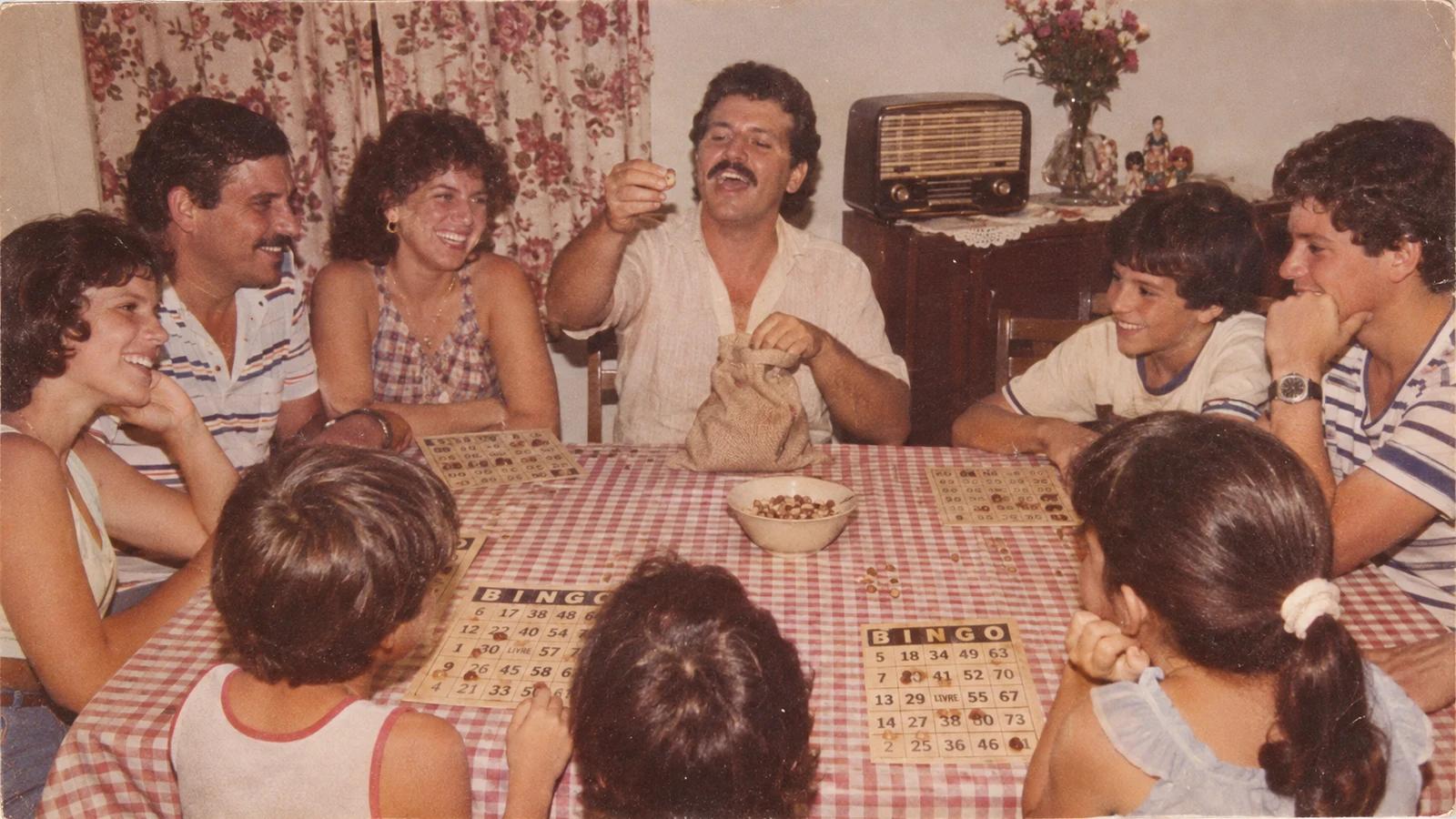
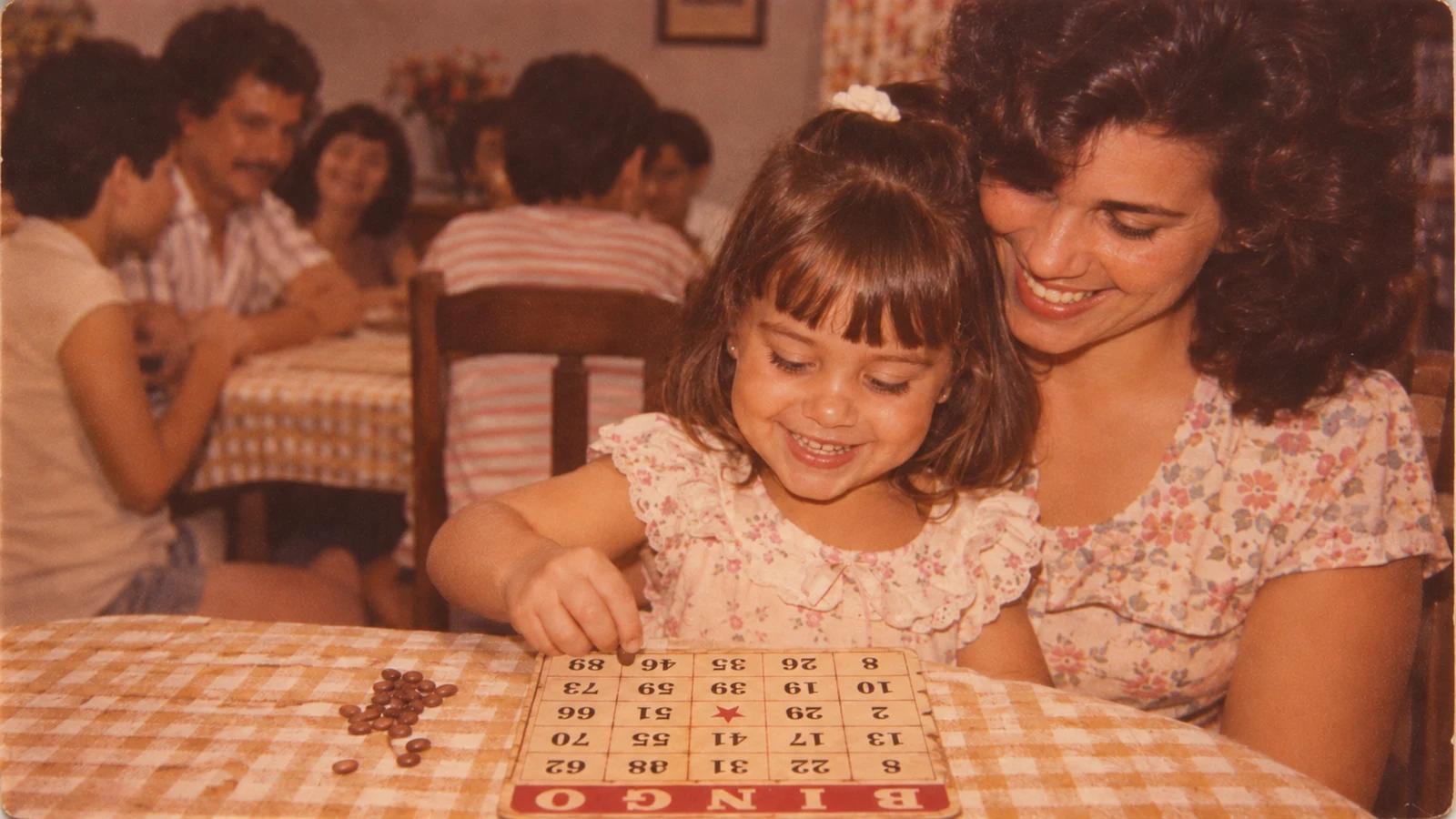
Bingo at home happened at the dining table, with the good tablecloth or the checkered one, after Sunday lunch or on a party night. It brought everyone together: the grandparents, the aunts and uncles, the kids who could already read the numbers and the little ones on someone's lap, helping to mark.

Gather the ones you love for the next Bingo
See how simple it is to play and host with Bingo Pé Quente.

5 stars on Google PlayFree to start, no sign-up
The cardboard card
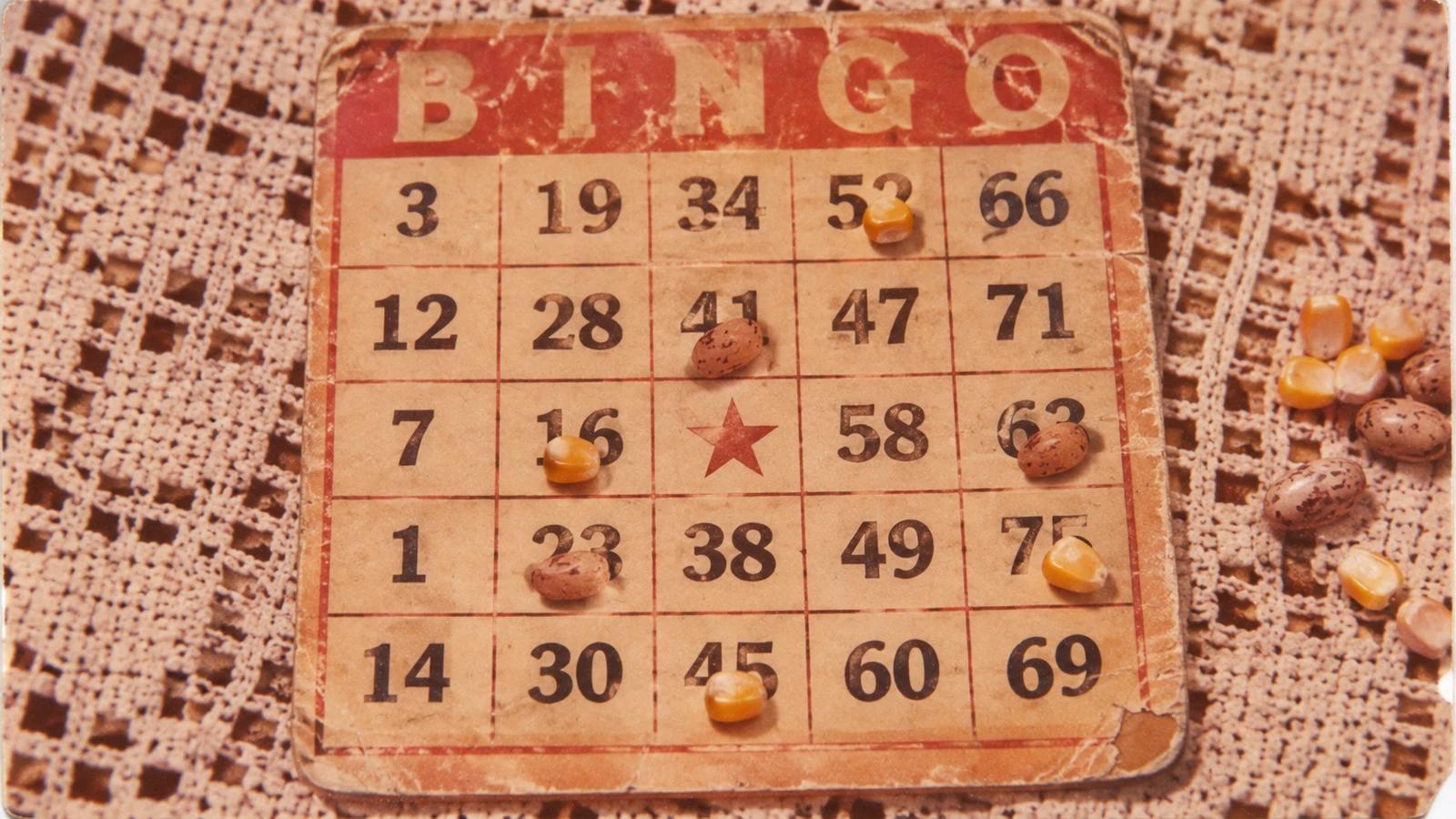
The cards were thick cardboard, from a boxed bingo set bought at the store or made by hand with a ruler and a pen. They lasted for years, slowly turning yellow, their corners worn, and everyone had a favorite, the one that "brought luck".
Beans instead of a dauber
Since the card was used over and over, nobody wrote on it: you marked it with whatever was in the kitchen. Beans were the classic, but corn, coffee beans, buttons and bottle caps all did the job. At the end of the round, you just tipped the card into the jar and started again. And there was always one bean that rolled onto the floor at the crucial moment.
 Bean
 Corn
 Coffee
 Chips
 Dauber
The crank cage and the little bag of tiles
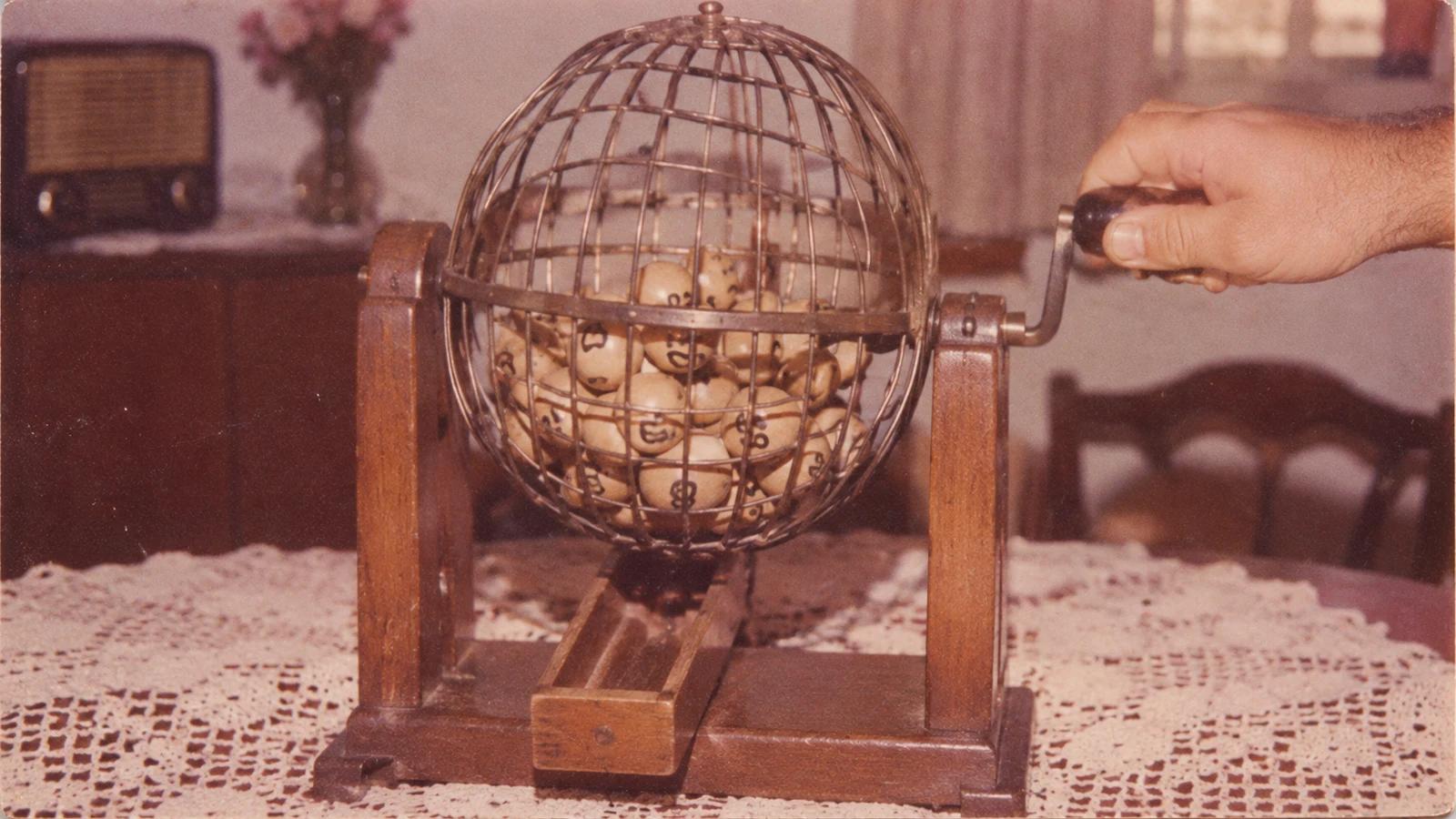
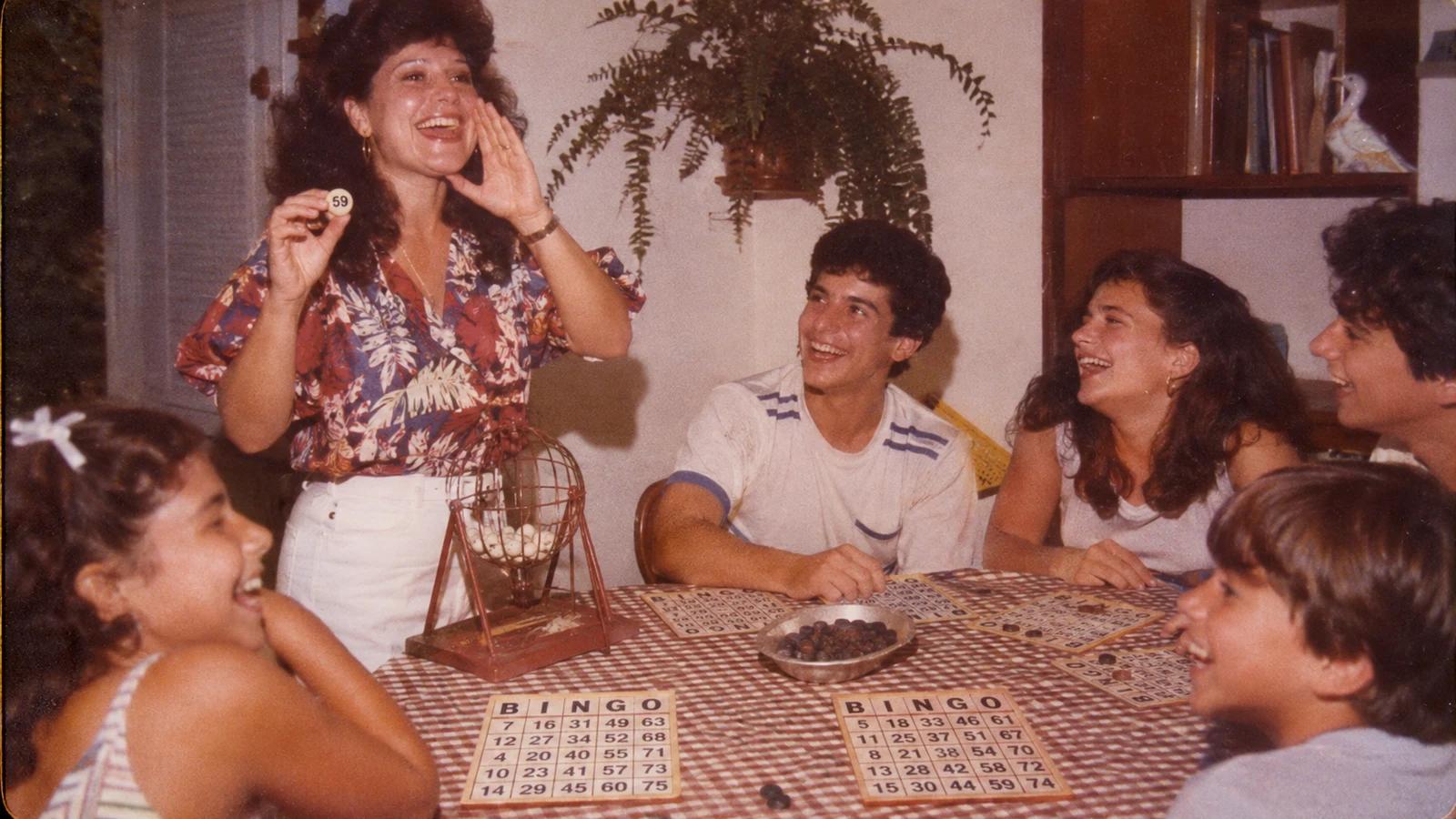
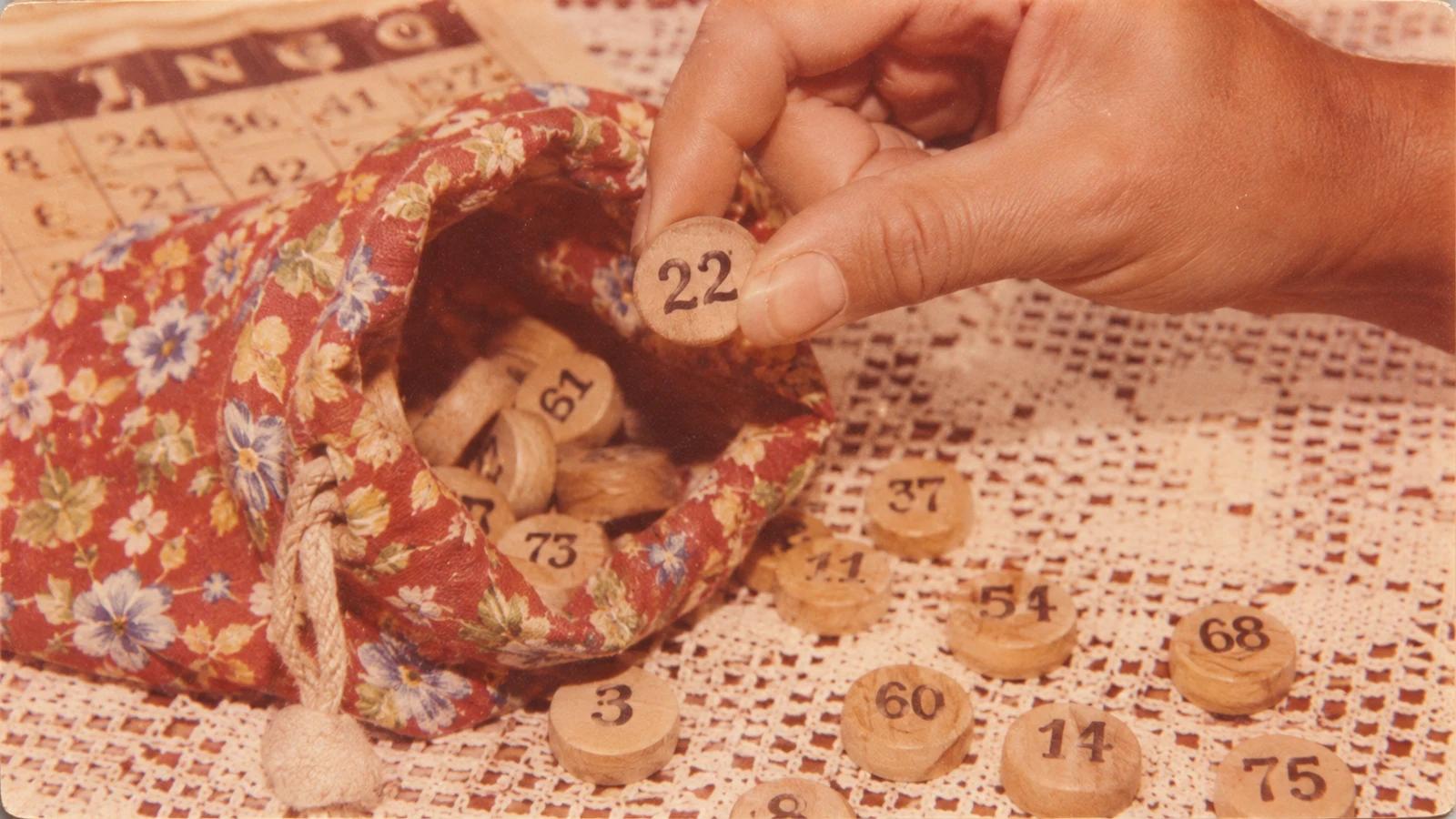
Families with the full set had the crank cage: it spun and spun, and the ball dropped into the chute. Those without one used a cloth bag of small numbered tiles, wooden or plastic, and pulled out one at a time without looking. In some homes the tiles were bottle caps with the number written on in pen.
Who called the numbers
Calling was a role people competed for. There was the uncle who built up the suspense, the aunt who made up a nickname for every number, the grandma who said each one twice so nobody could complain. Giving numbers nicknames is a tradition that crosses borders and passed from one generation to the next at tables like these: in British halls, 22 is "two little ducks" and 11 is "legs eleven"; in Brazil, 22 is "two little ducks on the pond" and 33 is "the age of Christ". More of them, and the story of the caller's voice, are in From the little bean on the card to grandma's phone.
"Here it comes, everybody... two little ducks: 22!"
The prizes
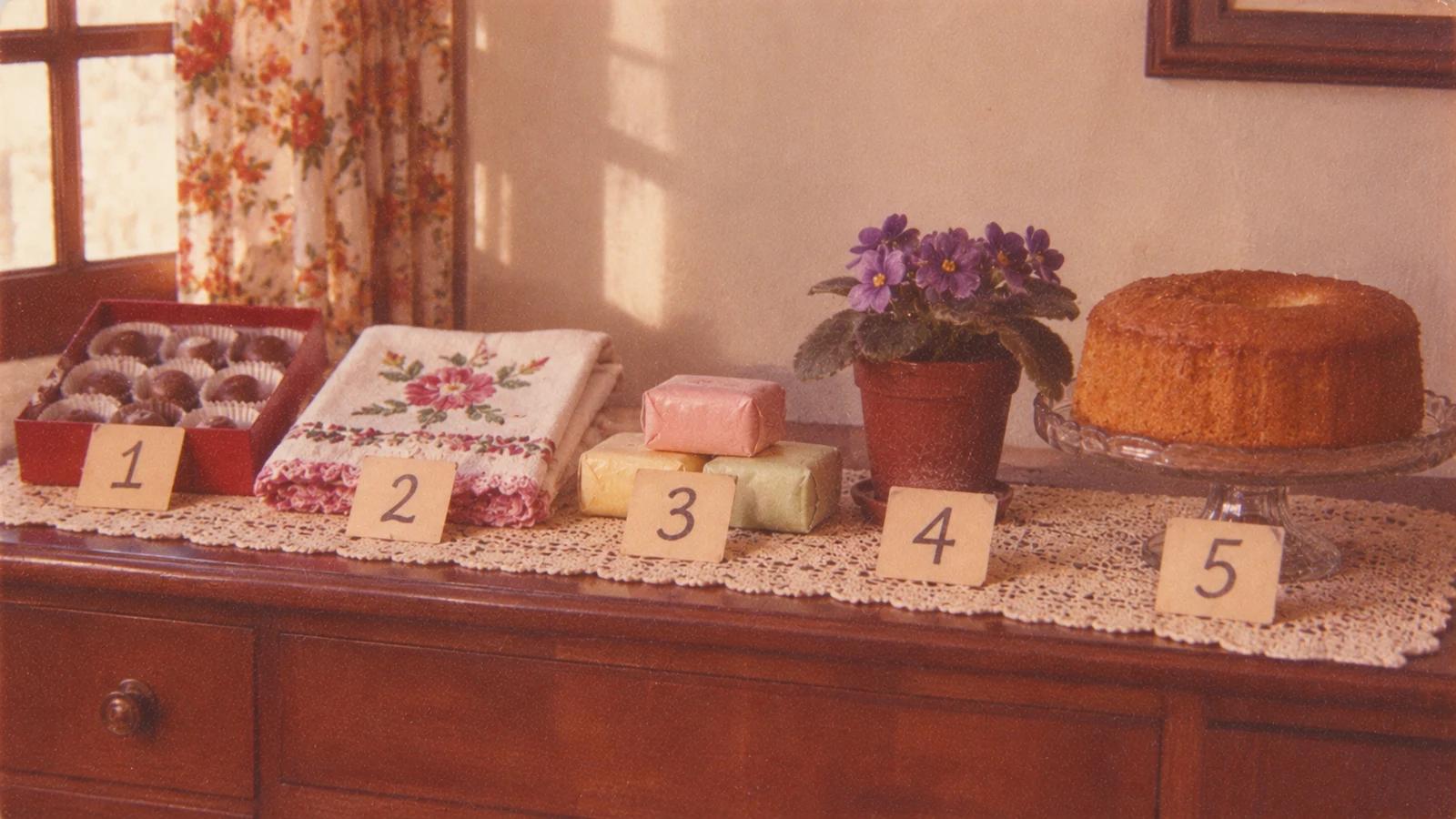
The prize was whatever was around the house or whatever someone had brought: a box of chocolates, an embroidered dish towel, a plant, a nice-smelling soap, the last slice of cake. The value hardly mattered: what counted was shouting BINGO in front of the whole family. Today, the ideas are in the bingo prize ideas guide.
What changed
The Sunday table
- A cardboard card, used for years
- Beans, corn or buttons to mark
- A crank cage or a bag of tiles
- Someone in the family calling until they went hoarse
- Checking out loud, number by number
The same table, with a little help
- A paper card printed at home, new every night
- Still beans, or a dauber
- The draw on a phone, with the ball big on the mirrored TV
- The app's voice calls, and the host gets to play too
- The app alerts you when one is left; the table checks
Cards now come out of the home printer, from the card generator, each one different. The cage became the phone and, with the screen mirrored, the current ball shows up huge on the TV. And whoever used to spend the whole night calling can let the app's voice do the calling and play too.
What stays the same
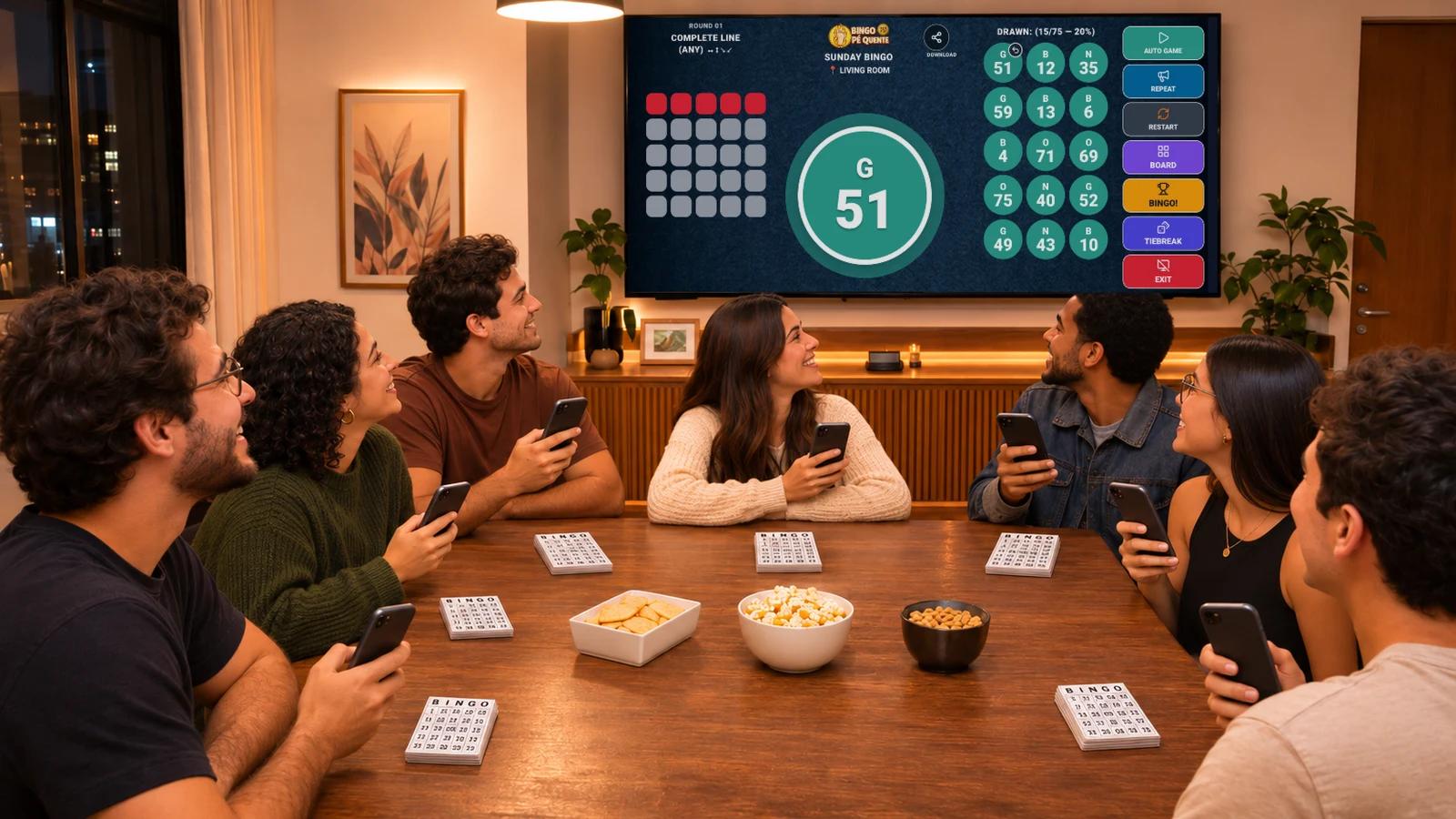
The table. The family. The paper card on the table, which nobody wanted to give up. The silence when one is left. The shout. And the child marking on grandma's lap today will be the grandma telling everyone, thirty years from now, what bingo was like back in the day.
The cage changed, the card changed, the caller changed. The BINGO shout is the same one from the Sunday table.
Quick questions
- Why did people mark cards with beans? Because the card was cardboard and was used again every round. With beans, you just emptied it and played again.
- How did people draw numbers without a cage? With a cloth bag and small numbered tiles, pulled out one at a time without looking.
- Can you still play the old-fashioned way? Yes: a paper card, beans and someone calling. If you like, the app can come in just to call the numbers and, with the screen mirrored, show the ball on the TV.
Back then or today, bingo at home is the same thing: the whole family watching the same ball.