B-I-N-G-O: the nearly 500-year story of the game that brings the world to one table
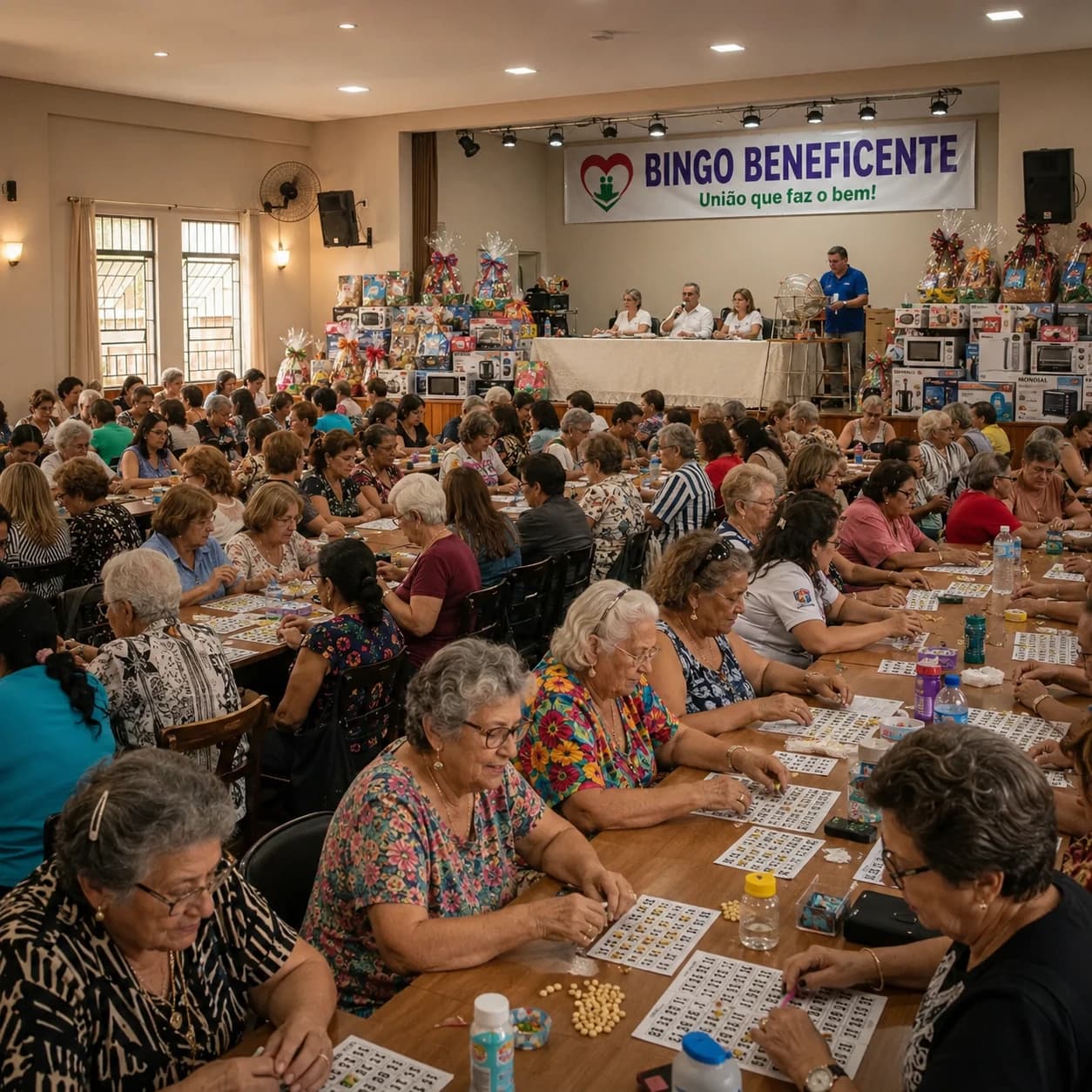
You sit in a chair, get a card, and wait for a voice to call numbers. Sounds simple. But that gesture has nearly five centuries of history and crossed empires, churches, wars and laws before reaching your family's table.
It all began in Italy, in 1530
Bingo's great-grandfather was born in Italy around 1530, under the name "Lo Giuoco del Lotto d'Italia" — a national lottery. And it never stopped: the draw still takes place every Saturday in Italy, centuries later. It was also in Italy, in Naples, in the 18th century, that tombola appeared — the version with cards, chips and someone "calling" the numbers, well known to Italian families in Brazil.
From the French parlor to the German schoolroom
The leap that created the game we recognize came from France, in 1778, with "Le Lotto" — the card with numbers in rows and columns and the idea that completing a line = a win. That skeleton is over 240 years old. Almost a century later, in the 19th century, Germany gave the game an unexpected use: teachers used the cards to teach children to spell and do arithmetic.
How "Beano" became "Bingo" — in the United States
In the early 1920s, in the United States, businessman Hugh J. Ward standardized the game at fairs and amusement parks, and published a rule book in 1933. Because the card was marked with beans, the game was called "Beano".
The turning point came in December 1929: New York toy salesman Edwin S. Lowe saw "Beano" at a fair near Atlanta. He took the idea home to Brooklyn, and — as Wikipedia tells it — during a game with friends one player got so excited on winning that she shouted "Bingo!" instead of "Beano!". The name stuck. Lowe founded the E. S. Lowe Company and began selling the game in boxes.
Then came a practical problem: with few different cards, many people won at the same time. To fix it, the story goes that Lowe hired mathematician Carl Leffler, of Columbia University, to create about 6,000 unique cards. Legend has it — and the encyclopedia itself treats this as myth, not proven fact — that the effort drove Leffler mad.
1530
the year it all began, in Italy
1778
the row-and-column card is born in France
~6,000
unique cards attributed to Carl Leffler
10,000
games a week in the US by 1934
How bingo became a craze — church, school and controversy
From Lowe's company, the game spread fast. It's estimated that by 1934, Americans were playing about 10,000 bingo games a week. Much of that growth came from churches and schools, which used bingo to raise funds — and the Catholic Church was especially active in it during the Great Depression, when money was tight.
But here's the full truth, no softening: that charity bingo was, at the time, often illegal. Most American states only changed their laws in the 1940s and 1950s to allow charitable gaming. And there was a curious effect, noted by law professor I. Nelson Rose: by running bingo, churches ended up weakening their own argument against gambling. In other words: bingo didn't only have godparents. It had defenders, critics, and a legality that took a while to settle.
It was in this period that the card we still use today took shape — five columns, the letters B-I-N-G-O and the free space in the middle:
And in Brazil?
In Brazil, bingo has no birth certificate with an exact date — and anyone who claims one is guessing: there's no consensus on the year it arrived. What we do know is how it entered daily life: through the door of the popular festival. The quermesse (a word from the Flemish kerkmisse) and the June festival were two old stages for the game — but over time, bingo spread far beyond them.
On paper, the history of bingo in Brazil is a nearly century-long fight between the game and the law. It's worth following — because it explains why casino bingo and church-fair bingo became such different things:
- 1941
Decree-Law 3,688 (the Criminal Misdemeanors Act), in Article 50, classifies running games of chance as a misdemeanor. Still in force today.
- 1946
President Dutra closes the casinos (Decree-Law 9,215).
- 1971
Law 5,768 organizes charitable raffles, requiring authorization.
- 1993
The "Zico Law" (Law 8,672) allows bingo for sports organizations. The boom of bingo halls begins.
- 1998
The "Pelé Law" (Law 9,615) keeps and regulates the activity.
- 2000
The "Maguito Law" (Law 9,981) repeals those rules, effective December 31, 2001.
- 2004
On February 20, President Lula signs Provisional Measure 168, banning bingo halls and slot machines. Congress later rejects the measure — but the year was marked by the "bingo scandal" and a Senate inquiry.
Who uses charity bingo today — and how many play
Step out of the news and into the hall: this is where bingo really works in Brazil today. It's one of the most-used fundraising tools of the non-profit sector, and organizations of every kind run bingos all year to fund their work. Some real, recurring examples:
- APAEs (Associations of Parents and Friends of People with Disabilities) — one of the country's largest care networks, with over 2,200 units and more than 700,000 people served. APAE bingos happen all year: the one in São Caetano do Sul drew over 800 people to expand the organization's health wing; others, from Ji-Paraná (RO) to Rio das Antas (SC), do the same.
- Charity hospitals (Santas Casas) — in Descalvado (SP), a single Santa Casa bingo raised R$ 32,541 for the hospital.
- Schools, daycares and social projects, neighborhood associations, service clubs (Rotary, Lions), care homes and civil-society organizations in general — all turn to bingo to fund works, equipment and activities.
Legally, this path exists: Law 5,768/1971 lets philanthropic organizations hold draws with prior federal authorization (today through the Secretariat of Prizes and Betting, rules in Ordinance SEAE/ME 7,638/2022). It's still a gray area — the tax authority has audited organizations over bingos, and there are bills in 2025 to give more legal certainty to those who rely on this income.
And how much do we play? A survey by the Hibou institute (August 2024, with 2,839 people across all social classes) found that 68% of Brazilians take part in some game or bet. In that survey, bingo came up in 10% of responses — that is, 1 in 10 respondents said they play. In a sample that size it's a snapshot, not a census; but it gives the order of magnitude: bingo is no niche. It trails the lottery (47%) and raffles (25%), is roughly tied with sports betting (11%) and ahead of online casinos (8%).
68%
of Brazilians take part in some game or bet
10%
play bingo — almost as many as sports betting
2,200+
APAE units that turn to charity bingo
R$ 32k
raised in a single Santa Casa bingo
What's left — and why it still matters
Clear away the slot-machine smoke and the scandal, and what remains is the simplest thing in the world: people gathered, a voice calling numbers, and the joy of shouting the word. That bingo — the church-fair one, the APAE one, the Sunday-table one — was never about money, and never stopped existing.
That's the bingo Bingo Pé Quente carries: a recreational app, with symbolic prizes (a basket, a cake, a trophy), no betting and no money — within what Brazilian law has always allowed for family and charitable use. We didn't invent bingo: it's nearly 500 years old. We just wanted to take this whole story and keep it, with care, inside your phone.
From the 1530 Italian lottery to the charity bingo in your neighborhood, the game has always done the same thing: bring people together.
Bingo Pé Quente — never miss a number again.
Sources
- Bingo (American version) — Wikipedia
- Edwin S. Lowe — Wikipedia
- Bingo card — Wikipedia
- The Third Wave of Legal Gambling — Prof. I. Nelson Rose
- Bingo in Brazilian Federal Law — LinkedIn (Bocayuva)
- The bingo scandal — Wikipedia (PT)
- Hibou survey: 68% take part in a game/bet (bingo 10%) — Games Magazine Brasil
- APAE São Caetano charity bingo — Rede NN
- Santa Casa de Descalvado charity bingo
- APAE Brasil — About Us
- Charitable draws and Law 5,768/71 — Conjur