
How to play bingo: a step-by-step guide for first-timers (75-ball Bingo)
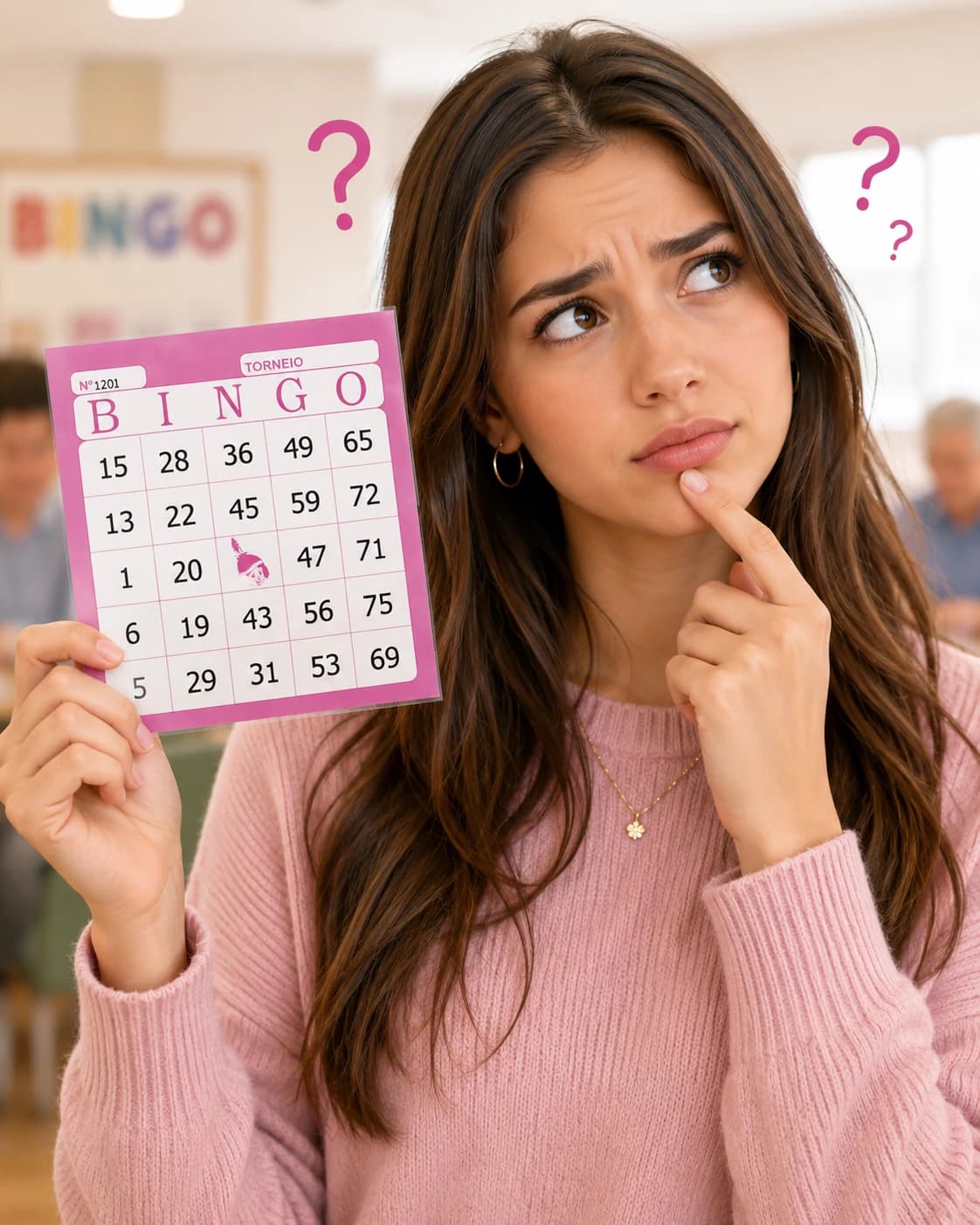
You've been invited to a June festival, a church bingo, or a game night at a friend's place — and that little doubt hits: "but how do you actually play this?" Relax. Bingo is one of the easiest games in the world: if you can recognize numbers, you already know almost everything. A few minutes with this guide and you'll sit down at the table knowing how to play.
We'll start from absolute zero, no rush and no jargon. By the end, you'll understand the card, know what to do as each number is called, learn the ways to win, and even speak the language of the old-timers.
If you can recognize numbers, you already almost know how to play bingo. The rest is paying attention and having fun.
First: what bingo is, in one sentence
Bingo is a game of chance where each player has a card full of numbers, and someone draws numbers one at a time. You mark the called numbers on your card. Whoever first completes the agreed pattern (a line, the whole card, etc.) shouts "BINGO!" and wins the prize. That's it — the rest are details, and we'll cover them all now.
In Brazil, the most common version is 75-ball Bingo: the card has the letters B-I-N-G-O across the top and the numbers run from 1 to 75. That's the one we'll explain.
What's on a bingo table (the objects)
Before you play, it helps to know the game's pieces. Here's what's usually on the table:
The cage and the balls
A spinning drum with 75 numbered balls, 1 to 75. Each time, one ball comes out — and its number is called out loud. At home, people use a little bag, a cup, or an app instead of the cage.
The card
The cardboard with 5 columns (B-I-N-G-O) and 25 squares: 24 with numbers and 1 free space in the middle. It's your board — it's where you follow the game.
The markers
What you use to mark the numbers already called. The Brazilian tradition uses beans and corn kernels; chips, bottle caps, a pen, or the classic dauber all work too.
The sound and the board
The microphone and speaker so everyone hears the number. In big halls there's also a lit display (or a TV) showing the numbers already drawn.
Who's who in the game (the people)
The caller
The star of the show. The one who draws and "calls" the numbers out loud, with pauses and flair. A good caller makes the table laugh and sets the mood — often with a nickname for each number.
The players
You and the rest of the table. Each person looks after their card (or several), marking numbers and rooting. No skill needed: everyone has the same chance.
The organizer / checker
The one who runs the round: hands out cards, sets the prize and the pattern for each round, and checks the card of whoever shouts bingo to make sure it's all correct.
What the 75-ball card looks like
This is the part that scares first-timers — but it's simple. The card has 5 columns, one for each letter of B-I-N-G-O. And each column only takes numbers from one range:
Notice three things: (1) each column has its own range, so the B column will never hold the number 70; (2) the middle square is free ("FREE") — it counts as marked for everyone; (3) there are 24 numbers on each card, all different.
A round, step by step
- 1
Get your card. Each player receives (or buys, at charity bingos) one or more cards. More cards = more chances, but also more numbers to track. To start, just one is perfect. Playing at home? You can print your own for free with our card generator.
- 2
See what the round is worth. The organizer announces the pattern of the round (a line? the full card? the four corners?) and the prize. Pay attention to that before the first ball.
- 3
Listen for the called number. The caller draws a ball and says it out loud, for example: "B-12!". They usually repeat it and sometimes show it on the board.
- 4
Find it and mark it. Check whether that number is on your card. If it is, mark it with a bean (or chip/pen). If not, no problem — wait for the next one.
- 5
Keep going until you close the pattern. The balls come out one by one. When your marked numbers complete the agreed pattern, your moment has arrived.
- 6
Shout "BINGO!". No shyness! Shouting is how you announce you've won. The game stops right away to check.
- 7
Checking and prize. The checker compares the called numbers with your card. If it's all correct, the prize is yours — and the next round begins.
— Attention, players! The next number is… B-12!
That way of calling, with pauses and excitement, is half the fun of bingo. In many places each number gets a nickname — we list the main ones below.
The ways to win (the patterns)
Not every round means filling the whole card. Before each round, players agree which pattern wins the prize. The most common are:
- Line: any complete row — horizontal, vertical, or diagonal, as agreed.
- Four corners: just the four numbers in the corners of the card.
- Full card ("blackout"): marking all 24 numbers. It's the biggest prize and the most common finale.
- Special shapes: some rounds call for fun shapes — a letter X, a cross, a frame. The organizer shows the shape before starting.
Beginner's tip: when in doubt, ask "what does this round count for?" before the first ball. No one will mind — everyone was a rookie once.
Where, when, and with whom it's played in Brazil
Recreational bingo is everywhere in Brazil — almost always tied to a party and a good cause. The most common places:
At church and the parish fair
The parish bingo is a classic: it raises money for the church and the community, with prizes like food baskets, cakes, and appliances.
At the June festival
June and July are the peak of bingo in Brazil. Between the square dance and the bonfire, there's almost always a bingo round with a prize.
At home, with family
On a Sunday or a birthday, with someone calling and the gang playing around the table. It's the nicest way to learn.
At charity bingos
Special-needs associations, charity hospitals, care homes, schools, and service clubs (Rotary, Lions) use bingo to fundraise all year. Playing is also helping.
When? The most common days are weekends (Saturday and Sunday afternoons) and the June festival season (June and July). In care homes and clubs, there's usually a fixed weekday — the highlight of the week for many.
With whom? Anyone. Bingo is one of the few games where the child, the adult, and grandma play on equal terms: luck doesn't ask your age.
Mini-dictionary of bingo
Heard a word you don't know at the table? Here are the terms that come up most:
- Card: the sheet with the numbers you mark.
- Ball: each drawn number ("number 42 came out").
- Call / called: to say the number out loud. A "called number" is one already drawn.
- Caller: the person who draws and calls the numbers.
- Mark / daub: to cover the called number on your card.
- FREE: the middle square of the card, which counts for free.
- Pattern: the shape you need to complete to win the round.
- Line: one complete row of the card.
- Full card / blackout: marking every number.
- Prize: what you win (a basket, a cake, a trophy, a treat).
- BINGO!: the shout that says you've closed the pattern and won.
The number nicknames (the spice of bingo)
Experienced callers don't just say the number: they give each one a nickname, and the table laughs back. They vary from town to town, but here are some of the best known (in classic English calls):
5 tips for beginners
- Start with just one card. Tracking several at once is confusing at first. You can add more later.
- Check the pattern before each round. Knowing whether it's a line or a full card changes everything.
- Mark calmly, but don't fall behind. If you miss a number, don't give up: ask or check the board.
- Don't be shy about shouting BINGO. That's how you win — and the game only stops when someone shouts.
- Relax: it's luck, not a test. No one has to be fast or clever. Bingo is about laughing and being together.
And if you want to practice at home, at your own pace, without needing anyone to call the numbers, you can use Bingo Pé Quente: your phone becomes the caller (with a clear, natural voice and even the nicknames), checks your cards, and warns you when you're close. But whether with an app or beans on the card, the game is the same — and so is the joy.
Want to set up your own at home? Here is how to make a bingo at home.
Now just sit at the table, grab your card, and wait for the first ball. Good game!